Metaverse Land NFT Projects: Top 10 Best Picks for 2026 (Proven Guide)
Metaverse land NFT projects ranked for 2026, with Decentraland, The Sandbox, Otherside and seven more compared by utility, activity and real risk.
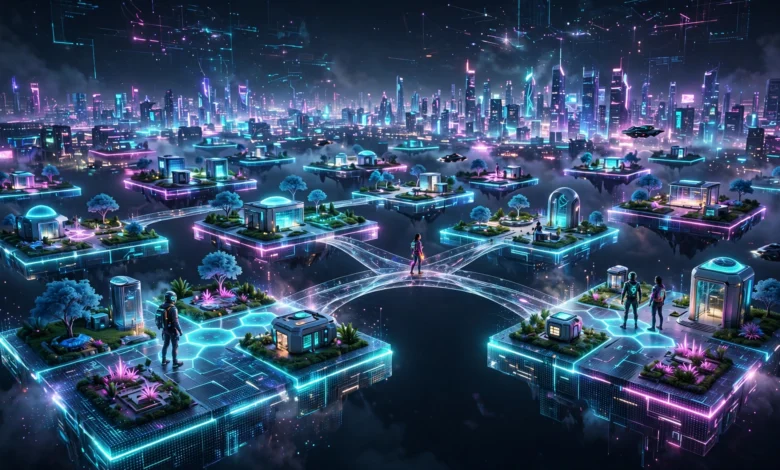
Metaverse land NFT projects went from a niche experiment to front-page news in a couple of years, and then most of them fell just as fast. In late 2021 people paid millions of dollars for parcels in virtual worlds. By 2023, floor prices had collapsed and a lot of buyers wondered whether virtual real estate was ever real at all. In 2026 the picture is quieter, and honestly, a lot more useful.
Some platforms kept building. Decentraland shipped mobile apps. The Sandbox is opening a new AI-assisted game engine to the public. Yuga Labs is still pushing Otherside forward. Others went silent. So if you are looking at virtual land NFTs today, the useful question is not which token will spike next. It is which worlds actually have people, working tools and a real reason to own land.
This guide covers the top 10 metaverse land NFT projects worth knowing right now. For each one you will see how the land works, what you can do with it, which token powers the economy and where the weak spots are. You will also find a comparison table, a simple buying process and the risks most lists leave out.
One quick note before we start: nothing here is financial advice. Digital real estate is highly speculative, most prices sit far below their peaks, and some of these projects may not survive the next cycle. Treat this article as a map, not a shopping list.
What Are Metaverse Land NFTs?
A metaverse land NFT is a token on a blockchain that proves you own a specific plot inside a virtual world. Each plot has fixed coordinates on the world’s map, and the NFT records who holds it. Because the record sits on a public ledger, you can sell the plot, rent it out or move it to another wallet without asking the game company for permission.
Think of it like a deed, except the house, the street and the city all live on servers. What makes the deed worth anything is what happens on the land: games people play, events they attend, shops they visit and builders who want space near the action.
How Virtual Land Ownership Works
Most NFT land projects follow the same basic model:
- A fixed supply. The world is split into a set number of parcels. The Sandbox, for example, has 166,464 LAND parcels, and Decentraland’s Genesis City has roughly 90,000.
- A native token. Land is usually priced and traded in the platform’s own currency, such as MANA, SAND or APE.
- Building tools. Owners get editors or SDKs to put games, galleries or social spaces on their plots.
- Governance rights. On several platforms, holding land gives you voting power in a DAO.
- Secondary markets. Parcels trade on the platform’s own marketplace and on general NFT markets like OpenSea.
Why People Buy Digital Land
Buyers usually fall into a few groups. Creators want a place to publish games and experiences. Brands want a presence where their audience hangs out. Communities use land as a clubhouse or event space. And speculators bet that a parcel near a popular hub will be worth more later. That last group drove most of the 2021 boom, and it is also why so many prices fell once attention moved on.
The key lesson from the last few years is simple: scarcity alone does not create value. A plot is only worth something if people show up to it.

How We Picked These Metaverse Land NFT Projects
There are dozens of virtual worlds selling plots, and many lists online still rank projects based on 2021 hype. To build this list of metaverse land NFT projects, I looked at what each platform looks like today, using five filters:
- Active development. Has the team shipped updates, tools or new content in the past year?
- Real users. Do people actually log in, attend events or play games, not just trade tokens?
- Land utility. Can owners build, host, rent or earn something with their plots?
- Market liquidity. Is there enough trading that you could sell a parcel if you needed to?
- Track record. How has the team handled bear markets, restructuring and community trust?
No project scores perfectly on all five. Some are strong on brand but slow to ship. Others are fun to play but have thin land markets. The ranking below balances those trade-offs, so read each section rather than just the number next to the name.
Top 10 Metaverse Land NFT Projects in 2026
Here is the full list, starting with the platforms that have the deepest land markets and the most proof of life.
1. Decentraland (MANA)
Decentraland is the original virtual land NFT world and still one of the most recognizable names in the space. It runs on Ethereum and is governed by a DAO, so landowners and MANA holders vote on how the platform’s treasury and rules work.
Quick facts:
- Land supply: about 90,600 parcels, each 16 by 16 meters
- Token: MANA (Ethereum)
- Best for: social events, galleries, brand activations
Every parcel bought through the official marketplace uses MANA that gets burned, and the DAO collects a 2.5% fee on secondary LAND sales. That gives the token a built-in demand sink tied to land activity.
The bigger 2026 story is access. Decentraland launched apps on iOS, Android and the Epic Games Store in April 2026, which removes one of its oldest problems: you no longer need a desktop and a crypto wallet to get in. It also kept up a steady event calendar, with hundreds of community events per month.
Where it falls short: daily users are still modest compared with mainstream games, and graphics lag behind modern titles. DAO voting can also slow decisions down. If you buy land here, you are betting on events and social traffic, not on gameplay depth.
2. The Sandbox (SAND)
The Sandbox is a voxel-style world backed by Animoca Brands, known for big brand partnerships and a creator-first approach. Its map holds exactly 166,464 LAND parcels, each 96 by 96 meters, and owners can merge neighboring plots into larger Estates.
Quick facts:
- Land supply: 166,464 parcels (fixed)
- Token: SAND (Ethereum and Polygon)
- Best for: creators and studios publishing games
The Sandbox is in the middle of a big shift in 2026. It announced The Sandbox Studio, an AI-assisted multiplayer game engine, in June 2026, and the public rollout is set for Q4 2026. According to eGamers’ coverage of the LAND utility upgrade, LAND holders will be able to host games made by other creators, with catalog visibility weighted by land tier.
There are some trade-offs to know about. The old LAND staking rewards ended in June 2025, and the Sandbox DAO went into dormant mode on 1 April 2026 after a vote moved operations back to the core team, as detailed in Blockworks’ Sandbox token transparency filing. So land now earns mainly through hosting and publishing, not passive yield.
Where it falls short: SAND trades more than 99% below its 2021 high, and the Studio is unproven until creators and players actually use it.
3. Otherside by Yuga Labs (APE)
Otherside is the metaverse from Yuga Labs, the company behind Bored Ape Yacht Club and CryptoPunks. Its land comes as Otherdeeds, and the April 2022 sale was one of the biggest NFT drops ever, bringing in about $317 million in a few hours.
Quick facts:
- Land supply: 100,000 Otherdeeds
- Token: APE (ApeCoin)
- Best for: holders already inside the Yuga ecosystem
Each Otherdeed carries traits like environment type, resources and sometimes a Koda creature. Yuga has run several playable demos over the years and, in August 2026, described a plan to connect Otherside with BAYC, MAYC, CryptoPunks, Meebits and ApeCoin, using the 100,000 plots as the backbone.
Where it falls short: there is still no confirmed public launch date for the full world, and the land market has cooled hard. The Block reported an Otherdeed floor of roughly $640 at one point, a long way from the $6,000 mint price. Otherside is a high-risk, high-brand bet.
4. Upland (UPX)
Upland takes a different route. Instead of an invented map, it mirrors the real world, so each NFT property is tied to an actual street address in cities like San Francisco, New York, Chicago and Rio de Janeiro.
Quick facts:
- Land supply: millions of properties, released city by city
- Token: UPX (in-game currency)
- Best for: casual players who enjoy property trading and collecting
Upland feels more like a mobile game than a 3D world. You buy addresses, collect neighborhoods for bonuses, build structures and trade with other players. It has also offered a way to sell properties for US dollars through a payments partner, which is unusual for NFT real estate.
Where it falls short: values depend on Upland’s closed economy, and the game controls when new cities open. It is less about building immersive spaces and more about collecting and flipping.
5. Somnium Space (CUBE)
Somnium Space is built for virtual reality first. It is a single persistent world where you can walk, fly and meet other people with a headset, though desktop access also works.
Quick facts:
- Land supply: a fixed set of parcels in S, M and XL sizes
- Token: CUBE (Ethereum)
- Best for: VR fans and builders who want immersive spaces
Land owners can build homes, galleries and venues with in-world tools or import their own 3D models. The team has also leaned into hardware with its own VR headset, which shows a long-term commitment to the immersive side of the metaverse.
Where it falls short: the user base is small and niche, and land liquidity is thin. Selling a parcel quickly at a fair price can be hard.
6. Voxels (formerly Cryptovoxels)
Voxels is one of the oldest metaverse land NFT projects, and it has a loyal following among digital artists. It runs straight in your browser, so there is nothing to download, and its blocky Minecraft-like look makes building easy for beginners.
Quick facts:
- Land supply: plots in Origin City and surrounding islands
- Token: none (land trades in ETH)
- Best for: NFT artists and gallery builders
The lack of a native token is actually a selling point for some people. You are not exposed to a separate coin’s price swings. You just own a plot priced in ETH. Owners use their parcels mostly as galleries, community hubs and small art installations.
Where it falls short: it is a small world with a small team, and growth has been slow. Think of it as a creative niche rather than a mass-market platform.
7. Axie Infinity Land (AXS)
Axie Infinity is famous for its creature battles and the play-to-earn boom, but it also has a land layer called Lunacia. Land plots feed into Axie Infinity: Homeland, a farming and base-building game where you gather resources and craft items.
Quick facts:
- Land supply: 90,601 plots, with rarer Genesis and Mystic tiers
- Token: AXS, running on the Ronin network
- Best for: gamers who already play in the Axie ecosystem
Ronin keeps transaction fees low, which matters when you are making lots of small in-game moves. Land owners also earn a share of resources generated on their plots, which gives the NFT a clear in-game job.
Where it falls short: land value depends heavily on how many people play Homeland, and the whole Axie economy is still recovering from its post-2021 slump.
8. Pixels (PIXEL)
Pixels is a farming game on Ronin that became one of the most-played Web3 games of recent years. It is light, cute and easy to pick up in a browser, which is a big reason it pulled in more players than most 3D worlds.
Quick facts:
- Land supply: 5,000 Farm Land NFTs
- Token: PIXEL (Ronin)
- Best for: casual players and guilds who want productive plots
The tiny supply makes Pixels land feel like a premium asset. Owners can farm on their plots, and other players can work on them too, which creates a simple landlord and sharecropper loop. Players without land can still enjoy the game on free plots, so the barrier to entry stays low.
Where it falls short: it is a single game, so land value is tied entirely to Pixels staying popular. Game economies can change fast when developers adjust rewards.
9. Aavegotchi Gotchiverse (GHST)
Aavegotchi mixes DeFi with pixel-art pet collectibles. Its world, the Gotchiverse, is split into REALM parcels in three sizes: Humble, Reasonable and Spacious. Owners place installations on parcels to harvest in-game resources called Alchemica.
Quick facts:
- Land supply: REALM parcels across districts around the central Citaadel
- Token: GHST (now on Base)
- Best for: DeFi-savvy users who like on-chain games
Aavegotchi has a strong DAO culture and an active core community. Land here works more like a small production business than a social space.
Where it falls short: the game’s design has changed several times, and the land economy is complex for newcomers. Check the latest Gotchiverse status before buying.
10. Wilder World (WILD)
Wilder World is an open-world metaverse built on Unreal Engine 5, set in a stylized city called Wiami. It aims for high-end graphics and racing-heavy gameplay, closer to a console game than to a social hangout.
Quick facts:
- Land supply: land and property NFTs across Wiami districts
- Token: WILD (Ethereum)
- Best for: players who care about visuals and gameplay quality
The visual ambition stands out in a sector where many worlds still look dated. Land and property NFTs are tied to locations in the city, and the project sells cars, avatars and other assets alongside them.
Where it falls short: public access has rolled out slowly, and land utility depends on features that are still being built. It is a speculative pick for patient holders.
Metaverse Land NFT Projects Compared
This table puts the best metaverse land NFT projects side by side so you can match a platform to what you actually want from it.
| Project | Token | Blockchain | Land supply | Main use for land | Risk level |
|---|---|---|---|---|---|
| Decentraland | MANA | Ethereum | ~90,600 parcels | Events, social spaces, brands | Medium |
| The Sandbox | SAND | Ethereum, Polygon | 166,464 parcels | Publishing and hosting games | Medium |
| Otherside | APE | Ethereum | 100,000 Otherdeeds | Future MMO world, Yuga ecosystem | High |
| Upland | UPX | EOS | Millions of real-world addresses | Collecting and trading properties | Medium |
| Somnium Space | CUBE | Ethereum | Fixed parcels (S, M, XL) | VR venues and homes | High |
| Voxels | None (ETH) | Ethereum | Origin City plots | Art galleries, community hubs | Medium |
| Axie Infinity Land | AXS | Ronin | 90,601 plots | Resource farming in Homeland | High |
| Pixels | PIXEL | Ronin | 5,000 Farm Lands | Farming and resource production | High |
| Aavegotchi | GHST | Base | REALM parcels | Harvesting Alchemica | High |
| Wilder World | WILD | Ethereum | Wiami land and properties | Future open-world gameplay | High |
A quick way to read this: if you want a virtual world with the deepest land market and the longest track record, Decentraland and The Sandbox are the obvious starting points. If you want land that does a clear job inside a game, look at Pixels or Axie. If you want a brand-driven moonshot, Otherside and Wilder World fit that profile, with all the risk that comes with it.
How to Buy Land in Metaverse Land NFT Projects
Buying metaverse real estate is easier than it was in 2021, but the steps are still a bit technical if you are new to crypto. Here is the basic process for most platforms:
- Set up a crypto wallet. MetaMask works for Ethereum-based worlds. Ronin Wallet is needed for Axie and Pixels. Write down your seed phrase offline and never share it.
- Buy the right token. Get MANA, SAND, APE, ETH or whatever the platform uses from a reputable exchange, then send it to your wallet.
- Pick your marketplace. Use the platform’s official marketplace or a well-known one like OpenSea. Always reach it from the official website link, not from ads or DMs.
- Check the parcel. Look at its location, nearby attractions, traffic, size and any special traits before you buy.
- Compare recent sales. Floor price tells you the cheapest listing. Recent sales of similar plots tell you what people actually pay.
- Buy and verify. Complete the purchase, then confirm the NFT shows up in your wallet and on the platform’s map.
Tips for Choosing the Right Virtual Land
Location still matters, just like in physical real estate. Plots next to busy plazas, roads, brand venues or popular games tend to hold value better. A few other things to weigh:
- Activity over hype. Visit the world yourself. If it feels empty on a weekend, that tells you something.
- What you will do with it. Land you build on, rent out or use for a community is easier to justify than land you just hold.
- Fees and gas costs. Ethereum transactions can cost more than the plot is worth during busy periods, so factor that in.
- Team communication. Projects with regular updates, public roadmaps and honest postmortems usually make better long-term bets.
Risks of Investing in Virtual Land NFTs
This is the section most guides rush through, so let’s be direct. Virtual land investment carries real risks:
- Price collapse. Most land floors sit 80% to 99% below their 2021 to 2022 peaks. They can fall further.
- Low liquidity. In smaller worlds you may wait weeks or months for a buyer.
- Platform risk. If the company shuts down or changes the rules, your land can lose most of its use overnight. DAOs can also be paused, as happened with The Sandbox in 2026.
- Unfinished products. Several worlds sold land years before the full game launched. Some still have not launched.
- Scams and phishing. Fake marketplaces, fake airdrops and wallet drainers target NFT buyers constantly.
- Regulation and taxes. Rules for NFTs and crypto differ by country and keep changing. Check how gains are taxed where you live.
The safest mindset is to only spend what you could lose entirely, and to buy land because you want to use it, not because a chart looks exciting. For a broader view of how the sector is tracked, DappRadar’s virtual worlds rankings are a useful place to compare activity across platforms.
Conclusion
The best metaverse land NFT projects in 2026 are the ones still giving people a reason to show up: Decentraland with its events and new mobile apps, The Sandbox with its creator tools and upcoming Studio, Otherside with the weight of the Yuga brand, and game-first worlds like Pixels and Axie where land does a clear job. Smaller names such as Upland, Somnium Space, Voxels, Aavegotchi and Wilder World each serve a specific crowd, from VR fans to digital artists to property collectors. What ties every one of these metaverse land NFT projects together is that value comes from use, not scarcity, so the smartest approach is to visit the worlds yourself, pick land you would actually build on or use, keep your spending to an amount you can afford to lose, and treat virtual real estate as a long, uncertain experiment rather than a guaranteed return.