DeFi Platforms: 10 Best and Most Trusted Picks to Watch in 2026
DeFi platforms in 2026 compared: Aave, Uniswap, Lido, Hyperliquid and six more, with fees, risks, and real reasons each one deserves your attention.

DeFi platforms have quietly grown up. A few years ago, most people saw decentralized finance as a playground for yield chasers and meme tokens. In 2026, the picture looks different. Banks are testing onchain lending, asset managers are issuing tokenized funds, and stablecoins now move billions of dollars a day without a single bank wire.
That shift makes choosing the right decentralized finance platform harder, not easier. There are thousands of protocols out there, and many of them look identical on the surface. Some have survived multiple market crashes and hacks without losing user funds. Others vanished the moment incentives dried up.
This guide cuts through the noise. We looked at the best DeFi platforms by total value locked, revenue, security record, user activity, and how they are adapting to new regulation. The list covers lending markets, decentralized exchanges, liquid staking, perpetual futures, yield tokenization, and stablecoin infrastructure, so you get a full view of where the money and builders are going.
For each platform, you will see what it does, why it matters right now, who it suits, and what risks you should keep in mind. Whether you are a first-time user with a small wallet, a long-term holder looking for yield, or an active trader, you will finish this article knowing which DeFi platforms to watch in 2026 and why.
One quick note before we start: nothing here is financial advice. Treat it as a well-researched starting point for your own homework.
What Are DeFi Platforms and Why Do They Matter in 2026?
DeFi platforms are financial apps that run on public blockchains through smart contracts instead of banks or brokers. You connect a self-custody wallet, and the code handles everything a traditional intermediary would: matching trades, issuing loans, paying interest, and settling transactions. Nobody can freeze your account because you missed a paperwork deadline, and anyone with an internet connection can use the same tools.
That basic idea has not changed since 2020. What has changed is scale and maturity. As of early October 2026, the 100 largest DeFi protocols tracked by DeFiLlama hold roughly $249 billion in total value locked, according to the DeFi TVL rankings from Decentralized Finance Publication. Liquid staking, lending, and bridges are the three biggest categories, each holding more than $50 billion.
Why 2026 Is a Turning Point for Decentralized Finance
A few forces are pushing decentralized finance into a new phase this year:
- Institutional money is arriving onchain. Tokenized Treasury funds, tokenized stocks, and regulated stablecoins are now plugged directly into lending markets and exchanges.
- Clearer stablecoin rules. New regulation in the United States, Europe, and parts of Asia gives larger players the legal comfort to use stablecoins and the DeFi apps built around them.
- Real revenue matters more than hype. Investors now judge DeFi platforms by fees, revenue, and buybacks, much like they would judge a regular business.
- Better user experience. Smart wallets, gas sponsorship, and cross-chain routing have made onchain finance feel closer to a normal fintech app.
How DeFi Platforms Differ from Centralized Exchanges
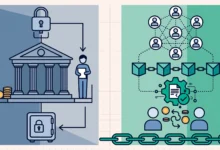
A centralized exchange holds your coins for you. A DeFi platform never takes custody; your assets sit in your wallet or inside an audited smart contract you can inspect. The trade-off is responsibility. If you lose your seed phrase or sign a malicious transaction, there is no support desk that can reverse it. That is why choosing well-tested DeFi platforms matters so much.

How We Picked the Best DeFi Platforms for 2026
There is no single number that tells you whether a protocol is good. Total value locked shows how much money users trust a platform with, but it can be inflated by incentives or double counted when the same asset is staked, wrapped, and lent again. So we used a mix of signals to choose the top DeFi platforms on this list:
- Total value locked (TVL): Size still matters. Deep liquidity means better rates, lower slippage, and more resilience during sell-offs.
- Revenue and fees: A platform that earns real fees from real users is more likely to survive when token rewards end.
- Security track record: Years in production, multiple audits, bug bounties, and how the team handled past incidents.
- Active development: New versions, new chains, and new products shipped in 2025 and 2026.
- Category leadership: We wanted a balanced list covering lending, trading, staking, stablecoins, and yield, rather than ten versions of the same thing.
- Regulatory positioning: How well each DeFi protocol is prepared for the stablecoin and digital asset rules now taking shape worldwide.
TVL figures below come from DeFiLlama data as of 2 October 2026. They move every day with token prices, so treat them as a snapshot, not a promise.
Top 10 DeFi Platforms to Watch in 2026
Here is our list of the top 10 DeFi platforms for 2026. They are not ranked purely by size. Instead, each one leads its category or is doing something that could reshape how decentralized finance works over the next few years.
1. Aave: The Lending Market Everyone Else Is Measured Against
Aave is the largest lending protocol in DeFi, with Aave V3 holding about $18.1 billion in TVL as of 2 October 2026. Users supply assets like ETH, USDC, or wrapped bitcoin to earn interest, and borrowers lock collateral to take loans at variable rates. Everything runs through code, and liquidations happen automatically when a loan becomes too risky.
What makes Aave worth watching this year is Aave V4. The new version introduces a hub and spoke design, where a shared liquidity hub feeds separate markets with their own risk settings. That lets Aave list newer or riskier assets without putting the whole pool at risk. In late September 2026, Aave V4 on Base began supporting Coinbase tokenized stocks, one of the clearest signs yet of traditional assets moving into DeFi lending.
Why it stands out:
- Over six years in production across more than a dozen chains
- Its own stablecoin, GHO, adds a second revenue stream
- Strong risk management culture with outside risk curators
Watch out for: Rates on Aave are often lower than smaller lenders because deep liquidity keeps utilization in check. Smart contract risk is low but never zero.
2. Lido: The Giant of Liquid Staking
Lido is the single biggest protocol in all of decentralized finance, holding about $26.7 billion in TVL. It lets you stake ETH without running a validator or locking your coins. You deposit ETH and receive stETH, a token that grows with staking rewards and can be used across other DeFi platforms as collateral or liquidity.
Lido matters because stETH has become a base layer asset. It is accepted on Aave, Morpho, Pendle, and dozens of other apps. In 2026, the team is pushing further into institutional products and a more modular validator setup, which spreads stake across more independent node operators and reduces centralization concerns.
Why it stands out:
- Deepest liquidity of any liquid staking token
- Simple to use, even for beginners
- stETH works almost everywhere in Ethereum DeFi
Watch out for: Lido controls a large share of staked ETH, which some researchers see as a long-term risk to Ethereum’s decentralization. stETH can also trade slightly below ETH during market stress.
3. Uniswap: The Original DEX Finally Pays Its Token Holders
Uniswap is the best known decentralized exchange (DEX) and has processed trillions of dollars in volume since 2018. Combined TVL across its V2, V3, and V4 deployments is roughly $4 billion. You can swap almost any ERC-20 token directly from your wallet, and anyone can become a liquidity provider.
The big story is the long-debated fee switch. Under the “UNIfication” proposal, governance turned on protocol fees for Uniswap V2 and the main V3 pools, and in late December 2025 the DAO burned 100 million UNI from its treasury, as reported by Cointelegraph’s coverage of the Uniswap burn. For the first time, trading activity directly reduces UNI supply. Uniswap V4 “hooks” also let developers build custom pools with features like dynamic fees and onchain limit orders.
Why it stands out:
- The most trusted brand in onchain trading
- Real fee revenue now tied to the token
- Unichain, its own layer 2, cuts costs and speeds up swaps
Watch out for: Liquidity providers face impermanent loss, and the fee switch slightly reduces their share of trading fees.
4. Hyperliquid: The Onchain Exchange That Feels Like a CEX
Hyperliquid is the breakout story of this cycle. It runs a fully onchain order book for perpetual futures on its own layer 1 blockchain, and it is fast enough to feel like a centralized exchange. Its bridge holds about $7.1 billion, and CoinGecko data showed it earned $429 million in revenue from January 1 to September 15, 2026, more than any other non-stablecoin crypto project.
In 2026, Hyperliquid has grown well beyond simple trading. It opened native lending on HyperCore in September, and its HIP-3 standard lets outside builders launch their own perpetual markets. A large share of fees goes toward buying back the HYPE token, which is a big reason it has held up while much of the market has struggled.
Why it stands out:
- Top revenue generator in crypto this year
- Order book trading with no gas fees per trade
- A growing ecosystem of apps on HyperEVM
Watch out for: Perpetual futures use leverage, and leverage can wipe out positions quickly. Large monthly token unlocks can also weigh on the HYPE price.
5. Morpho: The Lending Layer Behind Other Apps
Morpho has quietly become the second largest lending protocol, with Morpho Blue holding about $11.2 billion. Instead of one giant pool, Morpho uses small, isolated lending markets. Professional risk curators then bundle these markets into vaults that users can deposit into with one click.
This design is why so many fintech apps and exchanges now use Morpho behind the scenes. When a wallet or exchange offers “earn yield on USDC,” there is a good chance Morpho is doing the work. That kind of quiet infrastructure role often lasts longer than consumer hype.
Why it stands out:
- Isolated markets mean one bad asset cannot drain everything
- Curated vaults make it easy for beginners
- Strong adoption by exchanges and institutions
Watch out for: Your risk depends heavily on which curator manages your vault. Some vaults that held exotic collateral saw liquidations in 2026, so read the vault details before depositing.
6. Sky and Spark: Stablecoin Engine of DeFi
Sky is the rebranded MakerDAO, the team behind the DAI stablecoin and its successor USDS. Sky Lending holds about $5.7 billion, and its lending arm SparkLend holds a similar $5.7 billion. Together with Spark’s liquidity layer and savings products, the Sky ecosystem is one of the largest DeFi platforms by combined value.
Sky has one of the strongest business models in decentralized finance. It earns interest from loans and from real-world assets like tokenized Treasury bills, then shares part of that with USDS savers through the Sky Savings Rate. Spark acts as the distribution arm, pushing USDS liquidity into other markets.
Why it stands out:
- Large, steady protocol revenue
- Long track record dating back to 2017
- Deep ties to tokenized real-world assets
Watch out for: Exposure to real-world assets brings off-chain legal and counterparty risk. Governance is complex and decisions can shift quickly.
7. Ethena: The Synthetic Dollar Built on Hedging
Ethena issues USDe, a synthetic dollar backed by crypto collateral paired with short futures positions. The hedge keeps USDe close to one dollar, while the funding payments from the short side generate yield for stakers who hold sUSDe. Ethena USDe holds about $4.9 billion as of early October 2026.
Ethena matters because it offers a dollar product whose yield comes from crypto markets rather than bank deposits. It has also launched USDtb, a more traditional stablecoin backed mostly by tokenized Treasury funds, which gives users a lower risk option within the same ecosystem.
Why it stands out:
- Yield tied to market demand for leverage
- Widely used as collateral on Aave, Morpho, and Pendle
- Two dollar products for different risk appetites
Watch out for: When funding rates turn negative for long periods, yields drop and the model comes under stress. Exchange counterparty risk also remains part of the design.
8. Pendle: Trading Future Yield
Pendle is the leading yield trading platform in DeFi, with Pendle V2 holding about $1.25 billion. It splits a yield-bearing asset into two parts: a principal token (PT) and a yield token (YT). Buying PT is like buying a bond at a discount and locking in a fixed rate. Buying YT is a bet that yields will rise.
Fixed income is one of the biggest markets in traditional finance, and Pendle is the closest thing DeFi has to a bond market. Institutions in particular like being able to lock a known return instead of chasing floating rates.
Why it stands out:
- Fixed yields on stablecoins and staking tokens
- PT tokens are now accepted as collateral on several lenders
- Strong product market fit with yield-focused users
Watch out for: Pendle is harder to understand than most DeFi platforms. YT positions can lose most of their value if yields fall.
9. Jupiter: Solana’s All-in-One Trading Hub
Jupiter started as a swap aggregator on Solana and has grown into a full DeFi super app. Jupiter Lend holds about $1.2 billion, its perpetuals exchange holds roughly $810 million, and its JupSOL staking token adds more. Most Solana users touch Jupiter at some point, even through other wallets.
Jupiter is worth watching because Solana remains the second biggest home for DeFi activity after Ethereum, and Jupiter sits right at the center of it. Fast block times and low fees make it a good fit for active traders.
Why it stands out:
- Best price routing on Solana
- Swaps, limit orders, perps, lending, and staking in one place
- Strong community and active development
Watch out for: Solana memecoin trading is extremely volatile, and newer products like lending have a shorter track record.
10. ether.fi: Restaking Meets Everyday Banking
ether.fi is a liquid restaking protocol with about $5.2 billion staked. You deposit ETH, receive eETH or weETH, and earn both staking rewards and extra rewards from restaking networks. Like stETH, weETH is used widely as collateral across other DeFi protocols.
What makes ether.fi different is its push into consumer finance. Its Cash product offers a crypto-backed card, so users can spend against their staked ETH without selling it. That bridge between onchain yield and everyday spending is one of the more practical ideas in DeFi right now.
Why it stands out:
- One of the largest liquid restaking tokens
- Card and spending features for daily use
- Wide integration across lending markets
Watch out for: Restaking adds another layer of slashing and smart contract risk on top of normal staking.
DeFi Platforms Compared at a Glance
This quick comparison of the best DeFi platforms helps you match each one to your goals. TVL figures are DeFiLlama snapshots from 2 October 2026.
| Platform | Category | Main chain | Approx. TVL (USD) | Best for | Risk level |
|---|---|---|---|---|---|
| Lido | Liquid staking | Ethereum | $26.7B | Passive ETH stakers | Low to medium |
| Aave | Lending and borrowing | Multi-chain | $18.1B (V3) | Earning interest, borrowing | Low to medium |
| Morpho | Lending infrastructure | Ethereum, Base | $11.2B | Hands-off vault yield | Medium |
| Sky and Spark | Stablecoin and lending | Ethereum | $11.4B combined | Stablecoin savings | Medium |
| Hyperliquid | Perpetual futures DEX | Hyperliquid L1 | $7.1B (bridge) | Active traders | High |
| ether.fi | Liquid restaking | Ethereum | $5.2B | ETH holders wanting extra yield | Medium |
| Ethena | Synthetic dollar | Ethereum | $4.9B | Higher stablecoin yield | Medium to high |
| Uniswap | Decentralized exchange | Multi-chain | About $4B (V2 to V4) | Token swaps, LPs | Medium |
| Jupiter | Trading hub | Solana | $2B+ (lend and perps) | Solana traders | Medium to high |
| Pendle | Yield trading | Multi-chain | $1.25B | Fixed yield seekers | Medium to high |
Source: DeFiLlama data via Decentralized Finance Publication. Risk levels are our own judgment, not a formal rating.
Risks of Using DeFi Platforms and How to Stay Safe
Even the most trusted DeFi platforms carry real risk. 2026 has been a rough year for crypto prices, with Bitcoin falling sharply from its highs, and downturns are exactly when weak designs get exposed. Understanding the main risks before you deposit is the single best thing you can do.
The Main Risks in Decentralized Finance
- Smart contract bugs: Code can contain flaws that attackers exploit. Audits reduce this risk but do not remove it.
- Liquidation risk: If you borrow and your collateral drops in value, the protocol can sell it automatically, often with a penalty.
- Stablecoin depeg risk: A stablecoin can lose its peg during panic, especially synthetic or algorithmic designs.
- Oracle failures: Lending apps rely on price feeds. A wrong price can trigger unfair liquidations.
- Governance and admin key risk: Some protocols can be changed by a small group of key holders.
- Phishing and wallet drainers: Most users lose money to fake websites and malicious signatures, not protocol hacks.
A Simple Safety Checklist Before Using Any DeFi Protocol
- Bookmark official websites and never click links from ads or direct messages.
- Check the protocol’s audit reports and how long it has been live.
- Start with a small test transaction.
- Use a hardware wallet for larger amounts.
- Keep your loan health factor well above the liquidation line.
- Revoke old token approvals regularly with a tool like Revoke.cash.
- Spread funds across several DeFi platforms instead of putting everything in one place.
- Never chase yields that look too good to be true. In DeFi, they usually are.
For a deeper explanation of how decentralized finance works and its risks, the Ethereum.org guide to decentralized finance is a solid, neutral starting point.
Key DeFi Trends Shaping 2026 and Beyond
The top DeFi platforms on this list share a few common themes. These trends tell you where the industry is heading and which kinds of projects are likely to keep growing.
Real-World Asset Tokenization
Tokenized Treasury bills, money market funds, private credit, and now stocks are flowing into DeFi protocols. Sky, Aave, and Ethena all use tokenized real-world assets in some form. This brings steady, lower-risk yield into a space that used to depend almost entirely on token rewards.
Revenue Sharing and Token Buybacks
The market has stopped rewarding tokens that only offer governance votes. Hyperliquid’s buybacks and Uniswap’s fee switch show a clear shift toward tokens that capture real protocol revenue. Expect more DeFi platforms to follow.
Modular and Curated Lending
Morpho’s curated vaults and Aave V4’s hub and spoke design point to the same idea: separate risk into smaller pieces so one bad asset cannot break the system. This makes DeFi lending safer to scale and easier for institutions to use.
Onchain Perpetuals Challenging Centralized Exchanges
Hyperliquid proved that a decentralized exchange can match centralized speed. Competitors on Solana, BNB Chain, and Ethereum layer 2s are racing to copy that model, which means more choice and lower fees for traders.
Better User Experience and Chain Abstraction
Smart wallets, passkeys, and gas sponsorship are removing the old pain points. Many users now interact with DeFi platforms through exchange apps, fintech cards, or wallets without ever seeing a seed phrase. That invisible DeFi could be how the next hundred million users arrive.
Frequently Asked Questions About DeFi Platforms
Which DeFi platform is best for beginners in 2026?
Aave and Lido are the easiest starting points. Aave lets you earn interest on stablecoins with a simple deposit, and Lido turns ETH into a yield-bearing token in one step. Both have long track records and clear interfaces.
Are DeFi platforms safe?
No DeFi platform is risk-free. Large, audited protocols with years of history are safer than new ones, but smart contract bugs, depegs, and phishing attacks still happen. Only deposit what you can afford to lose.
What is TVL in DeFi?
Total value locked is the market value of all assets deposited in a protocol’s smart contracts. It shows size and user trust, but it moves with token prices and is not a measure of safety.
Can I lose money using DeFi protocols?
Yes. You can lose funds through hacks, liquidations, impermanent loss, or falling token prices. Understanding each DeFi protocol before you use it is the best protection.
Do I need a crypto wallet to use DeFi platforms?
In most cases, yes. You need a self-custody wallet such as MetaMask, Rabby, Phantom, or a hardware wallet. Some exchanges and fintech apps now give access to DeFi yields without managing a wallet yourself, but you give up some control in return.
Which DeFi platforms pay the highest yields?
Higher yields usually come from Pendle, Ethena, leveraged strategies, or newer protocols with token incentives. Higher yield almost always means higher risk, so compare the source of the yield, not just the number.
Conclusion
The DeFi platforms worth watching in 2026 are the ones that earn real revenue, manage risk carefully, and connect onchain finance to the wider economy. Aave and Morpho lead DeFi lending, Lido and ether.fi dominate staking, Uniswap, Hyperliquid, and Jupiter power onchain trading, while Sky, Ethena, and Pendle are building the stablecoin and fixed-yield layer that ties it all together. Each one comes with its own trade-offs, so match the platform to your goals, start small, keep security habits tight, and treat high yields with healthy suspicion. Decentralized finance is no longer an experiment, and if this year’s trends hold, these ten decentralized finance platforms will shape how money moves onchain for years to come.