DeFi Explained: The Ultimate Beginner’s Guide to How It Works in 7 Easy Steps
DeFi explained in plain English: what decentralized finance is, how smart contracts power it, key use cases, real risks, and how to start safely.
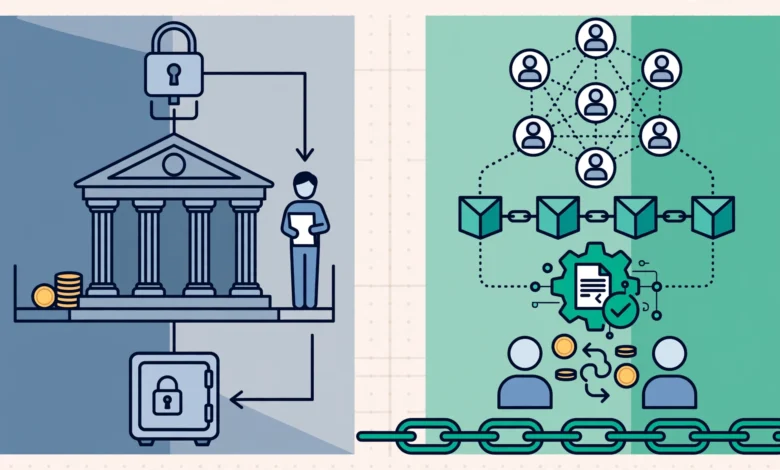
DeFi, short for decentralized finance, is one of those terms that gets thrown around a lot but rarely explained well. You hear that it will replace banks, that people are earning wild yields, or that someone just lost everything to a hack. All of those stories can be true at the same time, which is exactly why a clear, honest explanation matters.
At its core, DeFi is a way to lend, borrow, trade, and save money without a bank or broker in the middle. Instead of a company holding your funds and approving your transactions, computer programs called smart contracts run on a blockchain and follow rules that anyone can read. You keep control of your money through a crypto wallet, and the code does the rest.
That sounds simple, but there are a lot of moving parts underneath. Wallets, gas fees, stablecoins, liquidity pools, and governance tokens all play a role, and each one comes with its own trade-offs.
This beginner’s guide to DeFi walks you through everything step by step. You will learn what decentralized finance actually is, how DeFi works behind the scenes, how it compares to traditional banking, the most common ways people use it, the risks you need to understand, and seven practical steps to get started safely. No jargon without explanation, and no hype. Just the information you need to decide whether DeFi is right for you.
What Is DeFi? A Simple Definition
DeFi (decentralized finance) is a set of financial services that run on public blockchains instead of through banks, brokers, or payment companies. Think of it as finance rebuilt as open software. The rules for lending, trading, or earning interest are written into code, published for anyone to inspect, and executed automatically every time someone uses the service.
In traditional finance, you trust an institution. In DeFi, you trust code and math. A bank decides whether you can open an account, how much interest you earn, and when you can move your money. A DeFi app has no such gatekeeper. If you have a wallet and an internet connection, you can use it, whether you live in New York, Lagos, or Lahore.
The Core Ideas Behind Decentralized Finance
Most DeFi applications share a handful of principles:
- Permissionless access: Nobody needs approval to use a DeFi protocol. There are no account applications, credit checks, or minimum balances.
- Self-custody: You hold your own assets in a crypto wallet. The app never takes ownership of your funds the way a bank does.
- Transparency: Every transaction is recorded on a public blockchain ledger, so anyone can verify balances, loans, and trades.
- Composability: DeFi apps connect to each other like building blocks. A token you earn on one platform can be used as collateral on another within the same transaction. People often call this “money legos.”
- Always open: DeFi runs 24 hours a day, 365 days a year. There are no weekends, holidays, or banking hours.
A Short History of DeFi
The idea took shape after Ethereum launched in 2015 and made it possible to run programs, not just payments, on a blockchain. MakerDAO introduced the DAI stablecoin in 2017, Uniswap launched in 2018, and Compound sparked the 2020 “DeFi Summer” by rewarding users with governance tokens. Since then, DeFi has spread to Solana, BNB Chain, Arbitrum, Base, and many other networks.
Today DeFi is a serious market. As of early October 2026, the 100 largest DeFi protocols held roughly $249 billion in total value locked (TVL), according to DeFiLlama data compiled by Decentralized Finance Publication. That money sits in lending markets, staking services, exchanges, and stablecoin systems that run without a central operator.


DeFi vs Traditional Finance: Key Differences
The easiest way to understand DeFi is to compare it with the banking system you already know. Both let you save, borrow, and move money. The difference is who sits in the middle and what you have to trust.
| Feature | Traditional finance (TradFi) | DeFi |
|---|---|---|
| Who holds your money | A bank or broker | You, in your own wallet |
| Access | Requires ID, approval, and often a minimum balance | Anyone with a wallet and internet |
| Operating hours | Business days and banking hours | 24/7, every day of the year |
| Settlement speed | Hours to several days | Seconds to minutes |
| Transparency | Private internal records | Public blockchain anyone can audit |
| Interest rates | Set by the institution | Set by supply and demand in code |
| Consumer protection | Deposit insurance, chargebacks, support lines | Usually none; mistakes are hard to reverse |
| Loans | Based on credit score and income | Based on collateral you lock up |
Where DeFi Wins
Decentralized finance shines on access, speed, and openness. Someone without a bank account can earn interest on stablecoins. A small business can send money across borders in minutes instead of days. Developers can build new financial products without asking a bank for permission.
Where Traditional Finance Still Wins
Banks offer protections that DeFi simply does not have. If your card is stolen, you can dispute the charge. If a bank fails, deposit insurance usually covers you up to a limit. In DeFi, if you send funds to the wrong address or approve a malicious contract, there is no one to call. That responsibility is the price of control.
How Does DeFi Work? The Building Blocks Explained
To understand how DeFi works, picture a stack of layers. Your request starts at your wallet, passes through an app and its smart contracts, moves tokens, and is finally recorded on the blockchain. The result travels back up to your wallet.
Each layer has a specific job. Here is what each one does in plain terms.
Blockchain: The Settlement Layer
A blockchain is a shared public ledger maintained by thousands of independent computers. Once a transaction is confirmed, it is extremely hard to change. Ethereum is the largest home for DeFi, but Solana, BNB Chain, and layer 2 networks like Arbitrum and Base also host major apps. Every action costs a small gas fee, which pays the network for processing it.
Smart Contracts: The Engine of DeFi
Smart contracts are programs stored on the blockchain that run exactly as written. A lending contract might say: “If a user deposits $150 of ETH, let them borrow up to $100 of USDC. If the ETH falls below a set value, sell it to repay the loan.” Nobody has to approve the loan or chase repayment. The code handles it automatically, and anyone can read the rules before using it.
Tokens and Stablecoins: What Moves Through DeFi
DeFi deals in digital tokens. Some are volatile, like ETH or SOL. Others are stablecoins, such as USDC or USDT, which aim to stay worth one US dollar. Stablecoins are the backbone of DeFi because they let people lend, borrow, and trade without wild price swings.
Oracles: Bringing Real-World Data Onchain
Smart contracts cannot see the outside world on their own. Oracles like Chainlink and Pyth feed them live data such as asset prices. Without accurate oracles, a lending app would not know when a loan is undercollateralized.
Decentralized Applications (dApps): The Front Door
A dApp is the website or mobile app you actually use. It translates your clicks into blockchain transactions. The interface can go offline, but the underlying smart contracts keep running, so your funds remain accessible through other interfaces.
Wallets: Your Key to DeFi
A non-custodial wallet like MetaMask, Rabby, or Phantom stores the private keys that prove you own your assets. When you use a DeFi app, the wallet asks you to sign each transaction. That signature is your approval, so always read what you are signing.
Governance Tokens and DAOs
Many DeFi protocols are run by a DAO (decentralized autonomous organization). Holders of the protocol’s governance token vote on changes like fee levels or which assets to support. This spreads control across a community rather than a single company, though in practice large holders often have outsized influence.
What Can You Do With DeFi? Main Use Cases
DeFi covers almost everything a bank or brokerage does, plus a few things they cannot. Here are the most common DeFi use cases a beginner will run into.
1. DeFi Lending and Borrowing
DeFi lending platforms like Aave, Morpho, and Compound let you deposit crypto to earn interest or borrow against it. Lenders supply assets into a shared pool, and borrowers draw from it. Interest rates move automatically based on how much of the pool is being used.
One key detail: DeFi loans are overcollateralized. To borrow $1,000 in stablecoins, you might need to lock $1,500 or more in ETH. If the value of your collateral drops too far, the protocol sells part of it to repay the loan. This is called liquidation, and it is the biggest risk for borrowers.
2. Decentralized Exchanges (DEXs)
A decentralized exchange (DEX) lets you swap one token for another straight from your wallet. Instead of matching buyers and sellers through a company, most DEXs use liquidity pools. Users deposit pairs of tokens into a pool, and a formula called an automated market maker (AMM) sets the price. Uniswap, Curve, PancakeSwap, and Raydium are well-known examples.
People who deposit into these pools are called liquidity providers. They earn a share of trading fees, but they also face impermanent loss, which happens when the prices of the two tokens move apart.
3. Stablecoins
Stablecoins are the dollars of DeFi. Some, like USDC and USDT, are backed by cash and short-term government debt held by a company. Others, like DAI and USDS, are created onchain by locking crypto as collateral. Stablecoins make it possible to save, pay, and earn interest without exposure to crypto price swings.
4. Staking and Liquid Staking
Proof-of-stake blockchains like Ethereum pay rewards to people who lock up coins to help secure the network. Liquid staking services such as Lido give you a token, like stETH, that represents your staked ETH plus rewards. You can then use that token elsewhere in DeFi while it keeps earning.
5. Yield Farming
Yield farming means moving funds between DeFi protocols to earn the best return, often in the form of fees plus bonus tokens. It can be profitable, but it is also one of the riskiest corners of DeFi. Very high yields usually come from inflationary token rewards that fade quickly.
6. Derivatives and Perpetual Futures
Platforms like Hyperliquid, dYdX, and GMX offer perpetual futures, which let traders bet on price moves with leverage. These are powerful tools for experienced traders and dangerous ones for beginners, since leverage can wipe out a position in minutes.
7. Payments and Cross-Border Transfers
Sending stablecoins across the world takes minutes and often costs less than a dollar on fast networks. For freelancers, remote workers, and families sending money home, this is one of the most practical everyday uses of DeFi.
How to Get Started With DeFi in 7 Easy Steps
Ready to try DeFi for yourself? These seven steps take you from zero to your first transaction while keeping risk low. Go slowly. There is no prize for being fast, and most beginner losses come from rushing.
- Learn the basics first. Make sure you understand wallets, gas fees, and the difference between a stablecoin and a volatile token. Reading this guide is a good start.
- Set up a non-custodial wallet. Download a trusted wallet like MetaMask or Rabby for Ethereum-based chains, or Phantom for Solana, only from the official website or app store. Write your seed phrase on paper and store it somewhere safe and offline. Never type it into a website or share it with anyone.
- Buy crypto on a reputable exchange. Purchase a small amount of ETH, SOL, or USDC on a regulated exchange that is licensed in your country. You will need a little of the network’s native coin to pay gas fees.
- Send funds to your wallet. Withdraw to your wallet address and start with a tiny test amount. Double-check the address and make sure you choose the correct network. Sending on the wrong chain is a common and costly mistake.
- Pick a well-established DeFi app. Begin with large, audited protocols that have years of history, such as Aave for lending or Uniswap for swaps. Bookmark the real website so you never land on a fake copy from a search ad.
- Make your first small transaction. Try a simple swap or supply a small amount of stablecoins to earn interest. Read every wallet prompt carefully before you sign, and check the gas fee.
- Track, review, and stay secure. Use a portfolio tracker to watch your positions, revoke token approvals you no longer need, and move larger amounts to a hardware wallet. Keep learning before trying riskier strategies like leverage or yield farming.
Tips to Save on Gas Fees
Ethereum mainnet fees can make small transactions expensive. Beginners often start on cheaper layer 2 networks like Arbitrum, Base, or Optimism, or on fast chains like Solana, where most transactions cost cents. The same major DeFi apps are usually available there too.
Benefits and Risks of DeFi
DeFi is neither a scam nor a guaranteed path to riches. It is a powerful set of tools with real upside and real danger. Knowing both sides is what separates careful users from people who get burned.
Benefits of DeFi
- Open to everyone: No bank account, credit history, or paperwork required. This matters for the more than a billion adults worldwide who remain unbanked or underbanked.
- Full control of your assets: With self-custody, no company can freeze your funds or block a withdrawal.
- Transparency: Rules and balances are public, so you can verify how a protocol works instead of taking a company’s word for it.
- Speed and global reach: Transactions settle in seconds to minutes, across borders, at any hour.
- Competitive yields: Interest on stablecoins in DeFi has often been higher than typical bank savings rates, though rates change constantly.
- Innovation: Because DeFi apps can plug into each other freely, new products appear faster than in traditional finance.
Risks of DeFi
- Smart contract bugs: A flaw in the code can be exploited, and stolen funds are rarely recovered. Audits lower the risk but cannot remove it.
- Scams and phishing: Fake websites, malicious airdrops, and wallet drainers cause more beginner losses than protocol hacks. Never sign something you do not understand.
- Liquidation: If you borrow and your collateral falls in value, you can lose part of it quickly.
- Price volatility: Many tokens can drop 50% or more in a short time.
- Stablecoin depegs: Some stablecoins have lost their dollar peg during market stress, and a few collapsed entirely.
- No safety net: There is no deposit insurance, no chargeback, and no customer support line that can reverse a mistake.
- Regulatory uncertainty: Laws around DeFi are still evolving and differ widely by country.
How to Reduce Your DeFi Risk
Start small, stick with established protocols, use a hardware wallet for larger balances, and spread funds across more than one platform. Treat any yield that looks unusually high as a warning sign, not an opportunity. The Ethereum.org guide to decentralized finance is a helpful, neutral resource for checking your understanding before you commit real money.
Is DeFi Regulated? The Legal Picture
DeFi lives in a legal gray zone that is slowly getting clearer. Most governments regulate the on-ramps, meaning the exchanges where you convert local currency into crypto, much more strictly than the protocols themselves.
- United States: The GENIUS Act, signed in July 2025, created the first federal framework for payment stablecoins. Lawmakers are still debating broader rules for crypto markets and how they apply to DeFi.
- European Union: The MiCA regulation covers crypto asset service providers and stablecoin issuers. Fully decentralized protocols are mostly outside its scope for now, but that could change.
- Elsewhere: Rules range from welcoming frameworks in places like the UAE and Singapore to tight restrictions in others. Always check the laws and tax rules in your own country before using DeFi.
Tax is the part beginners forget most often. In many countries, swapping one token for another, earning interest, or receiving rewards can count as a taxable event. Keep records of every transaction.
The Future of DeFi
The next phase of decentralized finance looks less like a casino and more like infrastructure. A few trends stand out:
- Real-world assets (RWAs): Tokenized Treasury bills, money market funds, and even stocks are moving onchain and being used inside DeFi apps.
- Institutional adoption: Banks, asset managers, and fintech apps are quietly building on DeFi rails, often hiding the complexity from end users.
- Better user experience: Smart wallets, passkeys, and gas-free transactions are making DeFi feel more like a normal banking app.
- Revenue over hype: Protocols that earn real fees and share them with token holders are gaining favor over projects that rely on token giveaways.
- Stronger security: Formal verification, better audits, and onchain insurance are slowly reducing the frequency of large hacks.
None of this guarantees success, but it suggests DeFi is moving from an experiment to a lasting part of the financial system.
Frequently Asked Questions About DeFi
What is DeFi in simple terms?
DeFi is financial services like lending, borrowing, and trading that run on blockchain software instead of banks. You use them directly from your own crypto wallet.
Is DeFi safe for beginners?
DeFi can be used safely, but it is never risk-free. Beginners should start with small amounts, stick to well-known protocols, and learn to spot phishing scams before doing anything complex.
How do people make money with DeFi?
The most common ways are lending assets for interest, providing liquidity to a DEX for trading fees, and staking tokens for network rewards. Each method carries its own risks.
Do I need a lot of money to start with DeFi?
No. You can start with a few dollars on a low-fee network. On Ethereum mainnet, gas fees can make very small transactions uneconomical, so layer 2 networks are often a better starting point.
What is the difference between DeFi and crypto?
Crypto refers to digital assets like Bitcoin and ETH. DeFi refers to the financial applications built on top of blockchains that let you do things with those assets, such as lend, swap, or earn yield.
Can I lose all my money in DeFi?
Yes, it is possible. Hacks, scams, liquidations, and token crashes can all cause major losses. Only invest what you can afford to lose and spread your risk.
What is a DeFi protocol?
A DeFi protocol is the set of smart contracts that power a specific service, such as Aave for lending or Uniswap for trading. The website you visit is just an interface to that protocol.
Conclusion
DeFi takes the core services of banking, such as saving, lending, borrowing, and trading, and rebuilds them as open software on public blockchains. It works through a stack of layers: your wallet signs a request, a dApp packages it, smart contracts enforce the rules, tokens and stablecoins move, and the blockchain records the result for good. That design gives you round-the-clock access, full control of your money, and transparency no bank can match, but it also removes the safety nets of deposit insurance and customer support, leaving you exposed to bugs, scams, liquidations, and volatility. If you approach decentralized finance the way this guide suggests, learning the basics first, starting small on trusted protocols, guarding your seed phrase, and treating high yields with suspicion, you can use DeFi with confidence and decide for yourself how big a role it should play in your financial life.