NFT Artists to Follow in 2026: 10 Best and Most Inspiring Creators
NFT artists worth following in 2026, from Beeple to Tyler Hobbs. See who shapes digital art, what makes each one stand out, and how to collect wisely.
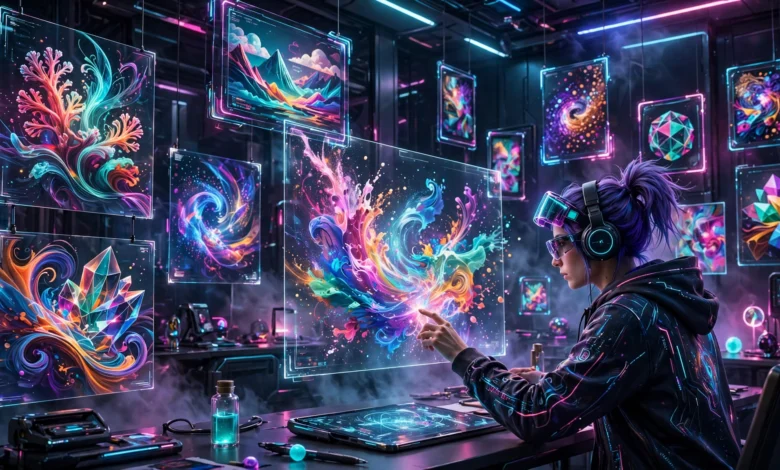
NFT artists have had a strange few years. In 2021, almost anyone with a JPEG and a Discord server could sell out a collection. Then the market cooled hard, prices fell, and many projects disappeared. What was left behind is more interesting than the hype ever was: a smaller, more serious community of digital artists who kept making work because they cared about it, not because it was trending.
Those are the people worth paying attention to now. Some are pioneers who helped define crypto art in the first place. Others are generative artists writing code that produces thousands of unique pieces. A few are pushing into AI, data, and physical installations that museums are starting to collect. Together, they show where digital art is actually heading once you look past floor prices.
This guide covers ten NFT artists to follow this year. For each one, you will get a short background, the work they are best known for, and why they still matter in 2026. You will also find a comparison table, a few rising names to keep on your radar, and practical tips for following and collecting without getting burned.
Whether you are a collector, an artist looking for inspiration, or just curious about where NFTs ended up, this list is a good place to start. No technical background needed, just an interest in art that lives on the blockchain.
Where NFT Artists Stand in 2026
The market for NFT artists looks very different from the 2021 boom. Trading volume is far below its peak, and many profile-picture projects that once sold for six figures now trade for a fraction of that. Christie’s even closed its dedicated digital art department in September 2025, calling it a strategic reformatting of how it sells digital work.
But digital art itself has not gone anywhere. If anything, it has moved closer to the mainstream art world. Art Basel launched Zero 10, a section dedicated to digital and new media art, and its leadership has described digital art as integral to how the market is evolving. According to the Art Basel and UBS Survey of Global Collecting, digital art now ranks third after painting and sculpture in total spending among high-net-worth collectors, and 51% of respondents bought a digital artwork in 2024 or 2025.
What Has Changed for Digital Artists
- Quality over hype: collectors now focus on artistic merit, provenance, and the artist’s track record instead of quick flips.
- Museums and fairs are paying attention: institutions are adding crypto art and generative art to their collections and exhibitions.
- Physical meets digital: many top artists now pair NFTs with prints, sculptures, robotics, or immersive installations.
- AI is part of the conversation: some of the most talked-about artists work with machine learning and large datasets.
- Royalties are less reliable: several marketplaces made creator royalties optional, so artists depend more on primary sales and strong collector relationships.
How We Picked These NFT Artists
This is not a ranking by all-time sales. Each artist on the list was chosen on a mix of factors:
- Influence: did they shape how people make or think about digital art?
- Current activity: are they still releasing work, exhibiting, or building in 2026?
- Artistic identity: is their style instantly recognizable?
- Recognition beyond crypto: have museums, galleries, or major auction houses taken their work seriously?
- Range: together, the list covers 1/1 artists, generative art pioneers, AI artists, and illustrators.
The result is a mix of household names and artists who are better known inside the community than outside it. All of them are worth following, whether you collect or not.
Top 10 NFT Artists to Follow This Year
Here are the ten NFT artists worth keeping on your radar in 2026. Each profile covers who they are, their signature work, and why they still matter right now.
1. Beeple (Mike Winkelmann)
If one name made the world pay attention to crypto art, it is Beeple. The South Carolina graphic designer spent over a decade posting a new image every single day, and in 2021 his collage Everydays: The First 5000 Days sold at Christie’s for more than $69 million. That sale put him among the most valuable living artists overnight.
What keeps Beeple on this list is that he did not stop there. His latest project, Regular Animals, is a pack of robot dogs wearing hyper-realistic heads of figures like Elon Musk, Mark Zuckerberg, Andy Warhol, and Pablo Picasso. The dogs film their surroundings, process the images through AI, and print them out of their rear ends. The pack sold out during the VIP preview at Art Basel Miami Beach and later went on view at Berlin’s Neue Nationalgalerie in spring 2026.
Why follow Beeple:
- Sharp, often uncomfortable satire about tech, power, and media
- A rare digital-native artist now showing in major museums
- Constantly experimenting with physical-digital hybrids
2. Refik Anadol
Refik Anadol turns huge datasets into flowing, almost liquid images that feel alive. Born in Istanbul and based in Los Angeles, he is one of the best-known AI art pioneers, and his large projections have appeared on buildings, at MoMA, and in galleries around the world.
In June 2026, he and studio co-founder Efsun Erkılıç opened DATALAND, billed as the world’s first museum of AI arts, inside the Frank Gehry-designed Grand LA complex. Its opening show, Machine Dreams: Rainforest, uses AI trained on ecological data to create an immersive, constantly changing environment.
Why follow Refik Anadol:
- He is shaping how museums present AI and digital art
- His work bridges NFTs, public installations, and institutions
- DATALAND gives him a permanent platform for new experiments
3. Tyler Hobbs
Tyler Hobbs is one of the most important generative art voices of the NFT era. A former software engineer from Texas, he writes algorithms that produce artwork, often using “flow fields” that guide curving shapes across a canvas.
His 999-piece collection Fidenza, released on Art Blocks in 2021, is widely credited with turning long-form generative art into a serious collecting category. He later co-created QQL, a collaborative generative tool, and turned its outputs into paintings for a solo show at Pace Gallery in New York. Fidenza turned five in June 2026, and Hobbs continues to show physical and digital work, including at Art Basel Miami Beach.
Why follow Tyler Hobbs:
- A defining figure in on-chain generative art
- Moves comfortably between code, plotters, and paint
- Respected by both crypto collectors and traditional galleries
4. XCOPY
XCOPY is a pseudonymous London-based artist known for glitchy, flickering GIFs filled with skulls, dark humor, and themes of death and dystopia. Active on the blockchain since 2018, XCOPY is often seen as the purest example of a crypto-native artist: anonymous, unfiltered, and deeply tied to early NFT culture.
Works like Right-click and Save As guy became iconic symbols of the NFT debate. XCOPY is still releasing work, including Mission Creep, a 250-edition piece made with Lewis Osborne in June 2026.
Why follow XCOPY:
- A cult figure with one of the most loyal collector bases in crypto art
- A distinctive, instantly recognizable visual style
- Living history of the NFT movement
5. Pak
Pak is an anonymous digital artist who treats the blockchain itself as a creative medium. Rather than simply minting images, Pak designs systems where collectors’ actions change the artwork. The Merge, sold on Nifty Gateway in December 2021, let buyers purchase “mass” units that combined into single growing objects, and it raised about $91.8 million from thousands of collectors.
Pak’s work asks big questions about value, scarcity, and what owning digital art actually means. That conceptual approach is why many NFT collectors consider Pak one of the most original artists the medium has produced.
Why follow Pak:
- Pushes the technical limits of what an NFT can be
- Uses smart contracts as part of the art, not just a sales tool
- Every release tends to spark debate across the community
6. Dmitri Cherniak
Dmitri Cherniak is a Canadian-born generative artist whose work is clean, minimal, and built around a single idea explored in depth. His most famous series, Ringers, imagines every possible way to wrap a string around a set of pegs, then lets an algorithm render those patterns.
Ringers became one of the most admired collections on Art Blocks, and one piece, Ringers #109 (nicknamed “The Goose”), sold at Sotheby’s in 2023 for about $6.2 million. That result helped prove that generative art could command top prices at traditional auction houses.
Why follow Dmitri Cherniak:
- A master of minimal, concept-driven code art
- Proven appeal with both crypto collectors and blue-chip auction buyers
- Focuses on automation as an artistic theme
7. Sam Spratt
Sam Spratt is a painter and illustrator who worked on album art for musicians, including Childish Gambino and Kanye West and Kid Cudi’s Kids See Ghosts, before moving into 1/1 NFTs. His digital paintings look like Renaissance oil work, rich with detail and symbolism.
Spratt is best known for his ongoing Luci storyline, a series of paintings set in a shared fictional world. He pairs each major release with interactive “monument games” where collectors interpret the painting and earn pieces of the story. That blend of fine art and community storytelling makes him one of the most engaging digital artists working on-chain.
Why follow Sam Spratt:
- Stunning traditional painting skills in a digital medium
- Creative ways to involve collectors in the work itself
- A long-running narrative that rewards close attention
8. Claire Silver
Claire Silver is a self-described collaborative AI artist who has become one of the most recognized names in AI-assisted art. Her dreamy, often figurative works are made in dialogue with machine learning tools, and she has been vocal about AI giving people who could never use traditional tools a way to create.
Her work has entered major institutional collections, including LACMA, and she has run AI art contests that helped spotlight emerging creators. As debates over AI and authorship heat up, Silver is one of the clearest voices arguing for AI as a genuine artistic medium.
Why follow Claire Silver:
- A leading voice on AI and creativity
- Museum recognition for AI-assisted art
- Supports and promotes other emerging artists
9. FEWOCiOUS (Victor Langlois)
FEWOCiOUS is a young artist whose bright, chaotic, emotional style draws on personal experience, including his story of coming out as a trans teenager. He became one of the breakout stars of the NFT boom when a Christie’s sale of his work in 2021 brought in over $2 million while he was still a teenager.
FEWOCiOUS has since built a brand that spans NFTs, physical paintings, sculptures, and fashion collaborations. His work speaks to a younger, internet-native audience, which makes him one of the most influential famous NFT artists among Gen Z collectors.
Why follow FEWOCiOUS:
- A deeply personal, recognizable visual voice
- Strong pull with a younger generation of collectors
- Works across digital, physical, and fashion
10. Snowfro (Erick Calderon)
Erick Calderon, known as Snowfro, is both an artist and an infrastructure builder. He founded Art Blocks, the platform that launched many of the generative collections on this list, including Fidenza and Ringers. His own project, Chromie Squiggle, a set of colorful generated squiggles, was the first collection ever released on Art Blocks.
Chromie Squiggles have become an emblem of the generative art movement, and many collectors view them as a foundational piece of NFT history. Snowfro’s influence goes far beyond his own art, since Art Blocks shaped how an entire generation of code-based artists release their work.
Why follow Snowfro:
- Built the platform behind modern on-chain generative art
- Chromie Squiggle is a historically significant collection
- Still a central figure in the generative art community
NFT Artists Compared at a Glance
This quick table sums up how each artist works and what they are best known for.
| Artist | Style | Signature Work | Best For Collectors Who Like |
|---|---|---|---|
| Beeple | Digital satire, sculpture, robotics | Everydays, Regular Animals | Bold commentary and art-world history |
| Refik Anadol | AI and data visualization | Machine Dreams, DATALAND | Immersive, museum-scale work |
| Tyler Hobbs | Generative art | Fidenza, QQL | Code-based art with painterly feel |
| XCOPY | Glitch art, dark humor | Right-click and Save As guy | Crypto-native culture |
| Pak | Conceptual, smart contract art | The Merge | Big ideas about value and ownership |
| Dmitri Cherniak | Minimal generative art | Ringers | Clean, concept-driven design |
| Sam Spratt | Digital painting, storytelling | Luci series | Fine art detail and narrative |
| Claire Silver | Collaborative AI art | AI-assisted portraits | The future of AI creativity |
| FEWOCiOUS | Expressive illustration | Christie’s 2021 sale | Youthful, personal, colorful work |
| Snowfro | Generative art, platform builder | Chromie Squiggle | NFT history and foundations |
Rising NFT Artists to Watch
The ten names above are established. If you want to catch the next wave early, these digital artists are also worth a look:
- Emily Xie: a generative artist known for textured, textile-like compositions inspired by traditional art forms.
- Kim Asendorf: a German glitch and pixel-sorting pioneer whose work keeps showing up in major digital art shows.
- Justin Aversano: a photographer best known for Twin Flames, who continues to exhibit in digital art galleries in New York.
- Emerging Tezos artists: the Tezos blockchain, with its low fees, remains home to a large community of experimental artists selling affordable editions.
How to Follow and Collect From NFT Artists
Following NFT artists is easy. Collecting their work takes a bit more care. Here is how to do both well.
Where to Follow NFT Artists
- X (formerly Twitter): still the main place where most NFT artists announce drops and share new work.
- Farcaster: a decentralized social network popular with many crypto-native creators.
- Newsletters and digests: marketplace blogs and art publications round up new releases each week.
- Exhibitions and fairs: Art Basel’s Zero 10 section, digital art galleries, and museum shows are great ways to see work in person.
Where to Buy NFT Art
Most work by top NFT artists sells through a handful of platforms:
- OpenSea: the largest general NFT marketplace, with a huge range of art and collectibles.
- SuperRare: focused on curated single-edition, or 1/1, artworks.
- Art Blocks: the home of long-form generative art collections.
- Foundation and objkt.com: popular with independent artists, with objkt serving the Tezos community.
- Auction houses: Sotheby’s and other houses still run digital art sales for high-end pieces.
Tips for Collecting Safely
- Verify the artist’s official accounts and contract addresses before you buy. Fake collections that copy famous artists are common.
- Buy what you love. Prices for even famous NFT artists can swing wildly, so treat art as art first, not as an investment.
- Use a hardware wallet for valuable pieces, and never share your seed phrase.
- Check where the art is stored. On-chain or decentralized storage, like IPFS or Arweave, is more durable than a regular web server.
- Read the license. Owning an NFT usually does not give you copyright or commercial rights unless the artist says so.
FAQs About NFT Artists
Who is the most famous NFT artist?
Beeple is the most widely known, thanks to his $69 million sale at Christie’s in 2021. In terms of total sales from a single release, Pak’s The Merge raised even more, but Beeple remains the name most people outside crypto recognize.
Are NFT artists still making money in 2026?
Yes, though the market is smaller and more selective than in 2021. Established NFT artists earn from primary drops, physical works, exhibitions, and commissions. Royalties on resales are less reliable now because several marketplaces made them optional.
How do I find new NFT artists to follow?
Start with curated platforms like SuperRare and Art Blocks, follow collectors and curators you trust on X and Farcaster, and visit digital art sections at fairs such as Art Basel. Many emerging NFT artists also get discovered through themed group shows and artist-led collaborations.
Is buying NFT art a good investment?
It can be risky. Prices for digital art can rise or fall sharply, and many collections from the boom years lost most of their value. The safest approach is to buy work you genuinely like from artists with a real track record, and only spend what you are comfortable losing.
What is the difference between generative art and 1/1 NFT art?
Generative art is created by an algorithm the artist writes, usually producing many unique outputs in one collection. 1/1 NFTs are single, one-of-a-kind pieces, often hand-made digital paintings or animations.
Conclusion
NFT artists have come out of the boom and bust with a clearer purpose, and the ten creators in this guide show where digital art is heading in 2026: Beeple and Refik Anadol are taking crypto-born ideas into museums and immersive spaces, Tyler Hobbs, Dmitri Cherniak, and Snowfro have made generative art a respected collecting category, XCOPY and Pak keep pushing the culture and concept of on-chain art, and Sam Spratt, Claire Silver, and FEWOCiOUS bring painting, AI, and personal storytelling into the mix. Whether you collect or simply enjoy the work, following these NFT artists is one of the best ways to understand how art, technology, and ownership are changing, as long as you approach buying with care, verify what you purchase, and choose art you truly connect with.