Bitcoin ETF Guide How to Invest in Bitcoin Through Traditional Markets
Learn how to invest in Bitcoin ETFs through traditional markets. Complete guide covering types, benefits, risks, and step-by-step investment strategies.

Bitcoin ETFs have completely changed how everyday investors can get exposure to cryptocurrency without the headaches of managing digital wallets or worrying about security breaches. If you’ve been curious about Bitcoin but felt overwhelmed by the technical side of buying and storing it, exchange-traded funds offer a familiar path forward through your regular brokerage account.
The approval of spot Bitcoin ETFs in early 2024 marked a turning point for cryptocurrency investing in traditional markets. These funds let you invest in Bitcoin the same way you’d buy shares of Apple or an S&P 500 index fund. You don’t need to set up a crypto wallet, remember complicated passwords, or stress about losing your private keys. Your Bitcoin ETF shares sit right alongside your other investments, tracked on the same tax forms you already know.
This guide walks you through everything you need to understand about Bitcoin ETF investing. We’ll cover what these funds actually are, the different types available, how they compare to buying Bitcoin directly, and exactly how to start investing through your brokerage account. Whether you’re a traditional investor looking to add crypto exposure or a Bitcoin enthusiast wanting a simpler approach, this comprehensive resource will help you make informed decisions about investing in Bitcoin through traditional markets.
What Is a Bitcoin ETF?
A Bitcoin ETF (exchange-traded fund) is an investment vehicle that tracks the price of Bitcoin and trades on traditional stock exchanges like the NYSE or Nasdaq. Instead of buying Bitcoin directly from a cryptocurrency exchange, you purchase shares of the ETF through your regular brokerage account.
Think of it this way: when you buy shares of a Bitcoin exchange-traded fund, the fund itself owns the actual Bitcoin (in the case of spot ETFs) or Bitcoin futures contracts. Your shares represent a portion of that Bitcoin holding. The ETF’s price moves up and down based on Bitcoin’s market value, giving you exposure to Bitcoin price movements without directly owning the cryptocurrency.
How Bitcoin ETFs Work
Bitcoin ETFs operate similarly to other exchange-traded funds you might already own:
- The fund manager purchases and holds Bitcoin (or Bitcoin-related assets)
- Shares of the fund trade on stock exchanges during regular market hours
- The share price reflects the underlying value of the Bitcoin holdings
- Investors can buy and sell shares through any brokerage account
- The fund charges an annual management fee (expense ratio)
The key difference between a Bitcoin ETF and directly owning Bitcoin is custody. With the ETF, you never hold the actual cryptocurrency. The fund’s custodian handles all storage and security, which removes the technical barriers that stop many people from investing in Bitcoin.
Types of Bitcoin ETFs
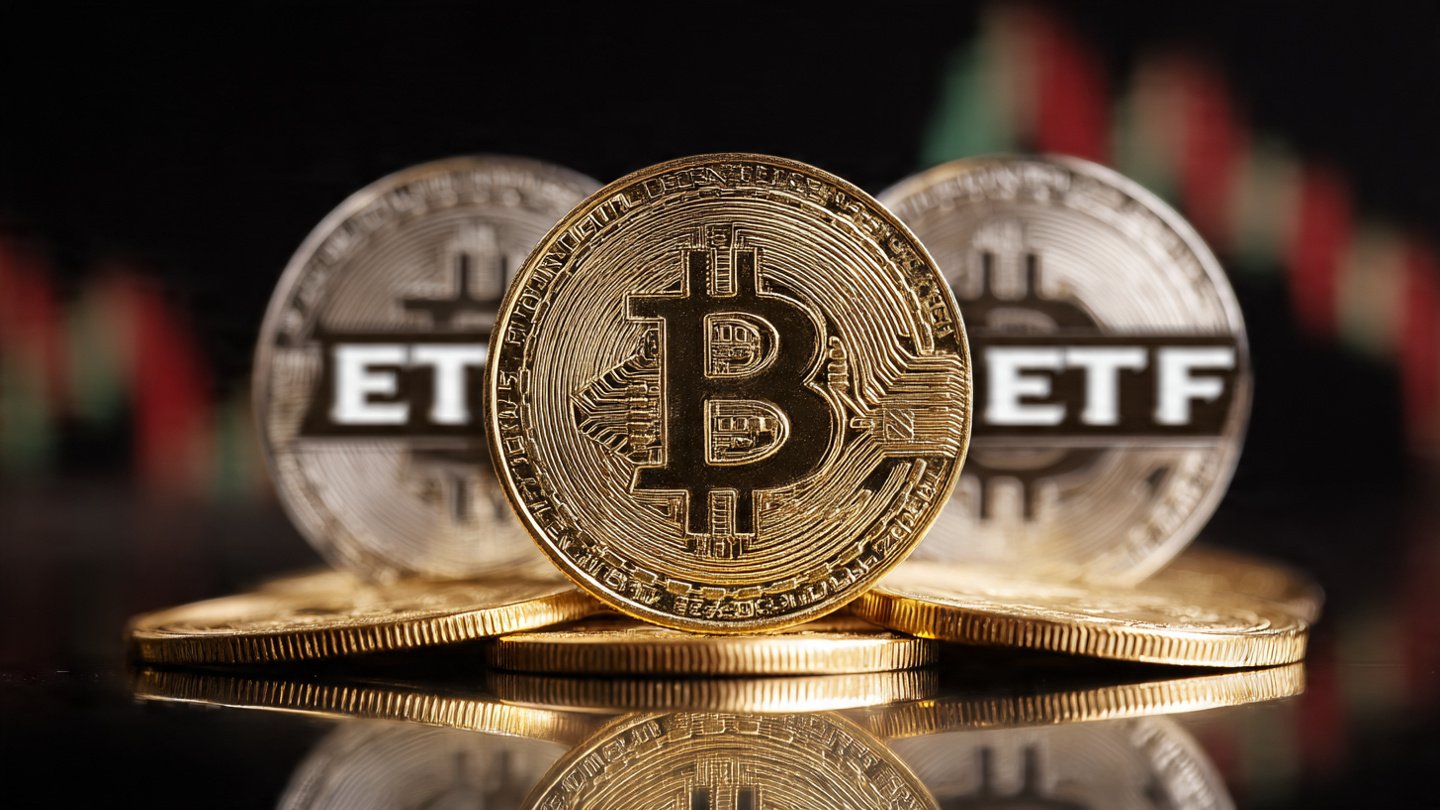
Not all Bitcoin ETFs are created equal. Understanding the different types helps you choose the right investment for your goals.


Spot Bitcoin ETFs
Spot Bitcoin ETFs directly purchase and hold actual Bitcoin. When you invest in a spot ETF, the fund buys Bitcoin at the current market price and stores it in secure custody. These funds provide the most direct exposure to Bitcoin’s price movements.
The U.S. Securities and Exchange Commission approved the first spot Bitcoin ETFs in January 2024, with options from major financial institutions including:
- BlackRock’s iShares Bitcoin Trust (IBIT)
- Fidelity Wise Origin Bitcoin Fund (FBTC)
- Grayscale Bitcoin Trust (GBTC)
- ARK 21Shares Bitcoin ETF (ARKB)
- Bitwise Bitcoin ETF (BITB)
These spot Bitcoin ETFs generally have lower expense ratios than futures-based alternatives and track Bitcoin’s price more accurately since they hold the actual asset.
Bitcoin Futures ETFs
Bitcoin futures ETFs don’t hold actual Bitcoin. Instead, they invest in Bitcoin futures contracts, which are agreements to buy or sell Bitcoin at a predetermined price on a future date. These were the first Bitcoin ETF products available to U.S. investors, launching in October 2021.
Examples include the ProShares Bitcoin Strategy ETF (BITO) and the Valkyrie Bitcoin Strategy ETF (BTF). While futures-based funds offered early access to Bitcoin exposure, they come with some drawbacks:
- Higher expense ratios (often 0.95% or more)
- Tracking error due to “contango” in futures markets
- More complexity in how the fund operates
- Generally underperform spot Bitcoin over longer periods
For most investors, spot Bitcoin ETFs represent a better choice now that they’re available.
Leveraged and Inverse Bitcoin ETFs
Some Bitcoin ETFs use leverage to amplify returns or bet against Bitcoin’s price:
- Leveraged Bitcoin ETFs aim to deliver 2x or 3x the daily return of Bitcoin
- Inverse Bitcoin ETFs profit when Bitcoin’s price falls
These products are designed for short-term trading, not long-term investing in Bitcoin. The daily rebalancing mechanism means they don’t track Bitcoin’s performance accurately over longer periods. Unless you’re an experienced trader with a specific short-term strategy, avoid these complex products.
Benefits of Investing in Bitcoin ETFs
Bitcoin ETFs solve several pain points that have kept traditional investors away from cryptocurrency markets.
Simplicity and Familiarity
You can buy Bitcoin ETF shares through the same brokerage account you use for stocks and bonds. There’s no need to:
- Set up accounts on cryptocurrency exchanges
- Learn how crypto wallets work
- Manage private keys or seed phrases
- Transfer funds between different platforms
This simplicity matters. According to a Charles Schwab survey, one of the top barriers preventing investors from buying cryptocurrency is the complexity of the process. Bitcoin ETFs remove that barrier entirely.
Enhanced Security
When you own Bitcoin directly, you’re responsible for securing it. Stories of people losing access to millions of dollars worth of Bitcoin because they lost their password or hard drive are unfortunately common. With a Bitcoin ETF, professional custodians handle security using institutional-grade storage solutions.
Your ETF shares are also protected by the same regulations that cover your other brokerage assets, including Securities Investor Protection Corporation (SIPC) insurance for your brokerage account (though this doesn’t protect against Bitcoin price declines).
Tax Simplification
Investing in Bitcoin directly creates tax headaches. Every time you spend, sell, or trade cryptocurrency, it’s a taxable event that you need to track and report. With a Bitcoin ETF, you receive standard 1099 tax forms from your broker, just like your other investments.
You only owe taxes when you sell your ETF shares, and the gains are treated as capital gains, the same as stocks. This dramatically simplifies tax reporting and compliance.
Regulatory Oversight
Bitcoin ETFs operate under Securities and Exchange Commission oversight. While this doesn’t eliminate investment risk, it does provide:
- Transparent reporting requirements
- Regular audits
- Clear regulatory frameworks
- Investor protections against fraud
This regulatory structure gives many traditional investors greater confidence compared to the less regulated cryptocurrency exchange environment.
Portfolio Integration
Bitcoin ETFs fit seamlessly into existing investment portfolios. You can:
- Hold them in retirement accounts like IRAs and 401(k)s
- Include them in automated rebalancing strategies
- View all your investments in one place
- Use familiar order types (market, limit, stop-loss)
This integration makes it much easier to manage Bitcoin exposure as part of a diversified investment strategy.
Drawbacks and Risks of Bitcoin ETFs
While Bitcoin ETFs offer significant advantages, they’re not perfect. Understanding the limitations helps you make better investment decisions.
Management Fees
Every Bitcoin ETF charges an annual expense ratio, typically ranging from 0.20% to 0.95%. While this might seem small, it adds up over time. If you invest $10,000 in a Bitcoin ETF with a 0.25% expense ratio, you’ll pay $25 per year in fees.
When you own Bitcoin directly on a cryptocurrency exchange, you pay trading fees when buying and selling, but there are no ongoing annual charges. For long-term holders, the cumulative ETF fees can become significant.
Limited Trading Hours
Bitcoin ETFs only trade during regular stock market hours (9:30 AM to 4:00 PM Eastern time on weekdays). Bitcoin itself trades 24/7/365. This creates two problems:
- You can’t react to news or price movements that happen overnight or on weekends
- The ETF price can gap up or down at market open based on Bitcoin’s moves while markets were closed
If you want the flexibility to trade at any time, directly owning Bitcoin gives you that option.
No Direct Ownership
When you invest in a Bitcoin ETF, you own shares of a fund, not actual Bitcoin. This means you can’t:
- Transfer Bitcoin to another wallet
- Use Bitcoin for purchases or transactions
- Participate directly in the Bitcoin network
For some investors, direct ownership of Bitcoin is important for philosophical or practical reasons. Bitcoin ETFs don’t provide that.
Tracking Error
While spot Bitcoin ETFs track Bitcoin’s price closely, they’re never perfect. Small discrepancies can occur due to:
- Management fees reducing returns
- Cash holdings for liquidity
- Timing differences in net asset value calculations
Bitcoin futures ETFs have even larger tracking errors due to the mechanics of rolling futures contracts. Over longer periods, futures-based ETFs have significantly underperformed the actual price of Bitcoin.
Counterparty Risk
Although minimal with reputable Bitcoin ETF providers, you do face some counterparty risk. You’re trusting that:
- The fund actually holds the Bitcoin it claims to
- The custodian properly secures those assets
- The fund operates according to its stated strategy
With direct Bitcoin ownership, you eliminate these intermediaries (though you take on the risk of securing the Bitcoin yourself).
How to Choose the Right Bitcoin ETF
With multiple Bitcoin ETFs available, selecting the best one for your situation requires comparing several factors.
Expense Ratio
The expense ratio directly impacts your returns. A fund charging 0.20% will outperform an identical fund charging 0.95% by 0.75% annually, all else being equal. For spot Bitcoin ETFs, expense ratios currently range from 0.20% to 1.50%.
Leading Bitcoin ETFs by expense ratio include:
- Bitwise Bitcoin ETF (BITB): 0.20%
- Franklin Bitcoin ETF (EZBC): 0.19%
- Fidelity Wise Origin Bitcoin Fund (FBTC): 0.25%
- BlackRock’s iShares Bitcoin Trust (IBIT): 0.25%
Fund Size and Liquidity
Larger Bitcoin ETFs typically offer:
- Tighter bid-ask spreads (lower trading costs)
- Better liquidity for entering and exiting positions
- Greater operational stability
The largest spot Bitcoin ETFs by assets under management are currently IBIT and FBTC, each managing tens of billions of dollars. Larger fund size generally indicates stronger investor confidence and better trading characteristics.
Tracking Accuracy
Review how closely the Bitcoin ETF tracks the actual price of Bitcoin. You can find this information by comparing the fund’s returns to Bitcoin’s price movement over various timeframes. Spot Bitcoin ETFs should track very closely, while futures-based funds will show more deviation.
Provider Reputation
Consider the track record and reputation of the fund provider. Established financial institutions like BlackRock, Fidelity, and Invesco bring decades of ETF management experience. Newer providers focused specifically on crypto, like Bitwise and Grayscale, offer specialized expertise in digital assets.
Both approaches have merit. The key is choosing a provider with:
- Strong regulatory compliance history
- Transparent operations
- Robust security measures
- Clear communication with investors
Tax Efficiency
All spot Bitcoin ETFs are structured similarly for tax purposes, so this is less of a differentiator. However, be aware that:
- Bitcoin futures ETFs may generate taxable events through futures contracts even if you don’t sell shares
- Some funds may be more tax-efficient in retirement accounts vs. taxable accounts
Consult with a tax professional if tax efficiency is a primary concern for your Bitcoin ETF investing strategy.
Step-by-Step Guide: How to Invest in Bitcoin ETFs
Investing in Bitcoin ETFs is straightforward if you already have a brokerage account. Here’s exactly how to get started.
Step 1: Open a Brokerage Account
If you don’t already have one, you’ll need a brokerage account. Popular options include:
- Fidelity
- Charles Schwab
- Vanguard
- TD Ameritrade
- E*TRADE
- Robinhood
Choose a broker that offers:
- Commission-free ETF trading
- User-friendly platform
- Good customer service
- Access to the specific Bitcoin ETFs you want
Opening an account takes 10-15 minutes and requires basic personal information, your Social Security number, and bank account details for funding.
Step 2: Fund Your Account
Transfer money from your bank account to your brokerage account. Most brokers offer several funding methods:
- Electronic bank transfer (ACH): Free, takes 1-3 business days
- Wire transfer: Faster but may have fees
- Check deposit: Slower option
Start with an amount you’re comfortable investing in Bitcoin. Many experts recommend limiting cryptocurrency exposure to 5-10% of your total investment portfolio due to Bitcoin’s volatility.
Step 3: Research and Select Your Bitcoin ETF
Review the available Bitcoin ETFs using the criteria we discussed earlier. Compare:
- Expense ratios
- Fund size and trading volume
- Tracking accuracy
- Provider reputation
For most investors, one of the major spot Bitcoin ETFs like IBIT, FBTC, or BITB makes the most sense. These offer low fees, strong liquidity, and direct Bitcoin exposure.
Step 4: Place Your Order
Once you’ve selected your Bitcoin ETF:
- Search for the ETF’s ticker symbol (e.g., IBIT, FBTC, BITB)
- Review the current price and recent performance
- Decide how many shares to purchase based on your investment amount
- Choose your order type:
- Market order: Buys immediately at current price
- Limit order: Buys only at your specified price or better
- Review and submit your order
For most Bitcoin ETF purchases, a market order during regular trading hours works fine given the high liquidity of major funds.
Step 5: Monitor and Rebalance
After investing in your Bitcoin ETF, monitor it periodically as part of your overall portfolio. Consider:
- Reviewing performance quarterly
- Rebalancing if Bitcoin exposure grows beyond your target allocation
- Staying informed about Bitcoin market developments
- Avoiding emotional reactions to short-term price swings
Remember that Bitcoin is volatile. Drops of 20-30% or more can happen. If that would cause you to panic and sell, you might have too much invested.
Bitcoin ETFs vs. Direct Bitcoin Ownership
The choice between Bitcoin ETFs and buying Bitcoin directly depends on your priorities and circumstances.
When Bitcoin ETFs Make More Sense
Choose a Bitcoin ETF if you:
- Want to avoid the technical complexity of cryptocurrency exchanges and wallets
- Prefer keeping all investments in one brokerage account
- Value simplified tax reporting
- Want to hold Bitcoin in a retirement account
- Prioritize regulatory oversight and traditional financial infrastructure
- Don’t need to access your investment outside market hours
When Direct Bitcoin Ownership Is Better
Buy Bitcoin directly if you:
- Want true ownership and control of your cryptocurrency
- Plan to use Bitcoin for transactions or transfers
- Value the ability to trade 24/7
- Want to minimize ongoing fees (willing to pay higher one-time trading fees)
- Prefer avoiding intermediaries and counterparty risk
- Are comfortable with technical security requirements
The Hybrid Approach
Some investors split their Bitcoin exposure between ETFs and direct ownership. For example:
- Hold Bitcoin in a retirement account through an ETF for tax advantages
- Own Bitcoin directly in a personal wallet for accessibility and control
- Use ETFs for dollar-cost averaging in taxable accounts
- Keep a small amount of Bitcoin for actual use or transactions
This strategy combines the benefits of both approaches while managing the downsides.
Tax Implications of Bitcoin ETF Investing

Understanding the tax treatment of Bitcoin ETFs helps you plan more effectively and avoid surprises.
Capital Gains Tax
When you sell Bitcoin ETF shares for more than you paid, you owe capital gains tax on the profit:
- Short-term capital gains (held less than one year): Taxed as ordinary income at your regular tax rate
- Long-term capital gains (held more than one year): Taxed at preferential rates of 0%, 15%, or 20% depending on your income
This treatment is identical to stocks and other ETFs. The holding period starts on the day you purchase shares and ends on the day you sell.
Retirement Account Advantages
Holding Bitcoin ETFs in tax-advantaged retirement accounts offers significant benefits:
- Traditional IRA: Contributions may be tax-deductible; gains grow tax-deferred until withdrawal in retirement
- Roth IRA: Contributions are after-tax; gains grow completely tax-free if you follow withdrawal rules
- 401(k): Some employers now offer cryptocurrency investment options including Bitcoin ETFs
In retirement accounts, you don’t pay taxes on gains until withdrawal (traditional accounts) or potentially never (Roth accounts). This can dramatically improve long-term returns, especially given Bitcoin’s volatility and potential for large gains.
Tax Loss Harvesting
Bitcoin ETF losses can offset other investment gains. If your Bitcoin ETF declines in value and you sell, you can use that loss to:
- Offset capital gains from other investments
- Deduct up to $3,000 against ordinary income (if losses exceed gains)
- Carry forward remaining losses to future tax years
Be aware of the wash sale rule: if you sell a Bitcoin ETF at a loss and buy the same or “substantially identical” security within 30 days before or after the sale, you can’t claim the loss. However, you could potentially sell one Bitcoin ETF at a loss and immediately buy a different Bitcoin ETF to maintain exposure while harvesting the loss, though the IRS hasn’t definitively ruled on whether different Bitcoin ETFs are “substantially identical.”
Record Keeping
Your broker will send you Form 1099-B showing your Bitcoin ETF transactions. This makes tax reporting much simpler than tracking numerous cryptocurrency trades across different exchanges. According to IRS guidance, all cryptocurrency transactions must be reported, which can become complex with direct ownership.
Common Mistakes to Avoid When Investing in Bitcoin ETFs
Learn from others’ mistakes to improve your Bitcoin ETF investing outcomes.
Mistake 1: Confusing Bitcoin ETFs with Bitcoin
Some investors mistakenly believe buying a Bitcoin ETF gives them actual Bitcoin they can transfer or spend. Remember that ETF shares represent indirect exposure to Bitcoin price movements, not ownership of the cryptocurrency itself.
Mistake 2: Ignoring Expense Ratios
A difference of 0.50% in expense ratios might not sound significant, but on a $10,000 investment over 10 years, it could cost you hundreds or thousands of dollars in reduced returns. Always compare fees when selecting between similar Bitcoin ETFs.
Mistake 3: Buying Bitcoin Futures ETFs When Spot ETFs Are Available
With spot Bitcoin ETFs now available, there’s little reason for most investors to choose futures-based alternatives. Futures ETFs have higher fees and tracking error, making them inferior for long-term Bitcoin exposure.
Mistake 4: Panic Selling During Volatility
Bitcoin regularly experiences dramatic price swings. Drops of 30-50% have happened multiple times in Bitcoin’s history, followed by eventual recovery to new highs. Selling your Bitcoin ETF in panic during a downturn locks in losses and eliminates the possibility of recovery.
If you can’t stomach this volatility, reduce your Bitcoin allocation to a level that won’t cause emotional decision-making.
Mistake 5: Neglecting Portfolio Diversification
Bitcoin should be one component of a diversified investment portfolio, not your entire strategy. Most financial advisors recommend limiting cryptocurrency exposure to 5-10% of your portfolio, especially if you’re a conservative investor or approaching retirement.
Mistake 6: Failing to Rebalance
If Bitcoin surges in value, your Bitcoin ETF holdings might grow from 5% to 15% or 20% of your portfolio. This increases your risk exposure beyond your intended level. Regular rebalancing (selling some gains and redistributing to other assets) maintains your target allocation.
Mistake 7: Not Understanding the Difference Between ETF Types
Not all Bitcoin ETFs are the same. Leveraged, inverse, and futures-based products behave very differently from spot Bitcoin ETFs. Make sure you understand exactly what you’re buying and how it tracks Bitcoin’s price.
The Future of Bitcoin ETFs
The Bitcoin ETF landscape continues to evolve rapidly. Here’s what might be coming next.
Expanded Product Offerings
Financial institutions are developing new variations of cryptocurrency ETFs, including:
- Multi-cryptocurrency ETFs holding Bitcoin and other digital assets
- Actively managed Bitcoin strategies
- Bitcoin ETFs with covered call strategies for income generation
- Staking ETFs that earn yield on proof-of-stake cryptocurrencies
Global Adoption
While the U.S. approved spot Bitcoin ETFs in 2024, other countries have had Bitcoin ETFs for longer. Canada approved its first Bitcoin ETF in 2021. As regulatory frameworks mature globally, expect more countries to approve similar products, increasing accessibility for international investors.
Integration with Traditional Finance
Bitcoin ETFs represent the bridge between cryptocurrency and traditional finance. As these products gain acceptance:
- More retirement plans may offer cryptocurrency investment options
- Financial advisors will increasingly incorporate Bitcoin ETFs into client portfolios
- Banks and wealth management firms will develop comprehensive cryptocurrency investment strategies
Regulatory Developments
The Securities and Exchange Commission will likely continue refining rules governing Bitcoin ETFs. Future developments might include:
- Approval of ETFs for other cryptocurrencies like Ethereum
- Enhanced disclosure requirements
- Clearer guidance on tax treatment
- Potential regulation of cryptocurrency exchanges that affect ETF operations
Conclusion
Bitcoin ETFs have opened cryptocurrency investing to millions of traditional investors who want exposure to Bitcoin without the complexity of managing digital wallets and private keys. These funds offer a familiar, regulated, and tax-efficient way to add Bitcoin to your investment portfolio through your existing brokerage account. While they come with management fees and some limitations compared to direct ownership, spot Bitcoin ETFs from reputable providers like BlackRock, Fidelity, and Bitwise deliver straightforward exposure to Bitcoin’s price movements with professional custody and simplified tax reporting.
Whether you’re a crypto-curious investor taking your first step or a traditional investor diversifying into digital assets, Bitcoin ETFs provide a practical path to participate in the cryptocurrency market through the traditional financial system you already trust. Start with a small allocation, understand the risks, and remember that Bitcoin remains a volatile asset that should complement, not dominate, a well-diversified investment strategy.