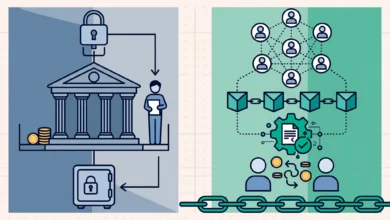
Liquidity Pools in DeFi: 7 Powerful Insights to Earn Smarter and Avoid Costly Losses
Liquidity pools power DeFi trading and lending. See how they work, how providers earn fees, and how to manage risks like impermanent loss and hacks.

Liquidity pools are the quiet engine behind almost everything you do in decentralized finance. Every time someone swaps one token for another on Uniswap, borrows stablecoins, or farms yield, there is a pool of crypto sitting in a smart contract making that possible. Yet most people who use DeFi every day could not explain how these pools actually work.
That gap matters. If you only use DeFi to swap tokens, understanding liquidity pools in DeFi helps you avoid bad prices and high slippage. If you are thinking about depositing your own crypto to earn fees, it matters a lot more. Providing liquidity can be a solid way to put idle assets to work, but it comes with risks that are easy to miss, especially impermanent loss, which catches a lot of first-time providers off guard.
In traditional finance, big banks and market makers keep markets running by always being ready to buy or sell. DeFi replaced that model with something different: ordinary users pool their assets together, and code sets the prices. It is a clever idea, and it has real trade-offs.
This guide walks you through how liquidity pools work from the ground up, including the pricing formula, LP tokens, the main types of pools, how providers earn money, and what can go wrong. You will also get a practical checklist for choosing a pool and adding liquidity safely. No finance degree needed, just a little patience.
What Are Liquidity Pools and How Do They Work?
A liquidity pool is a collection of crypto tokens locked in a smart contract that anyone can trade against. Instead of matching a buyer with a seller, a decentralized exchange (DEX) lets you trade directly with the pool. The pool takes in one token and gives you another, and a formula decides the price.
The people who deposit tokens into liquidity pools are called liquidity providers, or LPs. In return for lending their assets to the pool, they earn a share of the trading fees every time someone swaps.
Why DeFi Needed Liquidity Pools
Traditional exchanges use an order book. Buyers post the price they want to pay, sellers post the price they want to receive, and the exchange matches them. That works well when there are many professional traders and fast systems.
On a blockchain, order books run into problems. Every order, change, and cancellation costs a transaction fee and takes time to confirm. For smaller tokens, there might not be anyone on the other side of your trade at all. Liquidity pools solve both problems. The pool is always there, it never sleeps, and it can quote a price for any trade size instantly.
The Role of the Automated Market Maker (AMM)
The code that runs a pool and sets its prices is called an automated market maker (AMM). Instead of a human market maker deciding prices, the AMM uses a math formula based on how much of each token sits in the pool.


The most famous formula, popularized by Uniswap, is the constant product formula:
x \cdot y = kHere, x is the amount of token A in the pool, y is the amount of token B, and k is a constant that must stay the same (apart from fees) after every trade. When you buy token A, you remove some of it and add token B, so the price of A rises. The more you buy, the more expensive each additional unit becomes.
A Simple Worked Example
Imagine a small pool holding 10 ETH and 20,000 USDC. That makes k equal to 200,000, and the starting price is 2,000 USDC per ETH.
Now a trader buys 1 ETH:
- The pool will have 9 ETH left after the trade.
- To keep k at 200,000, the pool must hold about 22,222 USDC (200,000 divided by 9).
- So the trader pays roughly 2,222 USDC for 1 ETH, not 2,000.
That extra 222 USDC is slippage, the price impact caused by the trade being large relative to the pool. In a pool holding 1,000 ETH, the same trade would barely move the price. This is why deep liquidity pools with lots of assets give traders better prices, and why protocols work so hard to attract liquidity.
The example ignores fees. In practice, each trade also pays a small fee, for example 0.3% on the classic Uniswap v2 pools, which is added to the pool and belongs to the liquidity providers.
What Are LP Tokens?
When you deposit into a pool, the smart contract gives you LP tokens in return. Think of them as a receipt that proves your share of the pool. If you own 5% of all LP tokens, you own 5% of everything in the pool, including the fees it has collected.
When you want out, you return your LP tokens and receive your share of both assets back. Newer designs, like Uniswap v3 and v4, represent positions as NFTs instead of regular tokens because each position can have its own custom price range. The official Uniswap documentation on how pools and positions work explains these designs in detail if you want the technical version.
LP tokens can often be used elsewhere in DeFi, for example staked in a farm for extra rewards. That opens up more earning options, but every extra step adds another smart contract and another layer of risk.
Types of Liquidity Pools in DeFi
Not all liquidity pools are built the same way. Different designs suit different assets and different goals, and picking the right type has a big effect on your returns and your risk.
Constant Product Pools (50/50 Pools)
These are the classic pools described above. You deposit equal values of two tokens, such as $1,000 of ETH and $1,000 of USDC, and the pool spreads your liquidity across every possible price from zero to infinity.
- Pros: Simple, always available, and work for almost any token pair.
- Cons: Capital is spread thin, so fees per dollar deposited can be low, and you are fully exposed to impermanent loss when prices move.
Uniswap v2, SushiSwap, and PancakeSwap’s standard pools all follow this model.
Concentrated Liquidity Pools
Concentrated liquidity, introduced by Uniswap v3, lets providers choose a price range for their deposit. If you think ETH will trade between $2,500 and $3,500, you can place all your liquidity in that band.
- Pros: Your capital works much harder inside the chosen range, which can mean far higher fee income than a 50/50 pool with the same deposit.
- Cons: If the price leaves your range, you stop earning fees and end up holding only one of the two tokens. Positions need active monitoring, and impermanent loss can be larger.
This design suits experienced users and professional market makers more than beginners.
Stablecoin and Like-Asset Pools
Some liquidity pools hold assets that should trade at nearly the same price, such as USDC and USDT, or ETH and a liquid staking token like stETH. Curve Finance became famous for pools built specifically for this, using a formula that keeps prices very tight around a 1:1 ratio.
- Pros: Very low slippage for traders and minimal impermanent loss for providers, since the assets rarely drift apart.
- Cons: Lower fee rates, and a real risk if one asset loses its peg. When a stablecoin breaks down, the pool fills up with the failing coin.
Stablecoin pools are often the best starting point for beginners who want steady, lower-risk exposure.
Weighted and Multi-Asset Pools
Balancer popularized pools that hold more than two tokens or use uneven weights, such as 80% of one token and 20% of another. These work almost like a self-balancing index fund. As prices move, traders rebalance the pool for you, and you earn fees for it.
An 80/20 split reduces impermanent loss on the larger asset compared with a 50/50 pool, which is why many projects use it for their own governance tokens.
Single-Sided and Lending Pools
Lending protocols like Aave and Compound also use pools, though they work differently. You deposit a single asset, borrowers take loans from the pool, and you earn the interest they pay. There is no impermanent loss because you only hold one asset, but you take on credit and liquidation risks instead.
Some DEXs also offer single-sided deposits that automatically split your token into a pair behind the scenes. That is convenient, but the underlying position still carries the same risks as a normal two-sided pool.
Comparing the Main Pool Types
| Pool Type | Best For | Impermanent Loss Risk | Typical Example |
|---|---|---|---|
| Constant product (50/50) | Most token pairs, simple setup | High when prices move | Uniswap v2, PancakeSwap |
| Concentrated liquidity | Active managers seeking higher fees | Highest if price leaves range | Uniswap v3 and v4 |
| Stablecoin or like-asset | Low-risk, steady yield | Low, unless a peg breaks | Curve |
| Weighted or multi-asset | Index-style exposure | Medium, lower on the heavy asset | Balancer |
| Lending pool | Single-asset interest | None, but credit risk | Aave, Compound |
How Liquidity Providers Earn Money
People deposit into liquidity pools because they want a return on assets that would otherwise sit idle. There are three main sources of income.
1. Trading Fees
This is the core income source. Every swap pays a fee, and that fee is shared among all providers in proportion to their share of the pool. Here is a rough example:
- A pool holds $10 million in total value.
- It handles $2 million in trades per day with a 0.3% fee.
- That generates $6,000 in fees per day.
- If you deposited $10,000, you own 0.1% of the pool and earn about $6 per day.
- Over a year, that is roughly $2,190, or about 22% APR, before any losses.
The key ratio is trading volume compared with the size of the pool. High volume and a modest pool size mean strong fees. A huge pool with little trading pays very little.
2. Liquidity Mining Rewards
Many protocols pay extra rewards in their own token to attract liquidity. This is often called yield farming or liquidity mining. You stake your LP tokens in a farm and earn the bonus token on top of trading fees.
These rewards can push advertised APYs very high, but be careful. If the reward token keeps losing value as more gets printed and sold, the real return shrinks fast. Always ask how much of the yield comes from fees and how much from token emissions.
3. Extra Incentives and Points
Some newer protocols reward providers with points, airdrops, or voting power. These can be valuable, but they are uncertain and should be treated as a bonus rather than a reason to deposit.
If you want to compare real yields across thousands of pools, DeFiLlama’s yield rankings break down fee income versus reward income, total value locked, and historical returns for pools on most major chains.
The Risks of Liquidity Pools You Should Know
Earning fees sounds simple, but liquidity pools carry several risks that are not obvious at first glance. Understanding them is the difference between earning steady income and quietly losing money.
Impermanent Loss Explained
Impermanent loss is the most misunderstood risk in DeFi. It is the difference between what your assets are worth inside the pool and what they would be worth if you had simply held them in your wallet.
It happens because the AMM keeps rebalancing your position. When ETH rises against USDC, traders buy ETH from the pool, leaving you with less ETH and more USDC. You still profit from the rise, just less than if you had held. The bigger the price move in either direction, the bigger the gap.
Here is how large impermanent loss gets in a standard 50/50 pool, compared with simply holding:
| Price Change of One Token | Impermanent Loss vs. Holding |
|---|---|
| 1.25x | About 0.6% |
| 1.5x | About 2.0% |
| 2x | About 5.7% |
| 3x | About 13.4% |
| 4x | About 20.0% |
| 5x | About 25.5% |
The same losses apply if the price falls by the matching ratio, for example dropping to half (0.5x) costs about 5.7% as well. It is called “impermanent” because the loss disappears if prices return to where they were when you deposited. If you withdraw while prices are apart, it becomes very permanent.
Trading fees can offset impermanent loss, and in busy pools they often do. In quiet pools with volatile tokens, they usually do not.
Smart Contract Risk
Every pool is code, and code can have bugs. If an attacker finds a flaw, they can drain the pool and your deposit goes with it. Stick to pools on well-audited, long-running protocols, and remember that an audit lowers risk without removing it.
Rug Pulls on New Tokens
Anyone can create a pool for any token. Scam projects sometimes create a token, pair it with ETH, attract buyers, and then pull all the real liquidity out, leaving holders with worthless tokens. Be extremely careful with pools for brand-new or unknown tokens.
Depeg Risk in Stablecoin Pools
Stablecoin pools feel safe until one coin loses its peg. When that happens, traders dump the failing coin into the pool and take the healthy one out. Providers end up holding mostly the broken asset. Spread exposure across well-backed stablecoins and watch for warning signs.
Low Liquidity and Exit Risk
In small pools, large trades cause big price swings, which also means your own position can be more volatile. And if the pool’s reward program ends, other providers may leave quickly, cutting your fee income overnight.
Gas Costs
On Ethereum mainnet, adding, adjusting, and removing liquidity all cost transaction fees. For small deposits, these costs can eat most of your earnings. Layer 2 networks and cheaper chains reduce this problem significantly.
How to Choose the Right Liquidity Pools
Thousands of liquidity pools compete for your deposit, and the one with the highest APY is rarely the best choice. Run each option through these questions first.
Check the Protocol First
The safest pool on a risky protocol is still risky. Before looking at any specific pool, confirm that the protocol has public audits from respected firms, a track record of at least a year or two without major exploits, and admin controls protected by a multisig and timelock. Established DEXs like Uniswap, Curve, and Balancer have held billions of dollars for years, which counts for a lot.
Look at Volume Compared With TVL
As the fee example showed, fee income depends on trading volume relative to total value locked (TVL). A pool with $5 million TVL and $3 million in daily volume will usually pay far more in fees than a pool with $100 million TVL and the same volume. Check this ratio over several weeks, not just one day.
Separate Fee Yield From Reward Yield
The best liquidity pools for long-term providers earn most of their return from real trading fees. If 90% of the APY comes from a farm token that keeps dropping in price, the yield is fragile. Pools with solid fee income keep paying even after reward programs end.
Match the Pair to Your View
Only provide liquidity for tokens you are comfortable holding. If one of the two tokens crashes, you will end up holding more of it. Good choices often look like:
- Two stablecoins you trust, for low risk and steady fees
- A major token paired with its liquid staking version, such as ETH and stETH
- A blue-chip asset paired with a stablecoin, if you are fine holding both
Pairing two volatile tokens that tend to move together, like ETH and a wrapped version of BTC, can also reduce impermanent loss compared with pairing a volatile token with a stablecoin.
Think About Chain and Gas Costs
If you are depositing a few hundred dollars, Ethereum mainnet gas fees can wipe out months of earnings. Layer 2 networks such as Arbitrum, Base, and Optimism host deep liquidity pools with far lower costs.
How to Add Liquidity Step by Step
Once you have picked a pool, the process is fairly simple. Here is how it usually works on a major DEX:
- Set up a wallet. Use a self-custody wallet like MetaMask or Rabby. For larger amounts, connect a hardware wallet.
- Fund it with both tokens. For a 50/50 pool, you need roughly equal dollar values of each token, plus a little extra of the chain’s native coin for gas.
- Go to the official site. Type the address yourself or use a saved bookmark. Fake DEX sites in search ads are a common trap.
- Open the pool or liquidity section. Select the token pair and, if there is a choice, the fee tier. Higher fee tiers usually suit more volatile pairs.
- Set a price range if needed. On concentrated liquidity platforms, choose your range. Wider ranges are safer for beginners because they stay active longer.
- Approve the tokens. Your wallet will ask you to approve each token. Check that you are approving the correct contract.
- Confirm the deposit. Review the amounts and confirm. You will receive LP tokens or a position NFT.
- Track your position. Use the DEX dashboard or a portfolio tracker to monitor fees earned, price range status, and impermanent loss.
When you want to exit, return to the same page, choose to remove liquidity, and confirm. You will receive both tokens back in whatever ratio the pool holds at that moment, plus the fees you earned.
Smart Habits for Liquidity Providers
A few habits will protect you no matter which liquidity pools you use:
- Start with a small test deposit before committing larger amounts.
- Spread funds across more than one pool and protocol.
- Revoke old token approvals regularly with a tool like Revoke.cash.
- Recheck concentrated positions often, especially during volatile weeks.
- Keep records of deposits and withdrawals for tax purposes, since many countries treat these actions as taxable events.
Frequently Asked Questions About Liquidity Pools
Are liquidity pools safe?
Liquidity pools on established, well-audited protocols are reasonably safe from a technical standpoint, but no pool is risk-free. You face smart contract risk, impermanent loss, depeg risk in stablecoin pools, and the risk of scam tokens in newer pools. Choosing reputable protocols and simple pairs lowers that risk considerably.
How much can you earn from liquidity pools?
Returns vary widely. Stablecoin liquidity pools on major platforms often pay low single-digit to low double-digit annual returns, while volatile pairs and new farms can advertise much more. Always subtract likely impermanent loss and gas costs, and check how much of the yield comes from trading fees versus reward tokens.
Can you lose money in liquidity pools?
Yes. You can lose money through impermanent loss if prices move sharply, through falling token prices, through hacks, or through rug pulls. Your deposit in liquidity pools is not protected by any government insurance, so only deposit what you can afford to lose.
What is the difference between liquidity pools and staking?
Staking usually means locking a single token to help secure a network or protocol in exchange for rewards. Liquidity pools typically require two tokens and pay you mainly from trading fees. Staking avoids impermanent loss, while providing liquidity exposes you to it but can earn more in active markets.
Do I need two tokens to join liquidity pools?
Most DEX pools need two tokens in a set ratio, usually 50/50 by value. Some platforms offer single-sided deposits or weighted pools, and lending pools only need one asset. Even with single-sided options, the position underneath often still behaves like a two-token pool.
Are liquidity pool earnings taxed?
In many countries, yes. Adding liquidity, receiving LP tokens, collecting fees, and claiming rewards can all count as taxable events depending on local rules. Keep detailed records and check with a tax professional where you live, since this is not tax advice.
Conclusion
Liquidity pools are the foundation of decentralized trading and lending, replacing traditional order books and market makers with shared pools of crypto and an automated market maker that sets prices using formulas like x times y equals k. Liquidity providers deposit assets, receive LP tokens as proof of their share, and earn trading fees plus any extra rewards the protocol offers. The main pool designs, from classic 50/50 pools to concentrated liquidity, stablecoin, weighted, and lending pools, each come with their own balance of reward and risk, and impermanent loss remains the risk new providers most often underestimate, alongside smart contract bugs, rug pulls, depegs, and gas costs. The smartest approach to liquidity pools in DeFi is to start with reputable protocols, compare trading volume with TVL, favor fee-based yield over inflated token rewards, pair assets you are happy to hold, and begin with small deposits while you learn. Treat liquidity pools as a tool you understand rather than a yield number you chase, and they can become a steady, useful part of your DeFi strategy.