NFT Royalties Explained: 7 Proven Ways Creators Still Get Paid in 2026
NFT royalties explained: how creator fees work, why marketplaces made them optional, and 7 proven ways artists still earn from secondary NFT sales.
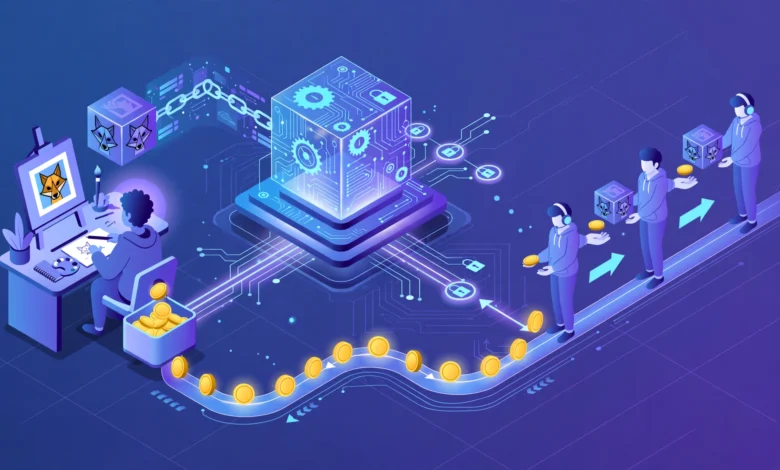
NFT royalties were supposed to fix one of the oldest problems in the art world. When a painter sells a canvas for $500 and it later resells for $50,000, the painter usually gets nothing from that second sale. NFTs promised something different: every time your work changed hands on a marketplace, a small cut would flow back to you automatically.
For a while, it worked. In 2022 alone, OpenSea reported that creators had earned more than $1 billion in royalties on its platform. Artists, musicians, and game studios built entire business plans around that steady income.
Then the royalty wars started. New marketplaces competed for traders by cutting fees, and creator royalties were the easiest thing to cut. By 2023, most major platforms had made them optional, and many collections saw their royalty income drop sharply almost overnight.
So where do things stand now? The short answer is that NFT royalties still exist, but they’re no longer guaranteed by default. Creators who get paid today usually choose the right token standard, the right marketplaces, and a smarter mix of income streams.
This guide explains how NFT royalties work, the technical standards behind them, why they became optional, and where major marketplaces stand. We’ll also cover seven proven ways creators still earn from their work, how to set a fair royalty rate, and the legal and tax basics every creator should know.
What Are NFT Royalties?
NFT royalties are payments that go to the original creator each time their NFT is resold on the secondary market. They’re usually set as a percentage of the sale price. If you set a 5% royalty and a collector later resells your NFT for 2 ETH, you’d receive 0.1 ETH from that sale.
Marketplaces often call them creator earnings or creator fees, but the idea is the same. The first sale (the mint or primary sale) pays the creator directly. NFT royalties cover what happens after that, when collectors trade among themselves.
Primary Sales vs. Secondary Sales
It helps to separate the two income streams:
- Primary sale: the creator sells the NFT for the first time, through a mint, auction, or direct listing. The creator keeps most of the proceeds, minus any platform fee.
- Secondary sale: a collector resells the NFT to someone else. The seller gets most of the money, and NFT royalties send a percentage to the creator if the marketplace honors them.
For popular collections, secondary trading volume can be many times larger than the original mint, which is why royalties became such an important income source.

Typical NFT Royalty Rates
Most creators set NFT royalty percentages between 2.5% and 10%. Here’s how common ranges tend to break down:
| Royalty rate | Typical use |
|---|---|
| 0% to 2% | High-volume PFP or gaming collections that want to attract traders |
| 2.5% to 5% | The most common range for art and PFP projects today |
| 5% to 7.5% | Established artists and collections with loyal collectors |
| 7.5% to 10% | Fine art, music, and one-of-one pieces, though high rates can discourage trading |
Higher isn’t always better. If royalties are too high, collectors may avoid trading or move to platforms where fees are optional.
How NFT Royalties Work Behind the Scenes
Many people assume NFT royalties are automatically enforced by the blockchain. In most cases, they aren’t. Understanding why is key to understanding the whole royalty debate.
Step 1: The Creator Sets a Royalty
When minting a collection, the creator sets a royalty rate and a wallet address to receive payments. This can be done in the smart contract, in a marketplace’s creator dashboard, or both.
Step 2: A Collector Lists the NFT for Resale
The owner lists the NFT on a marketplace. The marketplace reads the royalty information from the contract or its own records.
Step 3: The Marketplace Splits the Payment
When the NFT sells, the marketplace’s sale contract splits the money between the seller, the marketplace (its platform fee), and the creator (the royalty).
Step 4: The Creator Receives Funds
The royalty lands in the creator’s wallet, usually right away, in the same currency as the sale.
The key detail is in step 3. With most older NFT contracts, it’s the marketplace that decides whether to pay royalties. The NFT itself can be transferred freely, so a marketplace can simply skip the creator payment. That’s the weakness that triggered the royalty wars.
NFT Royalty Standards You Should Know
Several technical standards shape how NFT royalties are stored and enforced.
EIP-2981: The Royalty Information Standard
EIP-2981, the NFT Royalty Standard, gives marketplaces a common way to read royalty information from an NFT contract. When a marketplace asks, “What’s the royalty for this sale?”, the contract answers with an amount and a recipient address.
It’s widely supported, but it only signals royalties. It doesn’t force anyone to pay them. A marketplace can read the number and choose to ignore it.
ERC-721C: Programmable Royalty Enforcement
ERC-721C, created by Limit Break, takes a stronger approach. It lets creators restrict which marketplaces and transfer contracts can move their NFTs. If a platform doesn’t honor royalties, the creator can block it.
OpenSea added support for this standard, and its announcement on ERC721-C compatibility explains that creators can turn on enforced earnings through its creator tools. Collections that enforce royalties this way can only be traded on supporting marketplaces unless the creator allowlists others.
Solana Programmable NFTs and Similar Tools
On Solana, Metaplex’s programmable NFTs (pNFTs) and Magic Eden’s earlier Open Creator Protocol let creators add rules on how NFTs can be transferred, including royalty requirements. Other chains and platforms have built similar systems.
Operator Filters
In late 2022, OpenSea introduced an operator filter, a piece of code that blocked sales on marketplaces that didn’t pay creator fees. It was an early attempt at on-chain enforcement, but OpenSea later retired it, which played a big role in making royalties optional across the industry.
The NFT Royalty Wars: Why Royalties Became Optional
To understand where NFT royalties stand today, it helps to know how the industry got here.
The Golden Era
During the 2021 and 2022 boom, nearly every major marketplace honored creator fees by default. Top collections earned huge sums. According to OpenSea’s own figures, creators earned more than $1 billion in royalties on its platform in 2022, with Yuga Labs alone collecting well over $100 million.
Zero-Fee Marketplaces Arrive
As the market cooled, new marketplaces competed for traders by cutting costs. Platforms like Sudoswap, X2Y2, LooksRare, and later Blur offered low or zero creator fees. Traders, especially high-volume flippers, followed the lower costs.
On Solana, Magic Eden moved to an optional royalty model in late 2022, then introduced tools that let new collections enforce royalties if they chose to.
OpenSea’s Operator Filter and Its Reversal
OpenSea tried to defend creator fees with its operator filter in November 2022, which blocked sales on marketplaces that didn’t pay royalties. But Blur’s rapid growth put heavy pressure on OpenSea’s market share. In August 2023, OpenSea announced it would retire the filter and make creator fees optional for new collections, with existing collections following later.
For many creators, this was a turning point. Royalty income across the industry dropped, and artists began rethinking how they earn from NFTs.
The Shift to Enforceable Royalties
The story didn’t end there. Instead of relying on marketplaces to be generous, the industry moved toward enforceable NFT royalties built into token standards:
- ERC-721C gave Ethereum creators a way to block non-paying marketplaces
- Programmable NFTs on Solana did something similar
- OpenSea and Magic Eden added support for enforced creator earnings on collections that opt in
- Yuga Labs partnered with Magic Eden on an Ethereum marketplace committed to honoring royalties
The result is a split market. Collections that use enforcement tools can still collect NFT royalties reliably on supporting platforms. Collections that don’t are often at the mercy of whatever each marketplace decides.
How Major NFT Marketplaces Handle Royalties
Marketplace policies on creator royalties change often, so always check current terms before launching. Here’s the general picture:
| Marketplace | General approach to creator royalties |
|---|---|
| OpenSea | Optional by default for many collections; enforced for collections that set up ERC-721C enforcement |
| Magic Eden | Supports enforced royalties for opted-in collections on Solana and EVM chains; optional for others |
| Blur | Historically set a low minimum royalty (around 0.5%) with optional higher payments |
| Foundation and curated art platforms | Typically built with creator payouts in mind for one-of-one art |
| Game and brand marketplaces | Often enforce fees inside their own ecosystem, since they control transfers |
The big takeaway: if you want reliable NFT royalties, choose a token standard and marketplace setup that enforces them, rather than relying on default policies.
7 Proven Ways Creators Still Get Paid From NFTs
Even with optional royalties in many places, creators have plenty of ways to earn. The smartest ones combine several of these income streams.
1. Use Enforceable NFT Royalty Standards
If secondary income matters to you, launch with a standard that can enforce NFT royalties, such as ERC-721C on Ethereum-compatible chains or programmable NFTs on Solana. Then turn on enforced creator earnings in each supporting marketplace’s creator tools. The trade-off is that your collection may only trade on approved platforms.
2. Price Primary Sales Thoughtfully
Since secondary income is less predictable, many creators now focus more on the primary sale. That might mean higher mint prices for smaller collections, auctions for one-of-one work, or tiered pricing for different editions. A strong primary sale doesn’t depend on any marketplace’s royalty policy.
3. Sell Open Editions and Timed Drops
Open editions let anyone mint during a limited window at a fixed price. They’re popular on networks like Base, where mint costs are low. Creators earn from volume instead of scarcity, and every mint is a direct sale, not a royalty.
4. Build Ongoing Utility and Memberships
Some creators offer ongoing benefits to holders, such as access to future drops, private communities, physical merchandise, or events. Instead of relying on royalties, they charge for new products or premium tiers that holders actually want.
5. License Your Work and IP
If your art or characters become popular, licensing can bring in far more than secondary sales royalties. Brands, game studios, and publishers may pay to use your designs. Some collections also grant holders commercial rights, which can grow the brand and lead to bigger deals for the creator.
6. Use Revenue Splits and Collaborative Contracts
Split contracts let you automatically share primary and secondary income with collaborators, such as a musician and a visual artist working on the same release. This doesn’t increase total income on its own, but it makes partnerships easier, which can open the door to bigger projects.
7. Partner With Platforms That Prioritize Creators
Curated marketplaces, music NFT platforms, and game ecosystems often build creator payouts into their business model. Games, for example, can enforce fees on every in-game item trade because they control the marketplace. Choosing the right platform can protect your NFT royalty income far better than a general marketplace.
How to Set Up NFT Royalties as a Creator
If you’re launching a collection, here’s a simple process for setting up NFT royalties correctly:
- Choose your blockchain. Ethereum, Base, Solana, and Polygon each have different tools and costs.
- Pick a token standard. Use EIP-2981 at minimum so marketplaces can read your royalty, and consider ERC-721C or programmable NFTs for enforcement.
- Set a reasonable rate. Between 2.5% and 7.5% is common. Think about your audience and how actively they trade.
- Choose a secure payout wallet. Use a wallet you control long term, ideally a hardware wallet or a multisig for team projects.
- Configure each marketplace. Set your creator earnings in each platform’s creator dashboard and turn on enforcement if available.
- Communicate with collectors. Explain your royalty rate and what it supports, such as future art, community events, or development.
- Track your income. Use marketplace dashboards or on-chain tools to see how much you’re earning and from where.
Pros and Cons of NFT Royalties
NFT royalties still spark debate. Here’s a balanced look at both sides.
Benefits for Creators and Collectors
- Ongoing income that rewards creators as their work gains value
- Better alignment between creators and collectors, since both benefit from long-term demand
- Funding for future work, helping artists and teams keep building
- Transparency, since payments are recorded on-chain
Drawbacks and Criticisms
- Higher costs for traders, which can reduce liquidity
- Hard to enforce without restricting where NFTs can be traded
- Restricted transfers under enforcement standards can limit some uses, like lending or new marketplaces
- Unequal benefits, since most royalty income goes to a small number of top collections
Legal and Tax Considerations for NFT Royalties
NFT royalties aren’t the same as traditional copyright royalties. In most cases, they’re a marketplace or smart contract feature, not a legal right. Owning an NFT also doesn’t automatically give buyers copyright to the artwork. That depends on the license attached to the collection.
For taxes, many countries treat royalty income as ordinary income, valued at the time you receive it. Selling the crypto later may also create a capital gain or loss. Rules vary widely by country, so keep good records of every payout and consider speaking with a tax professional who understands digital assets. This isn’t legal or tax advice.
Frequently Asked Questions About NFT Royalties
Are NFT royalties still paid in 2026?
Yes, but not everywhere. NFT royalties are reliably paid on collections that use enforcement standards like ERC-721C or programmable NFTs, and on marketplaces that support them. On many other collections, royalties are optional and depend on the marketplace or buyer.
What is a good royalty percentage for NFTs?
Most creators set NFT royalties between 2.5% and 7.5%. Lower rates can encourage trading, while higher rates suit fine art and one-of-one pieces with dedicated collectors.
Are NFT royalties enforced by the blockchain?
Not automatically. Standard NFTs can be transferred freely, so marketplaces decide whether to pay. Only collections built with enforcement tools can restrict trading to platforms that honor NFT royalties.
How do creators receive NFT royalties?
When an NFT sells on a supporting marketplace, the sale contract splits the payment and sends the royalty share straight to the creator’s payout wallet, usually in the same currency used for the sale.
Can I change my NFT royalties after launch?
Often, yes. Many marketplaces let creators update their royalty rate and payout address in creator settings. If the rate is hard-coded in the smart contract, changing it may depend on how the contract was written.
Do buyers get copyright with NFT royalties?
No. NFT royalties only control resale payments. Copyright and usage rights depend on the license that comes with the collection.
Conclusion
NFT royalties began as one of the most exciting promises of digital ownership, giving creators a share of every resale, but the rise of zero-fee marketplaces and the end of OpenSea’s operator filter made them optional across much of the market and cut income for many artists. Today, NFT royalties work best when creators build them in deliberately, using standards like EIP-2981 to signal fees and ERC-721C or programmable NFTs to enforce them on supporting marketplaces. Smart creators also stop relying on resale income alone and combine strong primary sales, open editions, holder memberships, licensing deals, revenue splits, and creator-friendly platforms. By setting a fair rate, choosing the right tools, communicating clearly with collectors, and keeping careful records for taxes, creators can still turn their NFT work into a sustainable source of income in 2026.