Crypto Market Cap: 7 Critical Reasons It Doesn’t Tell the Whole Story
Crypto market cap looks simple but hides real risk. See why this popular metric can mislead investors and what to check instead.

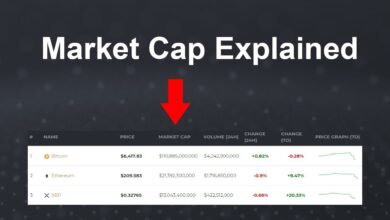
Crypto market cap is probably the single most cited number in the entire industry. It’s the first thing you see when you pull up a coin on any tracking site, it’s the basis for most “top 10” rankings, and it’s often treated as a shorthand for how legitimate or valuable a project is. The problem is that market cap, on its own, tells you a lot less than most people assume, and relying on it too heavily can lead to some genuinely costly investing mistakes.
The calculation itself is simple: current price multiplied by circulating supply. But that simplicity is exactly what makes it so easy to misread. A coin with a low price and a massive supply can post a market cap that looks impressive next to an established project, even if the two have almost nothing in common in terms of actual liquidity, adoption, or real trading depth. Market cap doesn’t account for how easily that value could actually be realized if a large number of holders tried to sell at once, and it says nothing about token distribution, unlock schedules, or how much of that “value” is even tradable at a given moment.
This article breaks down exactly why market cap falls short as a standalone metric in crypto, what it actually measures versus what people assume it measures, and which additional metrics give a much more complete picture of a project’s real market position. Whether you’re evaluating a new token or just trying to understand why two projects with similar market caps can behave completely differently, this should help you read the numbers with a more critical eye.
What Crypto Market Cap Actually Measures
Market cap in crypto is calculated the same basic way it is in traditional equity markets: current price multiplied by circulating supply. On the surface, this seems like a reasonable way to gauge a project’s overall size and relative importance in the market.
- It gives a rough sense of scale, useful for quickly comparing projects at a glance
- It’s easy to calculate and readily available on virtually every crypto tracking platform
- It provides a common reference point that’s become deeply embedded in how the industry talks about project rankings
The issue isn’t that market cap is meaningless. It’s that it’s frequently treated as a complete picture when it’s really just one input among several that actually matter for understanding a project’s real market position.
Reason 1: Circulating Supply Can Be Manipulated or Misleading
How Supply Numbers Get Distorted
Circulating supply figures aren’t always as straightforward as they appear. Some projects report circulating supply numbers that include tokens that are technically unlocked but still held by insiders, team members, or early investors who have no immediate intention of selling. This can inflate the reported market cap without reflecting the actual liquid, tradable portion of the token supply.
Why This Matters for Investors
A project with a large reported circulating supply but limited genuine market float can behave very differently from what its market cap alone would suggest, since the actual amount of tokens available for regular trading may be a fraction of the reported figure.
Reason 2: Market Cap Doesn’t Reflect Liquidity
The Difference Between Value and Liquidity
Market cap tells you the theoretical total value of a project’s tokens at current price, but it says nothing about how easily that value could actually be accessed. A project can have a high market cap while trading with relatively thin order books, meaning even moderate buy or sell orders could move the price significantly.
Why Low Liquidity Is a Real Risk
Low liquidity means larger trades face significant slippage, and in more extreme cases, holders attempting to exit a position can struggle to do so without accepting a much lower price than the current quoted market rate. This is a critical distinction that market cap alone simply doesn’t capture.


Data platforms like CoinGecko publish trading volume and liquidity data alongside market cap figures, and cross-referencing these numbers offers a much more complete picture of a project’s actual market depth than market cap viewed in isolation.
Reason 3: Fully Diluted Valuation Tells a Different Story
What FDV Actually Measures
Fully diluted valuation, often abbreviated as FDV, calculates what a project’s market cap would be if its entire maximum token supply were currently in circulation, rather than just the current circulating amount. Comparing a project’s market cap to its FDV can reveal a significant gap that market cap alone completely misses.
Why This Gap Matters
A large gap between current market cap and FDV often signals substantial future token unlocks on the horizon, which can introduce meaningful sell pressure as those tokens enter circulation. Projects with a small circulating supply relative to total supply can show an artificially low market cap today, even though the true, fully diluted picture looks considerably different.
Reason 4: Trading Volume Reveals Genuine Market Interest
Volume as a Reality Check
Trading volume, the total value of a token traded over a given period, offers a useful cross-check against market cap. A project with a high market cap but unusually low trading volume relative to its size can indicate limited genuine market interest, or in some cases, a token that’s largely inactive despite its headline valuation.
Watching for Wash Trading
It’s also worth noting that reported trading volume itself isn’t always reliable, since wash trading, artificially inflating volume through self-dealing trades, has been a documented issue on some exchanges. This is another reason relying on any single metric, market cap included, without cross-referencing multiple data points can lead to a distorted view of a project’s real market standing.
Reason 5: Token Distribution Affects Real-World Price Impact
Why Concentration Matters
How a token’s supply is distributed among holders can significantly affect price stability and risk, something market cap doesn’t capture at all. A project where a small number of wallets hold a large percentage of the circulating supply carries meaningfully more concentration risk than one with a broader, more evenly distributed holder base, even if both show similar market cap figures.
How to Check Distribution
Blockchain explorers and on-chain analytics platforms allow investors to review holder distribution directly, offering insight into how concentrated a token’s ownership actually is. This kind of on-chain research provides context that market cap simply cannot offer on its own.
Reason 6: Market Cap Doesn’t Account for Real Utility or Adoption
Market cap reflects price and supply, not whether a project is actually being used for anything. Two tokens with identical market caps can have dramatically different levels of real-world adoption, active development, or genuine utility within their respective ecosystems.
- Network activity metrics, such as active addresses or transaction counts, offer a more direct measure of genuine usage than market cap alone
- Developer activity, often tracked through public code repositories, can indicate whether a project is actively being built out or has effectively stalled
- Actual use cases, such as whether a token is used for real transactions, governance, or staking, provide context that pure valuation metrics miss entirely
Reason 7: Market Cap Can Be Skewed by Low-Float, High-Price Tokens
Some projects deliberately launch with a very small circulating supply relative to their total planned supply, which can produce an eye-catching market cap ranking shortly after launch, even though the actual liquid market for the token remains extremely limited. This dynamic, sometimes referred to informally within the industry as a low-float, high-FDV setup, has drawn scrutiny for how it can create a misleadingly high market cap ranking in the early stages of a token’s life, well before the broader token supply becomes available to the market.
How to Evaluate a Crypto Project More Completely
Rather than relying on market cap alone, a more complete evaluation typically includes several additional data points:
- Compare market cap to fully diluted valuation to understand potential future dilution
- Review trading volume relative to market cap to gauge genuine liquidity and market interest
- Check token distribution data through on-chain analytics to assess concentration risk
- Research the project’s token unlock schedule to anticipate potential future sell pressure
- Look at actual network activity and development metrics rather than relying purely on valuation figures
Regulatory bodies have also increasingly emphasized the importance of understanding underlying project fundamentals rather than relying solely on market valuation figures. The U.S. Securities and Exchange Commission has published investor guidance on evaluating digital asset investments more broadly, and reviewing this material through the SEC’s investor education resources can offer useful, general context on approaching crypto investment research with appropriate caution.
Putting Market Cap in Proper Context
None of this means market cap is a useless metric. It remains a reasonable starting point for quickly comparing the relative scale of different projects, and it’s deeply embedded in how the industry communicates and ranks tokens. The key is treating it as exactly that, a starting point, rather than a complete or final answer about a project’s real market position, risk profile, or investment merit.
A more rigorous approach layers market cap alongside fully diluted valuation, trading volume, liquidity depth, token distribution, and actual usage data, building a far more complete picture than any single number could provide on its own.
Conclusion
Market cap remains one of the most widely used metrics in crypto, but treating it as a complete measure of a project’s value or legitimacy overlooks several important gaps, including circulating supply distortions, hidden liquidity risk, the difference between current and fully diluted valuation, and the reality that market cap says nothing about actual adoption or utility. A genuinely informed evaluation looks well beyond the headline market cap figure, cross-referencing trading volume, token distribution, unlock schedules, and real network activity to build a much more complete and honest picture. For anyone navigating the crypto market, learning to read past the market cap ranking on the homepage of a tracking site is one of the more valuable habits you can develop as an investor.