Mid Cap Cryptocurrencies: 10 Powerful Picks Worth Watching in 2026
Mid cap cryptocurrencies offer a mix of growth and stability. Here's a clear look at ten projects worth watching and how to evaluate them.

Mid cap cryptocurrencies sit in a strange but interesting spot in the market. They’re too established to be dismissed as pure gambles, but too small to have the built-in safety net that Bitcoin and Ethereum enjoy. For investors who’ve watched the big coins for a while and want to branch out without jumping straight into unproven micro-cap tokens, this middle tier is often where the real homework pays off.
The term itself comes from traditional finance, where “mid cap” describes companies with a market valuation that’s neither tiny nor enormous. In crypto, the same idea applies: a mid cap cryptocurrency typically has a market capitalization somewhere between $1 billion and $10 billion. That range includes plenty of names you’ve probably already heard of, like Chainlink, Avalanche, and Hedera, alongside others that are quietly building real usage without the constant hype cycle that surrounds meme coins.
This article walks through what makes a mid-cap crypto worth watching, ten projects currently sitting in or near that range, and a few practical things to check before putting money into any of them. Market caps shift daily, so treat the rankings here as a snapshot rather than a permanent list, and always verify current figures on a live tracker before making a decision.
What Are Mid Cap Cryptocurrencies?
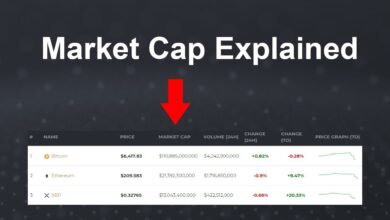
A mid cap cryptocurrency is generally defined by its total market capitalization, which is calculated by multiplying a coin’s current price by its circulating supply. Most trackers, including CoinGecko, split the market into three broad tiers:
- Large cap coins – market capitalization above $10 billion (Bitcoin, Ethereum, and a handful of others)
- Mid cap coins – market capitalization between $1 billion and $10 billion
- Small cap coins – market capitalization below $1 billion
That $1 billion to $10 billion band isn’t arbitrary. It roughly separates projects that have survived at least one full market cycle and built genuine infrastructure or user bases from projects still trying to prove themselves. A mid cap crypto has usually cleared some early hurdles: it’s listed on major exchanges, it has liquidity, and it typically has a working product rather than just a whitepaper.
That said, the boundaries move constantly. A coin can slide from mid cap to large cap during a strong rally, or drop into small cap territory during a downturn. This is part of what makes tracking mid cap cryptocurrencies an ongoing exercise rather than a one-time list you can set and forget.
Why Mid Cap Cryptocurrencies Deserve a Spot in Your Portfolio
Most crypto portfolios lean heavily on Bitcoin and Ethereum, and for good reason. But putting everything into the two largest coins means missing out on a segment of the market that often moves faster and offers more room for percentage gains. Here’s why many investors carve out space for mid cap crypto exposure:
- Growth potential without the extreme volatility of micro-caps. A mid cap coin can still double or triple in a strong cycle, but it’s less likely to go to zero overnight than an unproven small cap token.
- Established use cases. Many mid cap projects have been operating for years and have real transaction volume, developer activity, and partnerships to show for it.
- Diversification across sectors. The mid cap tier spans oracles, layer-1 blockchains, privacy coins, DeFi protocols, and enterprise blockchain solutions, so it’s possible to spread risk across different niches rather than betting on one narrative.
- Room to grow into large cap status. Some of today’s largest coins were mid caps just a few years ago. Buying in before that transition, if it happens, is where a lot of long-term crypto gains have historically come from.
None of this means mid cap coins are safe. They still carry real risk, and that’s covered in more detail further down. But as a category, mid cap cryptocurrencies occupy a reasonable middle ground for investors who want more than blue-chip stability but aren’t ready for the volatility of brand-new tokens.
Top Mid Cap Cryptocurrencies Worth Watching
Below are ten projects that regularly trade within or near the mid cap range. Market capitalization for each fluctuates with price action, so check a live source like CoinMarketCap before assuming any figure quoted here is current.


1. Chainlink (LINK)
Chainlink remains one of the most-cited names on any list of mid cap cryptocurrencies because of what it actually does: it connects smart contracts to real-world data. Its oracle network feeds price data, weather information, and other off-chain inputs into blockchains that otherwise can’t access that information on their own. This function has made Chainlink a backbone piece of infrastructure for DeFi lending platforms, tokenized asset projects, and increasingly, traditional finance pilots exploring blockchain settlement. Its steady expansion into real-world asset (RWA) tokenization is one reason analysts keep it on their radar heading into 2026.
2. Avalanche (AVAX)
Avalanche is a layer-1 blockchain built for speed and customization. Its standout feature is the ability to launch “subnets,” which are essentially custom blockchains that institutions and enterprises can configure for specific compliance or performance needs. This has made Avalanche attractive to companies exploring tokenized real-world assets, since it lets them build a compliant environment without giving up the underlying security of the broader network. As a mid cap crypto, AVAX benefits from a mix of retail trading activity and growing institutional pilot programs.
3. Polkadot (DOT)
Polkadot’s core idea is interoperability. Instead of building one blockchain to do everything, it created a system of connected “parachains” that can specialize in different tasks while still communicating with each other. This design has appealed to developers who want the flexibility of a custom chain without sacrificing security or the ability to interact with the wider ecosystem. Polkadot has been through a full market cycle already, and its continued development activity keeps it firmly in the conversation among established mid cap cryptocurrencies.
4. Hedera (HBAR)
Hedera uses a different consensus mechanism than most blockchains, called hashgraph, which it markets as faster and more energy-efficient than traditional proof-of-work or even many proof-of-stake systems. What sets Hedera apart is its governance structure: it’s overseen by a council of large global companies rather than a single foundation. That corporate backing has helped Hedera build partnerships around supply chain tracking, tokenization, and enterprise data integrity, making it a frequently mentioned name in real-world asset development activity.
5. Algorand (ALGO)
Algorand was founded by MIT professor and Turing Award winner Silvio Micali, and it’s built around a pure proof-of-stake model designed to solve the classic blockchain trilemma of scalability, security, and decentralization. Algorand has continued shipping technical upgrades, including recent work on quantum-resistant account signatures, which signals the team is thinking about long-term network security rather than just short-term price action. Regulatory clarity naming ALGO a digital commodity has also removed a longstanding barrier for institutional interest.
6. Monero (XMR)
Monero is the most established privacy coin in the market, using ring signatures and stealth addresses to keep transaction details confidential by default. It’s a genuinely different value proposition than most of the coins on this list, appealing to users who prioritize financial privacy over transparency. Monero has seen renewed attention as privacy-focused assets found fresh institutional interest, including moves toward exchange-traded products tracking the asset. Its position among mid cap cryptocurrencies reflects both its longevity and the niche demand for private, censorship-resistant transactions.
7. Uniswap (UNI)
Uniswap is the largest decentralized exchange by trading volume, letting users swap tokens directly from their wallets without a centralized intermediary. Its automated market maker model became the template that most other decentralized exchanges have since copied or adapted. UNI, the governance token, gives holders a say in protocol decisions and has periodically benefited from fee-sharing proposals and buyback mechanisms that tie token value more directly to platform usage.
8. NEAR Protocol (NEAR)
NEAR is a layer-1 blockchain designed with developer accessibility in mind, using human-readable account names and a sharding architecture called Nightshade to scale transaction throughput. In recent years, NEAR has repositioned itself around AI infrastructure, positioning its chain as a settlement layer for autonomous agents and decentralized AI applications. That pivot has kept it relevant in a market where AI-adjacent narratives have driven significant capital flows.
9. Aave (AAVE)
Aave is one of the largest decentralized lending protocols, allowing users to borrow and lend crypto assets without a bank or broker in the middle. It pioneered features like flash loans and has expanded into real-world asset lending markets, letting institutions borrow against tokenized treasury bills and other traditional instruments. As DeFi lending volumes have grown, Aave has remained one of the more consistently used protocols in the space, which gives AAVE a fundamentals-based case among mid cap crypto options.
10. Sui (SUI)
Sui is a newer layer-1 blockchain built by former Meta employees who previously worked on the Diem project. It uses an object-centric data model that allows for parallel transaction processing, which its team argues makes it faster and cheaper than many older chains for certain use cases like gaming and consumer applications. Sui has grown its ecosystem quickly since launch, and while it’s more volatile than some of the older names on this list, its rapid developer growth has kept it on watchlists.
How to Evaluate Mid Cap Crypto Projects Before You Invest
Not every coin trading in the $1 billion to $10 billion range deserves your money just because it’s crossed that threshold. Here’s a practical checklist for sizing up any mid cap cryptocurrency:
- Check real usage, not just price charts. Look at on-chain transaction counts, active wallets, and total value locked if the project is DeFi-related. A rising price with flat usage is a warning sign.
- Review the development activity. Active GitHub repositories and regular protocol upgrades suggest a team that’s still building, not just marketing.
- Understand the tokenomics. Look at circulating supply versus total supply, and check for large upcoming token unlocks that could add selling pressure.
- Look at exchange listings and liquidity. A coin available only on obscure exchanges carries more execution risk than one listed on major platforms with deep order books.
- Assess the competitive landscape. Ask whether the project solves a problem better than its direct competitors, or whether it’s riding a trend without real differentiation.
- Watch regulatory exposure. Some mid cap crypto projects, particularly privacy coins, face delisting risk in certain jurisdictions, which can affect liquidity and price.
Risks of Investing in Mid Cap Cryptocurrencies
It’s worth being direct about the downside here. Mid cap cryptocurrencies carry meaningfully more risk than Bitcoin or Ethereum, even if they’re safer than brand-new small caps.
- Lower liquidity than large caps, which can lead to sharper price swings on relatively modest buy or sell orders.
- Narrative dependence. Many mid cap coins rise and fall with broader sector trends (DeFi, AI, RWA tokenization), so a shift in market sentiment away from a coin’s core theme can hit its price hard even if the underlying technology hasn’t changed.
- Team and governance risk. Smaller teams behind mid cap projects may have less operational redundancy than large, well-funded foundations.
- Regulatory uncertainty, particularly for privacy-focused coins or tokens with unclear legal classification in major markets.
Position sizing matters here more than almost anywhere else in a portfolio. Treating mid cap crypto as a satellite allocation rather than a core holding is a common approach among more experienced investors.
Mid Cap vs Large Cap vs Small Cap Cryptocurrencies
| Category | Market Cap Range | Typical Risk Level | Typical Liquidity |
|---|---|---|---|
| Large cap | Above $10 billion | Lower | High |
| Mid cap | $1 billion – $10 billion | Moderate | Moderate to high |
| Small cap | Below $1 billion | High | Low to moderate |
This breakdown is a useful mental model, but it’s not a substitute for research on any individual asset. A mid cap cryptocurrency with strong fundamentals can behave more like a large cap in terms of stability, while a poorly run one can behave like a small cap in terms of volatility.
Conclusion
Mid cap cryptocurrencies offer a middle path between the relative safety of Bitcoin and Ethereum and the high-risk, high-reward nature of unproven small cap tokens. Projects like Chainlink, Avalanche, Polkadot, Hedera, Algorand, Monero, Uniswap, NEAR, Aave, and Sui each bring a distinct use case to the table, from oracle infrastructure and interoperability to privacy and decentralized lending. None of them are guaranteed winners, and market capitalization alone shouldn’t be the deciding factor in any investment decision. But for investors looking to diversify beyond the two largest coins while still favoring projects with a track record over pure speculation, the mid cap crypto segment remains one of the more reasonable places to start digging deeper. As always, verify current market data, understand the specific risks of each project, and size positions according to your own risk tolerance rather than following any list, including this one, without doing your own research.