Top 10 DeFi Tokens by Market Cap: Best Coins Dominating DeFi in 2026
Top 10 DeFi tokens by market cap ranked and explained, covering lending, trading, oracles, and yield protocols leading decentralized finance today.
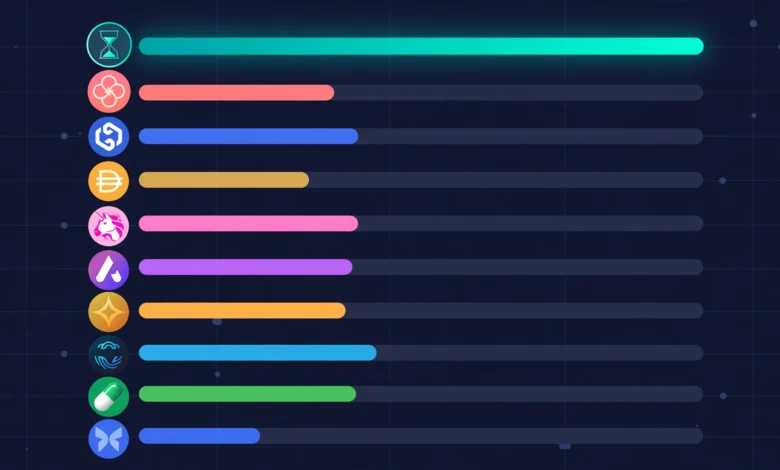
Top DeFi tokens by market cap shift constantly, but a handful of protocols have held their ground long enough to earn a permanent spot in most traders’ watchlists. Decentralized finance has grown from a niche experiment into a sector holding tens of billions of dollars in value, spread across lending platforms, decentralized exchanges, oracle networks, and yield protocols. Ranking these tokens by market cap gives you a quick read on which projects the market currently trusts the most with real capital.
This isn’t just a list of names, though. Market cap reflects a mix of adoption, token supply mechanics, and investor confidence, and each of the tokens on this list got there for a different reason. Some dominate because they power the plumbing other protocols rely on. Others sit at the center of a specific niche, like perpetual futures trading or real-world asset tokenization, that’s currently pulling in outsized attention.
In this guide, we’ll walk through the top 10 DeFi tokens by market capitalization right now, explain what each protocol actually does, and point out what’s driving their current standing. Whether you’re researching before an investment or just trying to understand where capital is concentrated in DeFi today, this breakdown should give you a clear, current picture of the sector’s leaders.
What Does Market Cap Tell You About a DeFi Token?
Before ranking anything, it’s worth being clear on what market cap actually measures. It’s calculated by multiplying a token’s current price by its circulating supply, and it’s used as a rough stand-in for how much value the market has assigned to a project overall.
For DeFi tokens specifically, market cap can be shaped by a few factors that don’t apply the same way to, say, Bitcoin:
- Token unlocks – Many DeFi protocols release tokens to early investors and team members on a schedule, which can dilute market cap even if the price holds steady.
- Governance value – Some tokens derive most of their worth from voting rights over protocol treasuries and fee structures, not direct utility.
- Protocol revenue – Tokens tied to protocols with real trading volume, lending activity, or fee generation often justify higher valuations than ones with speculative demand alone.
- Total Value Locked (TVL) – This measures the actual capital deposited in a protocol’s smart contracts, and it’s often a more honest signal than market cap alone, since it reflects usage rather than just price.
For a full technical explanation of how these calculations work and what can distort them, CoinGecko’s DeFi market overview is a useful reference point that updates continuously.
Top 10 DeFi Tokens by Market Cap Right Now
Here’s how the leading DeFi tokens currently rank, based on live market capitalization data. Note that rankings shift daily, sometimes hourly, so treat this as a snapshot of where things stand rather than a fixed list.
1. Hyperliquid (HYPE)
Hyperliquid currently sits at the top of the DeFi token rankings by a wide margin. It’s the native token of a high-performance decentralized exchange built specifically for perpetual futures trading, competing directly with centralized derivatives platforms on speed and order book depth.
What’s driving its position:


- A fully on-chain order book model rather than the automated market maker design most DEXs use
- Strong trading volume that rivals several centralized exchanges
- Recent all-time highs, though paired with a large token unlock event that could add selling pressure
2. Chainlink (LINK)
Chainlink isn’t a DeFi protocol in the traditional lending or trading sense, but it’s foundational infrastructure that most DeFi platforms depend on. It supplies the price feeds and off-chain data that smart contracts need to function accurately, making it one of the most widely integrated projects in the entire crypto ecosystem.
Why it stays near the top:
- Used by a large share of major lending and derivatives protocols for price data
- Continued expansion into cross-chain interoperability services
- Long-standing reputation as one of the more battle-tested infrastructure tokens in DeFi
3. Uniswap (UNI)
Uniswap remains the most recognized decentralized exchange token, and it’s the governance token behind one of the highest-volume DEXs in the industry. Its automated market maker model became the template that countless other exchanges have since copied or built on.
Key strengths:
- Consistently high trading volume across multiple blockchain networks
- Governance rights over protocol fees and treasury decisions
- Recent momentum tied to expansion activity and strategic moves within the broader DEX landscape
4. Aave (AAVE)
Aave is one of the largest and longest-running lending protocols in DeFi. Users can deposit crypto as collateral to borrow other assets, or supply liquidity to earn interest, all without a centralized lender approving anything.
What keeps Aave relevant:
- Multi-chain deployment across several major networks
- A track record stretching back to some of DeFi’s earliest days, giving it more trust than newer lending platforms
- Continuous protocol upgrades aimed at improving capital efficiency for lenders and borrowers
5. Aster (ASTER)
Aster has climbed quickly in the perpetual DEX space, an area of DeFi that’s seen explosive growth as traders look for decentralized alternatives to centralized futures exchanges. It’s part of a wave of newer protocols competing directly with Hyperliquid for market share in on-chain derivatives trading.
Notable points:
- Rapid growth in holder count within the perpetual DEX category
- Positioned in one of the fastest-growing DeFi sub-sectors right now
- Still relatively new compared to more established names on this list, which means higher volatility
6. Ondo (ONDO)
Ondo focuses on real-world asset (RWA) tokenization, bringing traditional financial products like treasury bonds on-chain. This niche has gained serious traction as institutions look for ways to bring regulated financial instruments into DeFi rails.
Why it matters:
- Positioned at the center of the growing RWA tokenization trend
- Partnerships aimed at bridging traditional finance products with blockchain infrastructure
- Benefiting from broader institutional interest in tokenized treasuries and bonds
7. Morpho (MORPHO)
Morpho is a lending protocol built to optimize rates between borrowers and lenders, layering efficiency improvements on top of existing lending markets rather than competing with them head-on. It’s become one of the more technically respected projects in the lending category.
What sets it apart:
- A peer-to-peer matching layer that improves rates compared to traditional pooled lending models
- Growing integration with other DeFi protocols building on top of its infrastructure
- Strong developer reputation within the lending and borrowing niche
8. Pump.fun (PUMP)
Pump.fun built its reputation as a launchpad for new tokens, primarily on Solana, and has expanded into a broader ecosystem around token creation and trading. It represents a different corner of DeFi focused on liquidity bootstrapping rather than lending or trading infrastructure.
Key details:
- High trading volume tied to new token launches
- A business model built around fees generated from token creation activity
- More speculative in nature compared to established lending or DEX tokens on this list
9. Ethena (ENA)
Ethena issues a synthetic dollar product designed to generate yield through a delta-neutral hedging strategy, rather than relying on traditional collateral backing like most stablecoins. It’s carved out a distinct niche in the stablecoin and yield-bearing asset space.
Why it’s on this list:
- A synthetic dollar model that differs meaningfully from standard stablecoin designs
- Strong yield generation that’s attracted significant deposits
- Ongoing discussion around a potential fee-switch mechanism that could change how value flows to token holders
10. Sky (SKY)
Sky, the rebranded protocol formerly known as MakerDAO, remains one of the most established names in decentralized finance. It oversees the issuance of a major decentralized stablecoin and has broadened its scope into a wider ecosystem of financial products.
What keeps it on the list:
- One of the oldest continuously operating DeFi protocols still active today
- Governance over a decentralized stablecoin system with deep liquidity
- Ongoing evolution of its tokenomics and branding to expand beyond its original scope
How These Rankings Can Shift
DeFi token rankings by market cap aren’t static, and a few forces regularly reshuffle the list:
- Token unlocks – Large scheduled releases, like the one facing Hyperliquid, can shift supply dynamics and market cap even without major price movement.
- Sector rotation – Capital moves between DeFi sub-sectors (lending, DEXs, RWAs, perpetuals) as narratives change, which can lift or drag rankings within weeks.
- Protocol upgrades – Fee-switch proposals, new chain deployments, or governance changes can shift investor sentiment quickly.
- Regulatory developments – Because several tokens on this list touch tokenized real-world assets or stablecoins, regulatory news can move valuations faster than pure market activity.
For traders and researchers who want to track these shifts as they happen rather than relying on a static snapshot, CoinMarketCap’s DeFi rankings page updates continuously and breaks down each token’s daily performance.
How to Evaluate a DeFi Token Beyond Market Cap
Market cap is a useful starting point, but it shouldn’t be the only number you look at before deciding a token matters. A few additional metrics worth checking:
- Total Value Locked (TVL): Shows how much capital is actually deposited in a protocol, which reflects real usage rather than speculative price action.
- Market Cap to TVL ratio: A token with a market cap far higher than its TVL may be overvalued relative to the actual capital it secures.
- Protocol revenue: Fees generated by the protocol itself indicate whether there’s real economic activity behind the token, not just trading speculation.
- Token unlock schedule: Upcoming unlocks can create predictable selling pressure that isn’t obvious from price alone.
- Governance participation: Active, engaged governance often signals a healthier, more decentralized project than one where a small group controls most decisions.
Frequently Asked Questions
What is the largest DeFi token by market cap?
Hyperliquid (HYPE) currently holds the top spot among DeFi tokens by market capitalization, driven by strong trading volume on its perpetual futures exchange.
Are DeFi tokens riskier than Bitcoin or Ethereum?
Generally, yes. DeFi tokens tend to carry higher volatility because they’re tied to specific protocols, smart contract risk, and narrower use cases compared to base-layer assets like Bitcoin or Ethereum.
Does a high market cap mean a DeFi token is safe to invest in?
Not necessarily. Market cap reflects price and supply, not security or protocol health. Checking TVL, audit history, and governance structure gives a more complete picture before making any investment decision.
Conclusion
The top 10 DeFi tokens by market cap right now, Hyperliquid, Chainlink, Uniswap, Aave, Aster, Ondo, Morpho, Pump.fun, Ethena, and Sky, represent a wide cross-section of what decentralized finance actually does today, from perpetual futures trading and lending markets to oracle infrastructure and real-world asset tokenization. These rankings will keep shifting as token unlocks, sector rotation, and new protocol launches reshape the landscape, but understanding what each of these tokens does and why the market values them the way it does gives you a much stronger foundation than just watching a number move on a chart.