The Top 10 Meme Coins by Market Capitalization: Explosive Picks Ranked for 2026
The top 10 meme coins by market capitalization show how Dogecoin, Shiba Inu, and newer tokens currently rank heading into late 2026.

The top 10 meme coins by market capitalization have gone through a strange transformation over the past several years. What started as internet jokes with no roadmap and no real utility have, in several cases, turned into multi-billion dollar assets with dedicated communities, active development, and in a few instances, genuine on-chain usage. That doesn’t mean meme coins have become safe investments. It means the category has grown large enough that it now deserves the same kind of careful attention investors give to any other corner of the crypto market.
The combined meme coin sector currently sits somewhere in the $30 billion to $35 billion range, and that total is spread across a handful of dominant names alongside hundreds of newer tokens launched every week, most of which disappear within days. Dogecoin and Shiba Inu remain the anchors of the category, but the list of coins competing for the remaining spots in the top 10 meme coins by market capitalization has shifted noticeably as newer entrants built around different platforms and communities have gained traction.
This article ranks the ten largest meme coins currently on the market, explains what separates the survivors from the thousands of failed tokens, and covers what to actually look at before putting money into this notoriously volatile category. As always with crypto rankings, market capitalization for these tokens moves constantly, so treat the order here as a current snapshot rather than a fixed hierarchy.
What Are Meme Coins?
A meme coin is a cryptocurrency created primarily around internet culture, humor, or a viral moment, rather than a specific technical innovation or business use case. Most meme coins launch with large, sometimes near-infinite token supplies and minimal utility beyond serving as a community rallying point and a speculative trading vehicle.
That said, the category has evolved considerably:
- Some meme coins have built real infrastructure. A handful of the larger names now support their own blockchains, decentralized exchanges, or Layer 2 networks, adding functionality well beyond their original joke premise.
- Community size often matters more than fundamentals. Meme coins tend to rise and fall based on social media attention, influencer endorsements, and viral moments rather than earnings, adoption metrics, or technical roadmaps.
- Survival rates are extremely low. Data from major trackers shows the overwhelming majority of meme coins launched in any given year fail within months, making the small group that reach the top 10 meme coins by market capitalization a genuine outlier within the broader category.
How Meme Coins Are Ranked by Market Capitalization
Market capitalization for a meme coin is calculated the same way as any other cryptocurrency: current price multiplied by circulating supply. Trackers like CoinGecko and CoinMarketCap maintain dedicated meme coin categories that rank tokens by this figure in real time.
A few things worth keeping in mind when comparing meme coins by market cap specifically:
- Supply size can distort price comparisons. Many meme coins launch with trillions or even quadrillions of tokens, which means the per-token price is almost meaningless on its own. Market cap is the only fair way to compare their actual size against one another.
- Liquidity varies widely even among top-ranked tokens. A meme coin can post an impressive market cap while still having relatively thin trading depth, especially if a large share of the supply is held by a small number of wallets.
- New entrants can climb quickly. Because meme coins are driven heavily by social momentum, a token can enter the top 10 meme coins by market capitalization within weeks of launching if it catches enough attention, though holding that position long-term is a different challenge entirely.
The Top 10 Meme Coins by Market Capitalization
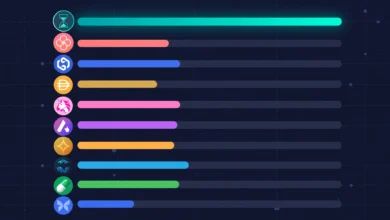
Here’s how the top 10 meme coins by market capitalization currently stack up, based on recent data from major crypto trackers.


1. Dogecoin (DOGE)
Dogecoin remains the largest and most enduring meme coin by a wide margin. Created in 2013 as a lighthearted parody of Bitcoin, it has survived multiple full market cycles and built genuine name recognition well beyond the crypto space, helped along by repeated attention from high-profile figures like Elon Musk. Dogecoin runs on its own independent blockchain, and its classification as a digital commodity by U.S. regulators has opened the door to further institutional products built around the asset.
2. Shiba Inu (SHIB)
Shiba Inu launched in 2020 as a self-described “Dogecoin killer” and has since built out considerably more infrastructure than most meme coins ever attempt, including its own Layer 2 network, Shibarium, and a decentralized exchange called ShibaSwap. Shiba Inu’s circulating supply runs into the hundreds of trillions of tokens, which keeps its per-token price extremely low even as its total market capitalization remains among the largest in the meme coin category.
3. MemeCore (M)
MemeCore has emerged as one of the more notable newer entrants in the meme coin space, positioning itself as infrastructure built specifically for meme-focused projects and communities rather than a single standalone token. Its rapid climb into the top 10 meme coins by market capitalization reflects how quickly capital can rotate toward newer projects when the broader meme coin sector is attracting fresh attention.
4. Pepe (PEPE)
Pepe launched in 2023 on Ethereum, built entirely around the widely recognized Pepe the Frog internet meme, and has no formal utility roadmap beyond serving as a community-driven speculative asset. Despite that, or arguably because of it, Pepe has become one of the more consistently traded meme coins on Ethereum, popular among traders looking for high volatility exposure within a well-established, high-liquidity ecosystem.
5. Official Trump (TRUMP)
Official Trump launched in early 2025 tied to political branding and generated significant early trading volume driven largely by media attention and political commentary. Its position among the top 10 meme coins by market capitalization illustrates how political and celebrity-driven narratives can rapidly generate large speculative valuations, independent of any underlying technology or utility.
6. Pippin (PIPPIN)
Pippin is a newer entrant that gained traction through community-driven momentum and social media presence, following a pattern common among smaller meme coins that suddenly break into wider recognition. Its appearance in the top 10 reflects how quickly the composition of this list can change compared to more established crypto sectors like Layer 1 blockchains or DeFi tokens.
7. Bonk (BONK)
Bonk was the first major meme coin built natively on Solana, launching via a large community airdrop in December 2022. It has become closely associated with the broader Solana ecosystem’s fast, low-cost transaction environment, and its ongoing utility within Solana-based decentralized applications has given it more staying power than many meme coins that rely purely on speculation.
8. Pudgy Penguins (PENGU)
Pudgy Penguins stands out from most meme coins because of its roots in a well-known NFT collection rather than a purely speculative token launch. The project has built a genuine brand around its penguin characters, including licensing and merchandise deals, which gives PENGU a somewhat different growth story compared to tokens built purely around internet jokes with no underlying intellectual property.
9. SPX6900 (SPX)
SPX6900 has built its identity around an anti-traditional-finance, internet-culture narrative, positioning itself as a satirical alternative to conventional stock market indexes. Its community-driven growth and consistent presence in the top 10 meme coins by market capitalization show how a strong, specific narrative can sustain a meme coin’s valuation even without any technical differentiation from thousands of similar tokens.
10. Floki (FLOKI)
Floki, inspired by Elon Musk’s pet Shiba Inu dog, has expanded well beyond its original meme premise into a broader ecosystem that includes a decentralized exchange, an NFT metaverse project, and educational initiatives branded as Floki University. That expansion into actual product development has helped it maintain a place among the larger meme coins even as newer, purely speculative tokens have come and gone around it.
Why Meme Coins Attract So Much Capital
It’s worth understanding why this category continues to draw serious money despite the well-documented risks involved.
- Low barrier to entry for retail investors. Meme coins are typically priced at a tiny fraction of a cent, which makes it psychologically easy for new investors to buy large quantities of tokens, even though the actual dollar value invested may be modest.
- Strong community identity. Many meme coin communities function almost like fan bases, with active social media presences that help sustain attention and trading volume over time.
- Asymmetric upside potential. A relatively small amount of capital flowing into a low-cap meme coin can produce dramatic percentage gains, which continues to attract speculative traders chasing outsized returns.
- Cultural relevance. Meme coins tied to viral moments, political figures, or recognizable internet characters benefit from free attention that would cost traditional projects significant marketing spend to replicate.
Risks of Investing in Meme Coins
The risks here are substantial, and it’s worth being direct about them before treating any meme coin as a serious portfolio allocation.
- Extremely high failure rates. The overwhelming majority of meme coins launched in any given period lose most or all of their value within months, and many disappear entirely.
- Concentration risk. A large share of a meme coin’s supply is often held by a small number of wallets, which can allow large holders to move the price dramatically with a single sale.
- No underlying utility in most cases. Outside of the handful of names that have built real infrastructure, most meme coins have no product, revenue, or use case supporting their valuation beyond speculative demand.
- Vulnerability to narrative shifts. Meme coins tied to a specific trend, celebrity, or cultural moment can lose relevance almost overnight once attention moves elsewhere.
- Manipulation and wash trading. Thin liquidity in many meme coins makes them more susceptible to coordinated pump-and-dump schemes than more established, higher-liquidity assets.
How to Evaluate a Meme Coin Before Buying
For anyone still interested in this category despite the risks, a few practical checks can help filter out the weakest projects:
- Check token distribution. Look at how much supply the top wallets control; heavy concentration among a small number of holders increases the risk of a sudden price collapse.
- Verify liquidity locks. Confirm whether liquidity has been locked on-chain, which reduces the risk of a rug pull where developers withdraw liquidity and abandon the project.
- Look for real activity beyond price speculation. Coins with an active decentralized exchange, NFT ecosystem, or Layer 2 network have more going for them than tokens with nothing beyond a logo and a social media account.
- Assess community engagement quality, not just size. A large follower count means little if engagement is dominated by bots or paid promotion rather than genuine, organic interest.
- Size positions conservatively. Given the failure rates in this category, treating meme coin exposure as a small, high-risk allocation rather than a core holding is the more prudent approach.
Meme Coins vs Utility Tokens: What’s the Difference
It’s worth drawing a clear line between meme coins and utility-focused cryptocurrencies, since the two categories carry very different risk profiles.
- Utility tokens are built around a specific function, such as paying transaction fees on a blockchain, accessing a decentralized application, or participating in protocol governance.
- Meme coins are built primarily around cultural relevance and community identity, with utility, when it exists at all, typically added after the fact rather than being the original purpose of the token.
- Valuation drivers differ significantly. Utility tokens tend to be valued, at least in part, based on network usage and adoption, while meme coins are valued almost entirely on sentiment, attention, and speculative demand.
Understanding this distinction helps explain why the top 10 meme coins by market capitalization can shift so much faster than rankings in more fundamentals-driven sectors like layer 1 blockchains or DeFi infrastructure.
Conclusion
The top 10 meme coins by market capitalization currently include established names like Dogecoin and Shiba Inu alongside newer entrants such as MemeCore, Pippin, and SPX6900, reflecting a category that has grown considerably in both size and complexity since its early, purely satirical origins. A handful of these tokens, including Bonk, Pudgy Penguins, and Floki, have built genuine infrastructure or brand identity beyond speculation, while others remain almost entirely dependent on community attention and cultural momentum. Given the extremely high failure rate across the broader meme coin category, treating this list as a starting point for research rather than a buy signal, and sizing any position conservatively, remains the more responsible approach for anyone considering exposure to this famously volatile corner of the crypto market.