NFT Fractionalization Explained: An Easy, Essential Guide in 7 Steps (2026)
NFT fractionalization explained simply: how splitting an NFT into tokens works, the 7 key steps, benefits, risks, legal rules, and real-world examples.
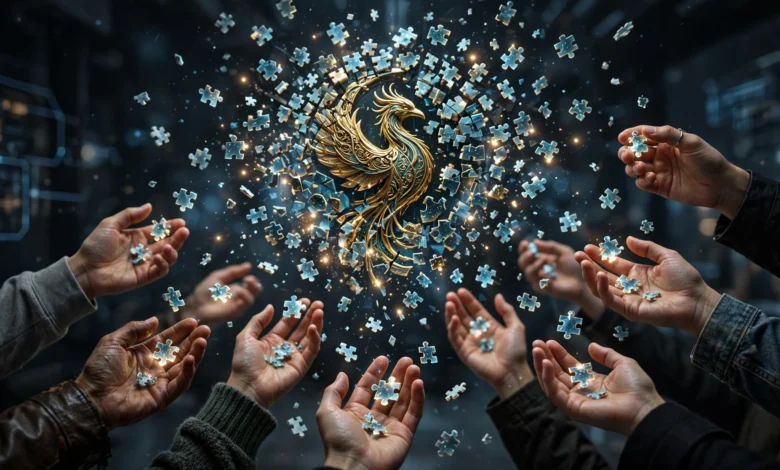
NFT fractionalization is a simple idea wrapped in a lot of confusing jargon. Strip away the technical terms and it comes down to this: instead of one person owning an entire NFT, many people own a small piece of it. Think of a group of friends chipping in to buy an expensive painting, except the painting is digital, the ownership shares are crypto tokens, and the whole arrangement is managed by code on a blockchain.
The concept took off in 2021, when some NFTs were selling for millions of dollars. Fractionalization promised to let everyday collectors own a slice of famous pieces they could never afford outright. One of the best-known examples, the original Doge meme NFT, was split into billions of tokens that anyone could buy.
Since then, the hype has cooled. Some early platforms shut down, regulators raised questions about whether fractional NFTs count as securities, and the market became much more cautious. But the core idea is still very much alive, especially as more real-world assets like art, real estate, and collectibles move onto blockchains.
This guide explains how fractionalization works in plain English, walks through the process step by step, and covers the real benefits and the serious risks. You will also find a look at the legal picture, a comparison with similar options, and practical tips if you are thinking about trying it yourself.
What Is an NFT? A Quick Refresher
A non-fungible token (NFT) is a unique digital token recorded on a blockchain. “Non-fungible” means it cannot be swapped one-for-one with another token, because each one is different. A dollar is fungible: any dollar is worth the same as any other. A signed first-edition book is non-fungible: it is one of a kind.
NFTs can represent digital art, collectibles, in-game items, music, domain names, event tickets, or ownership records for physical items. Most NFTs on Ethereum follow the ERC-721 standard, which defines how unique tokens are created and transferred. You can read the technical specification in EIP-721 on the Ethereum Improvement Proposals site, or a beginner-friendly overview on ethereum.org’s guide to NFTs.
The problem with uniqueness is that it creates two obstacles:
- High prices. Rare NFTs can cost far more than most people can afford.
- Low liquidity. Selling a one-of-a-kind item means finding one buyer willing to pay your price, which can take a long time.
Fractionalization was designed to solve both.
What Is NFT Fractionalization?
NFT fractionalization is the process of locking a single NFT in a smart contract and issuing a set number of fungible tokens that represent shares of it. Each token, often called a fraction or a share, gives its holder a proportional claim on the NFT, or more precisely on the vault that holds it.


The resulting tokens are usually standard ERC-20 tokens, the same type used by most cryptocurrencies on Ethereum. That means they can be traded on decentralized exchanges, held in ordinary crypto wallets, and priced by the market just like any other token.
A simple analogy
Imagine a rare vintage guitar worth $100,000. Instead of one collector buying it, the owner puts it in a secure vault and issues 100,000 certificates, each representing 1/100,000 of the guitar. People can buy one certificate or a thousand. They can trade certificates with each other. And if someone eventually wants the whole guitar, there is a process for buying out everyone else.
Fractional NFTs work the same way, except the vault is a smart contract, the certificates are tokens, and everything is recorded on a public blockchain.
Key terms to know
- Vault: the smart contract that holds the original NFT
- Fractions or shares: the fungible tokens issued against the NFT
- Curator: the person or group that fractionalized the NFT and set the initial terms
- Reserve price: the minimum value at which a buyout can be triggered
- Buyout: the process of purchasing the whole NFT back from fraction holders
- Redemption: reclaiming the original NFT by holding or returning all fractions
How NFT Fractionalization Works: 7 Simple Steps
Every platform handles the details a little differently, and there is still no single industry standard. But most fractional NFT setups follow the same basic path.
- Choose the NFT. The owner picks an NFT, or sometimes a bundle of NFTs, to fractionalize. Typically these are high-value pieces where few buyers could afford the whole thing.
- Lock it in a vault. The owner transfers the NFT into a smart contract vault. While it sits there, no single person controls it.
- Set the terms. The curator decides how many fractions to create, the token name and symbol, a starting valuation, and often a reserve price or exit price for future buyouts. Some platforms also let curators set a small ongoing fee.
- Mint the fractions. The vault issues fungible tokens, usually ERC-20, that represent shares of the NFT. The original owner receives them first.
- Distribute or sell the shares. The owner can keep some fractions and sell others, often through a public sale, an auction, or a liquidity pool on a decentralized exchange.
- Trade on the open market. Fraction holders can buy and sell their tokens at any time. The market price of each fraction reflects what buyers think the whole NFT is worth.
- Buyout or redemption. Eventually, someone may want to own the full NFT again. Depending on the platform, they trigger a buyout, and fraction holders receive their share of the sale price. Anyone holding 100% of the fractions can usually redeem the NFT directly.
How buyouts usually work
The buyout mechanism is one of the most important parts of NFT fractionalization, because it determines how fraction holders eventually get paid. There are three common models:
- Reserve price auctions. Fraction holders vote on a reserve price. Once a bidder meets or beats it, an auction starts. The winner gets the NFT, and the proceeds are split among fraction holders.
- Fixed exit price. The curator sets a price at which anyone can buy the whole NFT at any time. When that happens, fraction holders can swap their tokens for their share of the payment.
- Shotgun or buyout clauses. A buyer offers a price for all fractions. Holders either accept and sell, or reject by buying out the bidder at the same price.
In every model, fraction holders are paid pro rata, meaning in proportion to how many fractions they hold.
Token standards behind fractional NFTs
A few token standards make fractionalization possible:
- ERC-721: the standard for the original unique NFT
- ERC-20: the standard for the fungible fraction tokens
- ERC-1155: a multi-token standard that can represent both unique and fungible items in one contract
- Experimental hybrids: newer designs such as ERC-404 tried to blend fungible and non-fungible behavior in a single token, though they remain unofficial and niche
Single-NFT vaults vs. collection pools
There are two main ways to fractionalize:
- Single-NFT vaults split one specific NFT into shares. This was the model used for famous pieces like the Doge NFT.
- Collection pools let users deposit any NFT from a collection into a shared pool and receive a fungible token representing one “floor” item. NFTX is the best-known example of this approach. It is less about owning a slice of one masterpiece and more about creating liquidity for an entire collection.
Benefits of NFT Fractionalization
When it works well, fractionalization offers real advantages for both owners and buyers.
Lower entry cost
The most obvious benefit is access. A collector who could never buy a famous NFT outright can own a small share for a fraction of the price. This idea of fractional ownership is the same one that makes fractional shares of stocks popular with new investors.
More liquidity for owners
Selling a whole high-value NFT can take months. By selling fractions, an owner can unlock part of the NFT’s value quickly while keeping some exposure to future gains.
Price discovery
When fractions trade on an open market, their price gives a live signal of what the market thinks the whole NFT is worth. That is more informative than waiting for an occasional sale.
Shared ownership and community
Fractionalization lets communities, fan groups, and DAOs collectively own culturally important pieces. Holders often feel part of a shared project rather than just passive buyers.
DeFi possibilities
Because fractions are standard tokens, they can sometimes be used in decentralized finance, for example as liquidity in trading pools.
Risks and Downsides of Fractional NFTs
The benefits are real, but so are the risks. Several of them caught early buyers by surprise.
- Smart contract risk. Vault contracts can contain bugs. If a vault is exploited, the underlying NFT can be stolen.
- Low liquidity in practice. Many fraction tokens trade rarely, so selling at a fair price can be hard, especially in a falling market.
- Valuation risk. NFT prices are highly speculative. The value of your fractions depends entirely on demand for the underlying NFT, which can collapse.
- Buyout risk. A buyout can be triggered at a price you consider too low, forcing you to accept it or lose out.
- Platform risk. If the platform behind a vault shuts down, its website may disappear. The contracts may still exist on-chain, but using them becomes harder.
- Governance disputes. Fraction holders may disagree about reserve prices, buyouts, or how the NFT is used.
- No real usage rights. Owning a fraction usually does not give you intellectual property rights, display rights, or access perks tied to the NFT.
- Regulatory risk. In many countries, fractional NFTs may be treated as securities, which can affect how they are sold and traded.
Is NFT Fractionalization Legal? Securities Rules Explained
This is one of the most important questions around NFT fractionalization, and the answer depends on where you live and how the fractions are offered.
The United States
In the US, regulators use the Howey test to decide whether something is an investment contract and therefore a security. The test asks whether people invest money in a common enterprise expecting profits from the efforts of others.
Fractional NFTs raise obvious concerns here. Buyers pool money into a shared asset and usually expect it to rise in value. As early as 2021, SEC Commissioner Hester Peirce warned that selling fractional interests in NFTs could create investment products. In 2022, reports indicated the SEC’s enforcement unit was looking into NFT offerings with a particular focus on fractionalized NFTs. The SEC’s broader approach to crypto has shifted since 2025, but the basic securities analysis still applies to fractional ownership structures.
The European Union
The EU’s Markets in Crypto-Assets Regulation (MiCA) generally excludes unique, non-fungible crypto-assets from its scope. However, MiCA’s recitals state that fractional parts of a unique, non-fungible crypto-asset should not be considered unique and non-fungible. In practice, that means fractionalized NFTs may fall under MiCA or other financial rules depending on how they are structured. You can read the full text of Regulation (EU) 2023/1114 on EUR-Lex.
Other countries
Rules vary widely. Some regulators treat fractional NFTs like any other crypto token, while others treat them as collective investment schemes. If you plan to create or sell fractions, get legal advice in your jurisdiction first.
Real-World Examples of NFT Fractionalization
A few examples show both the promise and the pitfalls.
The Doge NFT
In 2021, the collector group PleasrDAO bought the original Doge meme as an NFT for about $4 million and then fractionalized it into billions of $DOG tokens. It became the most famous example of fractional ownership, letting fans around the world own a tiny piece of internet history.
Fractional.art and Tessera
Fractional.art was one of the first major fractionalization platforms and later rebranded as Tessera after raising venture funding. In May 2023, Tessera announced it would wind down operations, saying its economic model made it hard to become profitable. The shutdown showed that platform risk is real, even for well-funded projects.
NFTX and collection pools
NFTX took a different approach by pooling NFTs from the same collection and issuing tokens that represent a floor-priced item. This model focuses on liquidity rather than shared ownership of a single masterpiece.
Real-world asset tokenization
The same idea now shows up in the growing real-world asset (RWA) tokenization market, where fine art, real estate, and collectibles are represented on-chain and divided into shares. These products are often structured with regulation in mind from the start, which makes them quite different from the early, experimental NFT vaults.
Fractional NFTs vs. Other Ways to Own NFTs
Fractionalization is not the only way to get exposure to valuable NFTs. This table compares it with common alternatives.
| Option | How it works | Cost to enter | Liquidity | Main trade-off |
|---|---|---|---|---|
| Buying a whole NFT | You own the full token directly | High | Low, one buyer at a time | Expensive and slow to sell |
| Fractional NFT | You own fungible shares of a vaulted NFT | Low | Depends on trading volume | Buyout, platform, and legal risk |
| Collection pool token | You own a token backed by a pool of NFTs from one collection | Medium | Usually higher | Exposure to floor items, not rare pieces |
| DAO membership | You join a group that buys NFTs together | Varies | Often low | Governance and legal complexity |
| NFT index or fund | You hold a product tracking a basket of NFTs | Low to medium | Depends on the product | Fees and limited availability |
How to Get Started With NFT Fractionalization Safely
If you want to try it, as a buyer or as an owner, take it slowly.
If you want to buy fractions
- Research the underlying NFT. Understand why it has value and who else collects it.
- Check the vault contract and platform. Look for audits, a clear team, and an active community.
- Read the buyout terms. Know the reserve price, voting rules, and how payouts work.
- Check trading volume. Make sure there are enough buyers and sellers to exit when you need to.
- Start small. Treat any purchase as money you could lose completely.
- Protect your wallet. Use a hardware wallet and only connect to official websites.
If you want to fractionalize your own NFT
- Get legal advice first. Selling fractions to the public may count as offering securities in your country.
- Choose a reputable, audited platform that is actively maintained.
- Set realistic terms. A fair reserve price and a clear buyout process help avoid disputes later.
- Be transparent. Explain clearly what holders do and do not get, including any lack of usage rights.
- Plan for taxes. Selling fractions can create taxable gains, so keep detailed records.
The Future of NFT Fractionalization
The early wave of NFT fractionalization was driven by hype around expensive digital collectibles. The next phase looks different. Three trends stand out:
- Real-world asset tokenization. The ideas behind fractional NFTs are now being applied to art, property, and other physical assets, often inside regulated structures.
- Clearer rules. Frameworks like MiCA and ongoing work by securities regulators are pushing platforms toward licensed, compliant models.
- Better standards and security. Researchers and developers have proposed more standardized, secure designs for fractionalization contracts to reduce the risks seen in early platforms.
Fractionalization is unlikely to return to its 2021 frenzy, but as a tool for shared ownership and liquidity, it still has a role to play.
Frequently Asked Questions
What does NFT fractionalization mean in simple terms?
It means splitting ownership of one NFT into many smaller pieces. The NFT is locked in a smart contract, and fungible tokens are issued to represent shares, so many people can own part of it.
Can I sell my fraction of an NFT?
Yes, as long as there is a market for it. Fraction tokens can usually be traded on decentralized exchanges or the platform where they were created. In practice, some fractions have very little trading activity, which can make selling difficult.
Do fraction holders own the NFT’s copyright?
Usually not. Owning a fraction gives you a financial claim on the vaulted NFT, not intellectual property rights, unless the terms specifically say otherwise.
Are fractional NFTs securities?
They can be. In the US, fractional NFTs may meet the Howey test for investment contracts. In the EU, MiCA treats fractional parts of NFTs differently from unique NFTs. The answer depends on the structure and your location, so seek legal advice before creating or selling them.
What happens if the fractionalization platform shuts down?
The vault contract usually remains on the blockchain, so the NFT is not automatically lost. However, without the platform’s website and support, trading and buyouts may become much harder to manage.
Is NFT fractionalization a good investment?
It is a high-risk, speculative activity. It can offer access and liquidity, but prices are volatile and many fraction tokens lose value. Only use money you can afford to lose.
Conclusion
NFT fractionalization takes one unique NFT, locks it in a smart contract vault, and issues fungible tokens that let many people own a share of it, which lowers the cost of entry, adds liquidity for owners, and turns expensive digital assets into something a whole community can hold. The process follows seven simple steps, from choosing and vaulting the NFT to minting fractions, trading them, and eventually completing a buyout or redemption, but the risks are just as real as the benefits: smart contract bugs, thin trading markets, buyouts at unwanted prices, platforms that shut down like Tessera did in 2023, and legal questions about whether fractions count as securities under rules like the Howey test in the US or MiCA in the EU. The idea is now finding a more mature home in regulated real-world asset tokenization, so if you decide to take part, research the underlying asset, read the buyout terms carefully, protect your wallet, start small, and get legal advice before fractionalizing anything yourself.