NFT Use Cases Beyond Digital Art: 10 Powerful Real-World Applications in 2026
NFT use cases now reach far past digital art. See how tokens power tickets, gaming, real estate, identity, supply chains and loyalty programs in 2026.
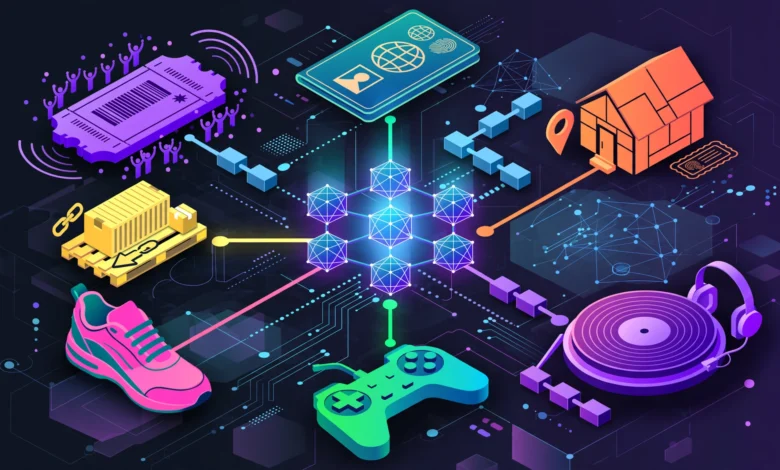
NFT use cases are a lot more interesting than the cartoon apes and million-dollar JPEGs that made headlines in 2021. Back then, most people saw non-fungible tokens as speculative collectibles. When prices crashed in 2022 and 2023, plenty of observers wrote the whole idea off.
But the technology underneath never depended on art prices. An NFT is simply a unique, verifiable record on a blockchain that proves who owns or controls something. That turns out to be useful in places that have nothing to do with galleries: a concert ticket that can’t be faked, a property title that transfers in minutes, a diploma an employer can check instantly, a sneaker that comes with a digital certificate of authenticity.
In 2026, many of the most practical real-world NFT applications don’t even use the word “NFT” anymore. Brands call them digital product passports, digital collectibles, membership passes, or tokenized assets. The label changed, but the core idea of provable digital ownership stuck.
In this guide, we break down ten areas where NFTs beyond digital art are being used today, from NFT ticketing and blockchain gaming to real estate tokenization, digital identity, and supply chain tracking. For each one, you’ll see how it works, real examples, and the problems it still faces. We’ll also cover the main benefits, the challenges holding adoption back, and where NFT utility is likely headed next.
What Is an NFT, Really?
A non-fungible token (NFT) is a unique digital token recorded on a blockchain. “Non-fungible” means it can’t be swapped one-for-one with another token the way a dollar or a bitcoin can. Each NFT has its own ID, its own owner, and its own history, all publicly verifiable.
If you want a neutral technical primer, the Ethereum.org guide to non-fungible tokens explains the basics well. The short version is that an NFT does three jobs:
- Proves ownership. Anyone can check which wallet holds a given token.
- Proves authenticity. The token’s origin, such as the brand or issuer that created it, is visible on-chain.
- Carries rules. Smart contracts can attach conditions, such as resale royalties, transfer limits, expiry dates, or access rights.
Common NFT Standards
Most NFTs follow a few shared standards so wallets and marketplaces can read them:
- ERC-721: the original Ethereum standard for one-of-one tokens
- ERC-1155: a multi-token standard popular in gaming and ticketing, since it handles large batches cheaply
- Soulbound tokens: non-transferable tokens tied to one wallet, useful for credentials and identity
- Solana and other chains: compressed NFTs and similar formats that make minting millions of tokens very cheap
Why NFT Utility Matters More Than Ever
The early NFT market ran on speculation. People bought tokens hoping someone would pay more later. When that cycle ended, the projects that survived were the ones that gave holders something useful: access, rights, proof, or rewards.
That shift is why NFT use cases now focus on utility NFTs rather than pure collectibles. Three trends pushed this along:

- Cheaper networks. Layer 2 chains and fast blockchains cut minting costs from dollars to fractions of a cent, which makes mass use realistic.
- Better wallets. Email logins and embedded wallets mean users don’t need to manage seed phrases to hold a token.
- The rise of tokenization. Banks and asset managers have embraced real-world asset (RWA) tokenization, which applies the same unique-token idea to property, bonds, and funds.
In plain terms, the question has moved from “what is this picture worth?” to “what problem does this token solve?” The sections below answer that question industry by industry.
10 Real-World NFT Use Cases Beyond Digital Art
Here are the ten NFT use cases with the most real activity behind them. Some are already in daily use, while others are still in pilot stages. For each, we cover how it works, where it shows up, and what still gets in the way.
1. NFT Ticketing and Event Access
NFT ticketing is one of the clearest wins for the technology. A ticket issued as a token is easy to verify at the door and very hard to counterfeit, since its origin is recorded on-chain.
How it helps:
- Fraud prevention: buyers can confirm a ticket came from the official issuer
- Fairer resale: organizers can cap resale prices or take a cut of secondary sales through smart contracts
- Collectible stubs: the ticket stays in your wallet after the event as a digital keepsake, sometimes unlocking future perks
- Better fan data: organizers can reward repeat attendees directly
Major ticketing companies have tested token-based tickets and digital collectible stubs, and sports leagues have issued commemorative tokens for big games. Proof of Attendance Protocol (POAP) badges are another well-known example, letting conference and event attendees collect free tokens that prove they were there.
Challenge: most fans don’t care what technology runs their ticket. The winning products hide the blockchain entirely and feel like a normal mobile ticket.
2. Gaming and In-Game Assets
Blockchain gaming uses NFTs to give players real ownership of items like characters, skins, weapons, and land. In a traditional game, the publisher controls every item. With gaming NFTs, players can sell, trade, or move items outside the game.
Popular models include:
- Tradable items that keep value even if you stop playing
- Interoperable assets that could, in theory, work across multiple games
- Player-driven economies where rare items earn real income
The play-to-earn boom of 2021, led by Axie Infinity, showed both the promise and the risk. Many players earned money for a while, but token rewards collapsed when new player growth slowed. Since then, studios have shifted toward “play-and-own” models, where the game has to be fun first and ownership is a bonus.
Challenge: many gamers remain skeptical, seeing NFTs as a cash grab. Quality games and fair economies will decide whether this sector grows.
3. Real Estate Tokenization
Real estate NFTs represent property deeds or ownership shares as tokens. Companies like Propy and Roofstock onChain have completed U.S. home sales where the property, held through a legal entity, was transferred by moving an NFT.
Benefits:
- Faster closings: ownership can change hands in minutes instead of weeks
- Fractional ownership: investors can buy a small share of a building instead of the whole thing
- Clear records: ownership history is transparent and tamper-resistant
- Global access: buyers abroad can take part more easily
This fits into the larger real-world asset tokenization trend, where financial firms are putting funds, bonds, and private credit on-chain.
Challenge: property law still runs on government land registries. Until registries officially recognize on-chain records, most real estate NFTs rely on LLC structures and traditional paperwork in the background.
4. Digital Identity and Credentials
Digital identity NFTs let people hold verifiable proof of who they are, or what they’ve achieved, in their own wallet. Many of these use soulbound tokens, which can’t be transferred or sold.
Examples include:
- University diplomas and certificates that employers can verify instantly
- Professional licenses for doctors, lawyers, or contractors
- Course completion badges from online learning platforms
- Know-your-customer (KYC) attestations that prove a check was passed without sharing personal data
The big advantage is control. Instead of asking a school or agency to confirm your records each time, you share a token that anyone can check.
Challenge: privacy. Putting sensitive information on a public blockchain is a bad idea, so good systems store only a proof or hash on-chain and keep personal details off-chain.
5. Supply Chain Tracking and Product Authenticity
Counterfeits cost brands billions every year. Supply chain NFTs give each product a digital twin that records where it was made, how it moved, and who owns it now.
Luxury is the leading sector here. The Aura Blockchain Consortium, founded by LVMH, Prada Group, and Cartier, provides digital certificates of authenticity for high-end goods. Customers can check a bag or watch’s history and transfer the certificate when they resell it.
Other uses include:
- Food traceability from farm to shelf
- Pharmaceutical tracking to fight fake medicines
- Digital product passports that share materials, repair, and recycling data, an idea gaining ground under new European sustainability rules
Challenge: a token only proves what’s recorded. If someone enters false data at the start, the blockchain keeps the false record just as faithfully.
6. Music and Creator Royalties
Music NFTs let artists sell directly to fans and keep more of the revenue. Some artists have released albums as tokens, while others have sold a share of streaming royalties so fans earn when a song performs well.
What creators gain:
- Direct sales without labels taking a large cut
- Automatic royalties on resales, written into the smart contract
- Closer fan relationships through exclusive content, early access, or backstage perks
Challenge: many marketplaces made creator royalties optional during the 2023 fee wars, which weakened one of the main selling points. Royalty-sharing tokens may also fall under securities laws depending on the country.
7. Loyalty Programs and Memberships
Brands use NFT memberships and loyalty tokens to reward customers in ways points systems can’t. A token can act as a membership card, unlock discounts, grant event access, or show status.
Starbucks ran its Odyssey program from 2022 to 2024, giving members collectible digital stamps tied to rewards. It ended, but it showed how a big brand could hide the blockchain behind a familiar app. Reddit’s collectible avatars, built on Polygon, brought millions of wallets to users who mostly never thought of them as NFTs.
Why brands like it:
- Portable rewards customers truly own
- Partnerships where one brand can reward another brand’s token holders
- Community building through token-gated content and events
Challenge: shutting down a program can upset holders, as several brands learned when their Web3 projects closed. Clear terms up front matter.
8. Domain Names and Web3 Identity
Blockchain domain names like those from the Ethereum Name Service replace long wallet addresses with readable names such as “alice.eth.” Each name is an NFT owned by the holder. The ENS documentation explains how these names link to wallets, websites, and profiles.
Uses include:
- Easier payments by sending crypto to a name instead of a long address
- A portable profile with links, avatar, and social handles
- Decentralized websites hosted without a traditional domain registrar
Challenge: names must be renewed, and phishing scams using look-alike names are common.
9. Healthcare Records and Consent
Healthcare is an early but promising area for NFT technology. The main idea is giving patients control over who can see their medical records, using tokens as access keys rather than storing health data on-chain.
Possible applications:
- Patient-controlled access to records across hospitals
- Consent tracking for research and data sharing
- Drug supply chain verification to block counterfeit medicines
Challenge: health data rules such as HIPAA in the U.S. and GDPR in Europe are strict. Most projects are pilots, and wide adoption is still years away.
10. Intellectual Property and Licensing
NFTs can record who owns a piece of intellectual property and the terms for using it. A photographer, writer, or designer can issue tokens that grant licenses, with usage rights written into the contract.
Benefits:
- Clear proof of creation date and ownership
- Automated licensing where buyers get usage rights instantly
- Brand IP licensing, where holders get commercial rights to the character or artwork they own
Some collections already grant holders commercial rights to their characters, letting them put the image on merchandise or media.
Challenge: owning a token doesn’t automatically mean owning the copyright. The legal rights depend on the license attached, and many buyers don’t read it.
NFT Use Cases at a Glance
This quick summary compares the ten NFT use cases by maturity and the main problem each one solves.
| Use case | Main problem solved | Maturity in 2026 | Biggest hurdle |
|---|---|---|---|
| Ticketing | Fake tickets, scalping | Growing | Fans don’t want crypto friction |
| Gaming | No real item ownership | Growing | Gamer skepticism |
| Real estate | Slow, costly transfers | Early | Land registry laws |
| Identity and credentials | Slow verification | Early to growing | Privacy |
| Supply chain | Counterfeits | Growing, strong in luxury | Bad data at the source |
| Music | Low artist payouts | Niche | Optional royalties, securities law |
| Loyalty and membership | Locked-in points | Growing | Program shutdowns |
| Domains | Long wallet addresses | Established | Renewals, phishing |
| Healthcare | Fragmented records | Pilot stage | Strict regulation |
| Intellectual property | Unclear rights | Early | Legal enforceability |
Key Benefits of NFTs Beyond Digital Art
Across all these industries, a few benefits keep showing up. They explain why businesses keep testing non-fungible tokens even after the speculative bubble burst.
- Verifiable ownership: anyone can check who holds a token without asking a middleman
- Fraud resistance: fakes are easy to spot because the issuer is recorded on-chain
- Programmable rules: royalties, resale caps, expiry dates, and access rights run automatically
- Portability: users can move tokens between apps, marketplaces, and wallets
- Transparency: histories of ownership and transfers are public and hard to alter
- Lower friction: some processes, like transfers and verification, take minutes instead of days
Challenges Holding NFT Adoption Back
The technology is promising, but NFT adoption still faces real obstacles. Being honest about these matters if you’re evaluating a project.
Reputation and Trust
The 2021 mania left many people associating NFTs with scams, rug pulls, and overpriced pictures. That’s why brands often rename them “digital collectibles” or “digital passports.”
User Experience
Wallets, gas fees, and seed phrases still confuse mainstream users. The projects that succeed tend to hide these steps with email sign-ups and sponsored transaction fees.
Legal and Regulatory Uncertainty
Rules differ widely by country. Some tokens, especially those that share revenue or royalties, may count as securities. Property and IP laws haven’t fully caught up with on-chain records either.
Security Risks
Phishing, wallet drainers, and fake marketplaces remain common. Users need to verify contract addresses and use trusted wallets.
Environmental Concerns
This worry has eased since Ethereum switched to proof of stake in 2022, cutting its energy use by more than 99%. Most new utility NFT projects now run on energy-efficient networks.
The Future of NFT Use Cases
The next phase of NFT use cases will probably look less like a trend and more like infrastructure. Here’s what to watch:
- Invisible blockchain. Users will hold tokens without knowing it, much like people use the internet without thinking about TCP/IP.
- Growth of real-world asset tokenization. As banks and funds tokenize assets, NFT-style ownership records will spread into mainstream finance.
- Digital product passports. Regulations pushing product transparency could make token-based passports common in fashion, electronics, and batteries.
- Verifiable credentials. Schools, employers, and governments may adopt token-based credentials to speed up hiring and checks.
- AI and authenticity. As AI-generated content spreads, on-chain proof of origin could help verify that a photo, document, or artwork is genuine.
How Businesses Can Start Using NFTs
If you’re thinking about adding NFT utility to a business, start small and practical:
- Pick a real problem such as counterfeits, ticket fraud, or customer retention, not “we need an NFT.”
- Choose a low-cost, energy-efficient chain with good wallet support.
- Hide the complexity with email sign-ups and no upfront gas fees.
- Write clear terms about what holders get and what happens if the program ends.
- Get legal advice on securities, consumer protection, and data privacy rules in your markets.
- Measure results like fraud reduction, repeat visits, or resale revenue, and scale only what works.
Frequently Asked Questions About NFT Use Cases
What are the most practical NFT use cases today?
The most practical NFT use cases right now are event ticketing, gaming items, luxury product authentication, blockchain domain names, and loyalty programs. These have working products and real users, not just pilots.
Are NFTs still relevant in 2026?
Yes, though not in the way the 2021 headlines suggested. Speculative art trading has shrunk, while utility NFTs for access, ownership, and authenticity have kept growing, often under different names.
Can NFTs represent physical items?
Yes. NFTs can act as digital certificates for physical goods like watches, sneakers, artwork, and even homes. The token proves authenticity and ownership, while the item itself stays in the real world.
What’s the difference between an NFT and a tokenized real-world asset?
They use the same core idea of a unique on-chain record. “Tokenized asset” is the term finance firms prefer when the token represents something like property, a bond, or a fund share, often with legal and regulatory backing.
Are NFT use cases safe for businesses?
They can be, with the right setup. Businesses should use reputable blockchains, keep personal data off-chain, set clear terms for holders, and get legal advice on local rules before launching.
Conclusion
NFTs started as a way to sell digital art, but their real value lies in proving ownership, authenticity, and access in a way anyone can verify. Today, NFT use cases span ticketing that blocks fraud, games where players own their items, faster real estate transfers, portable credentials, luxury goods with digital certificates, fairer creator payouts, loyalty programs customers actually own, readable Web3 domains, patient-controlled health data, and clearer IP licensing. Challenges around trust, user experience, regulation, and security are real, and many projects still sit in early stages, but the direction is clear: as the technology becomes invisible and real-world asset tokenization grows, NFTs are turning from a speculative trend into a quiet layer of digital infrastructure that businesses and everyday users rely on without thinking twice.