Top Crypto Exchanges by Market Cap: 10 Best Platforms With Powerful Valuations in 2026
Top crypto exchanges by market cap in 2026, from Robinhood and Binance to Coinbase and Hyperliquid, ranked by stock and token value with key risks.

Top crypto exchanges by market cap is a trickier ranking than it sounds. Most exchange lists sort platforms by trading volume or user count, which tells you how busy a venue is. But it doesn’t tell you what the market thinks the business is actually worth. For that, you need a price that trades publicly.
Here’s the catch. Only a handful of crypto exchanges sell shares on a stock market. Coinbase, Robinhood, Bullish, eToro and Gemini do. Most of the biggest names, including Binance, OKX and Crypto.com, are private companies. What they do have is a native token that trades openly and is closely tied to how their platform performs. And some of the most valuable trading venues today aren’t companies at all. They’re decentralized exchanges like Hyperliquid and Uniswap, whose tokens carry multibillion-dollar valuations.
So this ranking uses what we call listed market cap: the value of whatever publicly traded asset best represents each exchange, whether that’s a stock or a token. It’s not a perfect apples-to-apples comparison, and we’ll explain why, but it’s the closest thing to a real-time price tag on each platform.
The timing makes this especially interesting. Crypto has had a rough stretch, with Bitcoin falling hard from its late-2025 peak before partly recovering. That has pushed exchange valuations around sharply. Below you’ll find the ten largest exchanges by listed market cap as of September 2026, what drives each one, the risks, and how to use this data wisely. None of it is financial advice.
What “Listed Market Cap” Means for Crypto Exchanges
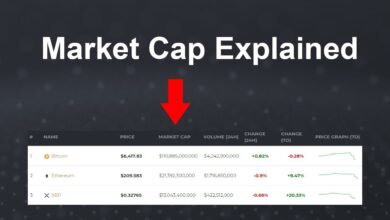
Before looking at the list, it helps to be clear about what’s being measured. The SEC’s investor education site defines market capitalization as the current share price multiplied by the total number of outstanding shares. You can check the official definition in Investor.gov’s market capitalization glossary. Crypto trackers apply the same idea to tokens, multiplying price by circulating supply.
For this article, each exchange falls into one of three groups.
Publicly Traded Crypto Exchanges (Stocks)
These are companies listed on stock exchanges like Nasdaq or NYSE. Their market cap reflects the value of the whole business: profits, cash, debt and growth prospects. Shareholders have legal ownership rights, and the companies must publish audited quarterly results.
Exchange Tokens
Many private exchanges issue a native token, such as BNB for Binance or OKB for OKX. These tokens usually offer trading fee discounts, access to token sales, or rewards, and many exchanges use part of their profits to buy back and burn tokens. But holding an exchange token does not give you ownership of the company. Its market cap is a proxy for how the market values the platform’s ecosystem, not a formal company valuation.
Decentralized Exchange Tokens
Decentralized exchanges (DEXs) run on smart contracts rather than a central company. Their governance or utility tokens can capture fees through buybacks or staking. These have become serious players, especially in perpetual futures trading.


Why This Isn’t a Perfect Comparison
A stock market cap and a token market cap measure different things. A company’s equity value includes everything it owns and earns. A token’s value depends on its design, supply schedule and how much of the platform’s revenue actually reaches holders. Keep that in mind as you read. The ranking shows where public money is flowing, not which business is objectively “worth more.”
The 2026 Backdrop: Why Exchange Valuations Swung So Hard
Exchange valuations are tightly tied to crypto prices, because trading activity rises and falls with the market. 2026 has been a tough year on that front. Allied Venture Partners notes that Bitcoin fell from a peak of about $126,000 in October 2025 to roughly $58,000 by June 2026. By late September, Slickcharts showed Bitcoin back near $86,000, with the total crypto market worth about $2.93 trillion.
That drop hit exchanges hard:
- Earnings pressure: Finance Magnates reported that several listed crypto exchanges posted first-quarter losses in 2026.
- Job cuts: The same report notes Coinbase cut about 14% of its workforce, roughly 700 people, in May, citing AI adoption and weaker markets.
- IPO delays: Kraken, which many expected to be the next big exchange listing, has repeatedly pushed back its plans.
At the same time, some platforms kept growing thanks to new products like tokenized stocks, prediction markets and their own blockchains. That split between struggling and thriving venues shows up clearly in the ranking below.
Quick Overview: Top Crypto Exchanges by Market Cap
| Rank | Exchange | Listed Asset | Type | Approx. Listed Market Cap |
|---|---|---|---|---|
| 1 | Robinhood | HOOD (Nasdaq) | Stock | $108B to $111B |
| 2 | Binance | BNB | Exchange token | $104.7B |
| 3 | Coinbase | COIN (Nasdaq) | Stock | About $50B (estimate) |
| 4 | Hyperliquid | HYPE | DEX token | $24.2B |
| 5 | Bitfinex | LEO | Exchange token | $8.3B |
| 6 | Uniswap | UNI | DEX token | $5.7B |
| 7 | Bullish | BLSH (NYSE) | Stock | About $3.9B |
| 8 | Crypto.com | CRO | Exchange token | $3.3B |
| 9 | OKX | OKB | Exchange token | $2.6B |
| 10 | eToro | ETOR (Nasdaq) | Stock | About $2.2B |
Token figures come from the Slickcharts snapshot on September 22, 2026. Stock figures come from the sources cited in each section. Coinbase’s figure is an estimate explained below.
Now let’s go through each one.
1. Robinhood (HOOD): The Broker That Became a Crypto Powerhouse
Robinhood tops our list of top crypto exchanges by market cap, with a stock market value of roughly $108 billion to $111 billion depending on the day. The Motley Fool recently listed its market cap at about $111 billion, while eToro’s data page shows about $107.7 billion.
Why Robinhood Counts as a Crypto Exchange
Robinhood started as a commission-free stock app, but crypto has become central to its identity. The Motley Fool notes it embraced crypto long before most financial firms did and keeps deepening that involvement. It’s not a pure crypto exchange, which is worth remembering, but its crypto business is now large enough to put it in direct competition with Coinbase.
What’s Driving Its Valuation
- Robinhood Chain: Robinhood launched its own blockchain, a layer 2 network, on July 1, 2026. It quickly became a hub for trading and token launches.
- Tokenized stocks: Robinhood’s shares jumped along with Coinbase and Circle in premarket trading on September 21 after analysts pointed to gains from a new SEC rule on tokenized stocks.
- Growth over time: For context, MarketBeat put Robinhood’s market cap at about $88.5 billion in August 2025, so it has grown even as crypto prices fell.
Risks to Watch
Robinhood trades at a premium valuation, which the Motley Fool openly acknowledges. It’s also exposed to retail trading activity, which can drop quickly in weak markets. And because it’s a broker first, its crypto revenue is only part of the story.
2. Binance (BNB): The Biggest Exchange Token by Far
Binance is private, so it has no stock. But its native token, BNB, is valued at about $104.7 billion, making it the fourth-largest crypto asset overall behind Bitcoin, Ethereum and Tether.
Why BNB Represents Binance
BNB began as a fee discount token for Binance’s exchange and now also powers BNB Chain, one of the busiest blockchains in crypto. When people want exposure to Binance’s ecosystem, BNB is the closest option available.
Binance’s Market Position
Binance remains the dominant exchange globally. CoinDesk reported in 2025 that Binance held around 55% of user funds and about 24% of spot trading among tracked exchanges, and it attracted net inflows even when the wider market saw outflows. That scale is a big reason BNB holds its value better than most exchange tokens.
Risks to Watch
BNB is not equity. Holders don’t own Binance or receive its profits directly. The token also carries regulatory risk tied to Binance’s history with authorities in several countries, and its value depends partly on the health of BNB Chain, not just the exchange.
3. Coinbase (COIN): The Original Publicly Traded Crypto Exchange
Coinbase is the benchmark for crypto exchange stocks. It went public in April 2021 and was the first pure-play crypto company added to the S&P 500.
Estimating Coinbase’s Current Market Cap
Coinbase’s market cap has been moving fast, and sources don’t line up perfectly because of differing share counts. Robinhood’s stock page showed COIN trading around $200.77 on September 22, 2026. On August 3, when shares were at $146.50, Google Finance put the market cap at about $38.65 billion. Scaling that to the current price puts Coinbase at roughly $50 billion to $53 billion. Treat that as an estimate, and check a live quote before relying on it.
A Rollercoaster Year
Coinbase is a great example of how volatile exchange valuations can be. In July 2025, it crossed a $100 billion market cap for the first time, as Bitcoin hit new highs. You can read about that milestone in The Block’s report on Coinbase reaching $100 billion. Over the past year, its stock has ranged from a high of $402.16 to a low of $139.11.
What’s Driving It Now
Coinbase is trying to reduce its dependence on spot trading fees. Its first-quarter 2026 results showed revenue of $1.41 billion and a GAAP loss driven mostly by a $482.4 million non-cash markdown on crypto holdings, while the core business stayed profitable on an adjusted basis. Its “Everything Exchange” strategy includes retail derivatives, prediction markets and stablecoins.
Risks to Watch
Coinbase remains highly sensitive to crypto prices and trading volume. It also faces growing competition from Robinhood and from decentralized platforms that offer similar products without a middleman.
4. Hyperliquid (HYPE): The Most Valuable Decentralized Exchange
Hyperliquid is the only decentralized platform in the top four, and its rise has been one of the defining crypto stories of the past two years.
What Hyperliquid Is
Hyperliquid is a decentralized exchange focused on perpetual futures, running on its own blockchain. Its HYPE token is now worth about $24.2 billion, ranking tenth among all crypto assets.
How Fast It Grew
For perspective, CoinDesk noted that HYPE debuted at roughly a $4.2 billion fully diluted valuation in November 2024. It has since grown several times over. By June 2026, Hyperliquid had even climbed into the top 10 altcoins, passing Cardano on CoinMarketCap.
Why It Matters for This Ranking
Hyperliquid shows that a trading venue doesn’t need to be a company to earn a massive valuation. It’s also the leader that rivals measure themselves against. CoinDesk reported that when Lighter launched, its daily perp volume ranked behind only Hyperliquid and Aster.
Risks to Watch
As a DEX, Hyperliquid faces smart contract risk, competition from new perp platforms, and uncertain regulatory treatment. Its token value depends on continued trading activity and how the protocol shares revenue with holders.
5. Bitfinex (LEO): The Quiet Giant of Exchange Tokens
Bitfinex’s UNUS SED LEO token has a market cap of about $8.3 billion, making it the second-largest centralized exchange token after BNB.
Why LEO Ranks So High
LEO is closely tied to Bitfinex and its sister company Tether, which share the same parent. Bitfinex has also been investing in new infrastructure. It co-led funding for Stable, a Layer 1 blockchain built around USDT.
How LEO Works
LEO is designed around a buyback-and-burn model, where the exchange uses part of its revenue to buy tokens and permanently remove them from supply. That gives holders indirect exposure to Bitfinex’s business performance.
Risks to Watch
LEO trades with relatively low volume for its size, which can make large trades difficult. It’s also heavily tied to one company group, so any trouble at Bitfinex or Tether would hit it directly.
6. Uniswap (UNI): The Original DEX Giant
Uniswap is the most famous decentralized spot exchange, and its UNI token is valued at about $5.7 billion.
Why Uniswap Still Matters
Uniswap pioneered the automated market maker model that most DEXs now copy. It remains central to Ethereum and layer 2 networks. On Robinhood Chain, Uniswap is the default exchange.
New Moves in 2026
Uniswap has been expanding into new areas. In August, it launched Pools.trade, a zero-fee token launchpad that quickly captured half of all launchpad volume on Robinhood Chain.
Risks to Watch
UNI has historically been criticized for weak value capture, since its governance token hasn’t always directly shared in protocol fees. Competition from other DEXs and aggregators also keeps pressure on its market share.
7. Bullish (BLSH): The Institutional Newcomer
Bullish is one of the newest publicly traded crypto exchanges, having debuted on the NYSE in August 2025.
Bullish’s Market Value
MacroTrends put Bullish’s market cap at about $3.86 billion as of July 6, 2026. Its shares have recently traded around $40.
Why Bullish Is Worth Watching
Bullish focuses heavily on institutional clients. Coin Metrics data showed that among exchanges considering IPOs, Coinbase led with 49% of spot volume, while Bullish and Kraken each held about 22%. The Motley Fool also noted analysts see Bullish, along with Coinbase and Robinhood, as a potential winner from tokenized stocks.
Risks to Watch
As a newer public company, Bullish has a short track record in public markets. Its stock also moves closely with crypto prices and institutional trading volumes, which have been choppy in 2026.
8. Crypto.com (CRO): The Consumer Brand Token
Crypto.com’s CRO token has a market cap of about $3.3 billion.
What CRO Does
CRO powers the Crypto.com app, card rewards and the Cronos blockchain. Crypto.com has spent heavily on marketing and sports sponsorships to build one of the most recognized consumer brands in crypto.
Why It Ranks Here
CRO benefits from Crypto.com’s large retail user base and its growing presence in regulated markets. For investors who want exposure to the platform, CRO is the only public option since the company remains private.
Risks to Watch
CRO has had a history of changes to its tokenomics and rewards programs, which can affect holders. Like other exchange tokens, it doesn’t represent ownership of the company.
9. OKX (OKB): A Major Global Exchange’s Token
OKX’s OKB token is valued at about $2.6 billion.
What OKB Offers
OKB gives trading fee discounts on OKX and serves as the gas token for OKX’s X Layer network. OKX is one of the largest global exchanges by derivatives volume, which supports demand for the token.
Why It’s on the List
OKB is one of the few ways to get exposure to OKX’s growth. The exchange has also expanded its regulated presence, including in the U.S., in recent years.
Risks to Watch
OKB’s value depends on OKX’s decisions about supply, burns and utility. Regulatory issues in any major market could also weigh on the token.
10. eToro (ETOR): The Multi-Asset Platform
eToro rounds out the top 10 with a market cap of about $2.2 billion, according to Yahoo Finance.
What eToro Is
eToro is a multi-asset trading platform offering stocks, crypto, commodities, currencies and options. Crypto is an important part of its business, though not the only part, similar to Robinhood.
Recent Performance
eToro has had a tough stretch as a public company. Public.com’s data showed its market cap down about 20% over the 12 months to mid-August 2026. Analysts have been split, with Mizuho lowering its price target to $43 while KeyBanc started coverage with an Overweight rating.
Risks to Watch
eToro’s crypto revenue swings with market activity, and it competes directly with larger platforms like Robinhood and Coinbase. Its smaller size also means more stock price volatility.
Honorable Mentions and Notable Absences
A few other exchanges are worth knowing about, even though they didn’t make the top 10:
- Bitget (BGB): Its token is valued at about $1.46 billion, just outside the list.
- Gate (GT) and KuCoin (KCS): Their tokens sit at about $1.18 billion and $1.01 billion.
- Aster and Lighter: Newer perp DEX tokens, valued at about $1.96 billion and $1.21 billion. Aster would actually rank just below eToro.
- Gemini (GEMI): Gemini is publicly listed, but its stock has fallen sharply. Shares traded around $5.88 on September 22, compared with a 52-week high of $26.75, leaving it among the smallest listed exchanges.
- Kraken: Kraken is still private and has no token, so it can’t be ranked by listed market cap. Its last private valuation was about $20 billion, but CoinSpectator reports its IPO has now been pushed to at least the second quarter of 2027. Finance Magnates notes its valuation fell 33% from the $20 billion peak after Deutsche Börse bought a stake in April. For more detail, Finance Magnates’ coverage of Kraken’s IPO delays is a useful read.
Key Trends Behind the Top Crypto Exchanges by Market Cap
Looking across the whole list, a few clear patterns explain how the top crypto exchanges by market cap are shifting.
1. Diversified Platforms Are Winning
Robinhood and Coinbase’s different paths tell the story. Robinhood’s broad mix of stocks, options and crypto has helped it hold its value, while Coinbase remains more exposed to the crypto cycle. Coinbase is now pushing hard into derivatives, prediction markets and stablecoins to close that gap.
2. Decentralized Exchanges Are Real Competitors
Hyperliquid and Uniswap together are worth about $30 billion in listed market cap. That’s more than Bullish, eToro and the smaller exchange tokens combined. DEXs are no longer a niche.
3. Tokenization Is the Next Battleground
Tokenized stocks are becoming a major growth area. The market reaction to the SEC’s tokenized-stock rule lifted Robinhood, Coinbase and Circle together, showing how much investors care about this trend.
4. The IPO Window Has Narrowed
2025 was a big year for crypto listings. Coin360 reports that the crypto IPO market expanded to 11 listings raising $14.6 billion in 2025, compared with just $310 million in 2024. 2026 has been much quieter, with Kraken’s repeated delays as the most visible example.
Exchange Stocks vs. Exchange Tokens: Which Is Better Exposure?
If you want investment exposure to crypto exchanges, you’ll usually choose between stocks and tokens. Here’s how they compare:
| Factor | Exchange Stocks | Exchange Tokens |
|---|---|---|
| Ownership | Legal ownership of the company | No ownership rights |
| Disclosure | Audited quarterly reports | Varies widely, often limited |
| Value drivers | Profits, growth, balance sheet | Utility, burns, tokenomics, sentiment |
| Trading hours | Market hours (plus extended) | 24/7 |
| Regulation | Securities law protections | Much lighter oversight |
| Volatility | High | Usually higher |
Neither is automatically better. Stocks give you legal rights and transparency. Tokens give you access to exchanges that have no stock at all.
How to Evaluate a Crypto Exchange Beyond Market Cap
Market cap is only one lens. Before trusting or investing in any platform, check these factors:
- Proof of reserves: Does the exchange publish verifiable evidence that it holds customer assets one to one?
- Regulatory status: Is it licensed in major jurisdictions where it operates?
- Trading volume and liquidity: Are order books deep enough for your trades?
- Revenue mix: How dependent is it on spot trading fees versus more stable income?
- Security history: Has it suffered hacks, and how did it handle them?
- Token design (for exchange tokens): Are there burns, buybacks, or large unlocks coming?
- Financial disclosures (for stocks): Is it profitable, and how much debt does it carry?
Common Mistakes When Reading Exchange Market Cap Rankings
- Treating tokens like shares. Owning BNB or OKB doesn’t make you a part-owner of Binance or OKX.
- Ignoring the crypto cycle. Exchange valuations rise and fall with crypto prices. A cheap-looking stock may just reflect a weak market.
- Confusing size with safety. A large market cap doesn’t guarantee customer funds are secure. FTX was highly valued right up until it collapsed.
- Forgetting private giants. Kraken and others don’t appear in listed rankings, but they’re still major players.
- Using stale data. These numbers can change by 10% or more in a single week.
Frequently Asked Questions About Top Crypto Exchanges by Market Cap
Which crypto exchange has the highest market cap?
By listed market cap, Robinhood leads at roughly $108 billion to $111 billion, with Binance’s BNB token close behind at about $104.7 billion. Among pure crypto exchanges with a stock listing, Coinbase is the largest.
Is Binance a publicly traded company?
No. Binance is private, so it has no stock. Its BNB token is the most common way to measure the market’s view of its ecosystem.
Is Kraken publicly listed?
Not yet. Kraken filed confidentially for an IPO in November 2025 but has delayed its plans, with reports now pointing to 2027.
Are decentralized exchanges included in market cap rankings?
They usually aren’t in company rankings, but their tokens are listed on crypto trackers. Hyperliquid’s HYPE and Uniswap’s UNI are both among the most valuable exchange-related assets.
Why did Coinbase’s market cap fall in 2026?
Mainly because crypto prices and trading volumes dropped sharply from their late-2025 peaks. Coinbase also reported a first-quarter loss tied to a markdown on its crypto holdings.
Conclusion
The top crypto exchanges by market cap in 2026 show just how varied the trading landscape has become, with Robinhood’s roughly $110 billion stock value and Binance’s $104.7 billion BNB token leading the pack, followed by Coinbase at around $50 billion, decentralized giant Hyperliquid at $24.2 billion, and a mix of exchange tokens and newer listed firms like Bitfinex, Uniswap, Bullish, Crypto.com, OKX and eToro rounding out the top 10. A brutal drop in Bitcoin from its late-2025 peak cut many exchange valuations sharply, delayed Kraken’s IPO into 2027, and rewarded platforms with diversified revenue, tokenized stock ambitions and their own blockchains. Because stocks and tokens measure value in very different ways, the smartest approach is to use listed market cap as a starting point, then look deeper at ownership rights, proof of reserves, regulation, revenue mix and token design before trusting any exchange with your money or your investment.